

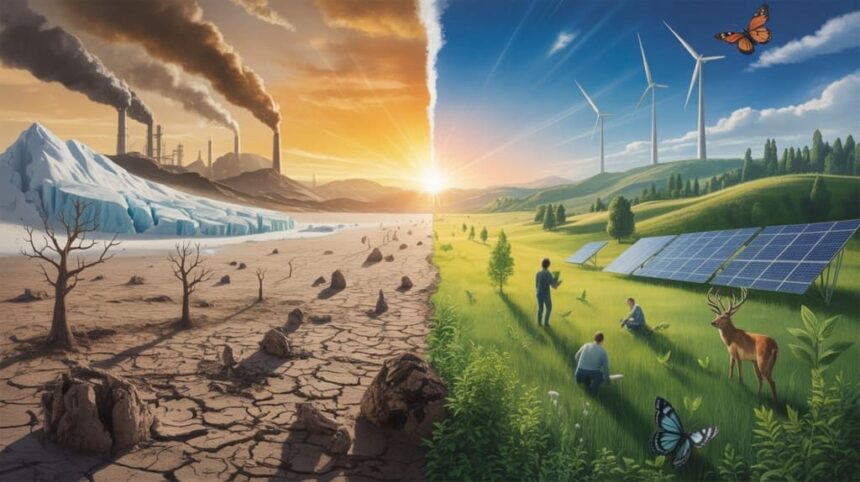
Understanding Climate Change
Climate change refers to long-term alterations in temperature, precipitation patterns, and other atmospheric conditions on Earth. It is a critical distinction from weather, which involves short-term atmospheric changes that can vary daily. The scientific consensus indicates that climate change is primarily driven by human activities, particularly the emission of greenhouse gases (GHGs) such as carbon dioxide (CO2), methane (CH4), and nitrous oxide (N2O). These gases trap heat from the sun in the atmosphere, creating a “greenhouse effect” that contributes to global warming.
The rise in GHG emissions can be traced back to post-industrial activities, including the burning of fossil fuels for energy, deforestation, and intensive agriculture. These practices not only increase the concentration of GHGs in the atmosphere but also degrade natural systems that can absorb these gases, such as forests and wetlands. As a result, the present levels of CO2 in the atmosphere are at their highest in over 800,000 years, indicating a significant departure from natural climatic variations.
Climate change is measured through various indicators, such as average global temperatures, sea level rise, and changes in precipitation patterns. Scientists utilize data from direct measurements, satellite observations, and climate models to project future scenarios under different emission levels. This approach helps to highlight the potential impacts of climate change on ecosystems, human health, and global economies.
Understanding the nuances of climate change is essential for addressing it effectively. Awareness of its scientific underpinnings fosters informed discussions around the necessary interventions required to mitigate its adverse effects. As the urgency of the climate crisis escalates, so does the need for individual and collective action to reduce emissions and adapt to an ever-changing environment.
The Causes of Climate Change
Climate change is a complex phenomenon influenced by both natural and anthropogenic factors. Natural factors, such as volcanic eruptions and variations in solar radiation, have historically contributed to the Earth’s climate fluctuations. For instance, volcanic eruptions release significant amounts of ash and sulfur dioxide into the atmosphere, which can lead to temporary cooling of the planet’s surface due to increased cloudiness and reflection of solar radiation.
However, the most pressing drivers of climate change today are primarily anthropogenic. The combustion of fossil fuels—such as coal, oil, and natural gas—releases substantial amounts of carbon dioxide (CO2) and other greenhouse gases into the atmosphere. These emissions trap heat and cause global temperatures to rise, a phenomenon commonly referred to as the greenhouse effect. In addition to fossil fuel combustion, deforestation plays a critical role by reducing the number of trees that can absorb CO2 from the atmosphere. This not only exacerbates the greenhouse gas problem but also disrupts local climate patterns.
Industrial processes contribute to climate change as well, often releasing potent greenhouse gases like methane (CH4) and nitrous oxide (N2O). Agricultural practices, waste management, and land-use changes further compound these issues, creating a feedback loop that accelerates climate change. Each of these human activities underscores a significant shift from natural equilibrium to a state of imbalance, resulting in increased global temperatures.
The cumulative effect of these causes—the relentless rise in greenhouse gas concentrations and the degradation of carbon sinks—has led to unprecedented climate shifts, requiring immediate action to mitigate impacts on the environment and society.
The Consequences of Climate Change
Climate change presents a multitude of consequences that affect not only our environment but also human health and global economies. One of the most alarming effects is the rising sea levels, primarily driven by the thermal expansion of seawater and the melting of polar ice caps. Coastal communities around the world, such as those in Bangladesh and parts of the United States, face the risk of significant flooding, which can lead to displacement and loss of livelihoods.
Additionally, the increased frequency of natural disasters—such as hurricanes, wildfires, and droughts—has been closely linked to climate change. For example, the recent wildfires in Australia and California illustrate how extreme weather events are becoming more common, leading to loss of life and severe economic damage. The insurance market has shown growing concern over these risks, leading to higher premiums and even withdrawal from certain regions.
Another critical area impacted by climate change is biodiversity. Alterations in habitat due to changing temperatures and weather patterns threaten numerous species, leading to a decrease in biodiversity. The loss of species not only disrupts ecosystems but also diminishes natural resources that human populations depend on for food, medicine, and other essentials.
Food security is further compromised by shifts in agricultural productivity as climatic conditions vary. Regions heavily reliant on agriculture, like sub-Saharan Africa, are experiencing challenges such as reduced crop yields due to changing precipitation patterns and increased incidences of pests. Such factors directly impact local economies and can exacerbate poverty levels.
In summary, climate change manifests in diverse and severe consequences that require immediate attention and action. Its effects stretch far beyond environmental concerns, permeating into the core of human health and economic stability, thus necessitating a global response to mitigate the adverse impacts.
The Scientific Consensus on Climate Change
Climate change is a pressing issue that has garnered significant attention from scientists around the globe. The overwhelming consensus among climate scientists indicates that climate change is primarily driven by human activities, particularly through the emission of greenhouse gases such as carbon dioxide and methane. Major scientific organizations, including the Intergovernmental Panel on Climate Change (IPCC), have produced comprehensive reports highlighting these findings.
The IPCC’s assessment reports, which synthesize research from thousands of studies worldwide, consistently present the same conclusion: human influence is the dominant cause of observed warming since the mid-20th century. For instance, the IPCC Sixth Assessment Report published in 2021 clearly establishes that the increase in global temperatures can be strongly linked to human-induced emissions. Furthermore, the report outlines expected consequences if current trends continue, including more extreme weather events, rising sea levels, and significant impacts on biodiversity and public health.
Beyond the IPCC, other institutions such as the National Aeronautics and Space Administration (NASA), the World Meteorological Organization (WMO), and myriad national and international scientific bodies confirm these findings, reinforcing the notion that climate change is an urgent issue requiring immediate action. Studies have indicated that the temperature rise may exceed 1.5 degrees Celsius above pre-industrial levels, which could lead to catastrophic environmental changes.
This scientific consensus forms a critical foundation for policy-making and cooperative global actions aimed at mitigating climate change. Scientists emphasize that transitioning to renewable energy sources, improving energy efficiency, and implementing sustainable practices are essential strategies to address the ongoing climate crisis. Without a concerted effort to reduce emissions, the ramifications of climate change will likely exacerbate, leading to profound challenges for generations to come.
Current Solutions and Mitigation Strategies
As the world grapples with climate change, a multitude of solutions and strategies have emerged, providing hope for mitigation efforts. One of the most prominent methods involves the transition to renewable energy sources such as solar, wind, and hydropower. These sustainable energy forms not only reduce greenhouse gas emissions but also offer a long-term solution to energy security. Countries worldwide are increasingly investing in renewable projects, showing significant commitment to decrease their dependency on fossil fuels.
Energy efficiency improvements have also become paramount in tackling climate change. By optimizing energy use in buildings, transportation, and manufacturing processes, we can dramatically lower energy consumption. Innovations such as smart grids and energy-efficient appliances facilitate this transition, making it easier for individuals and industries alike to cut down on waste while saving costs.
Furthermore, carbon capture and storage (CCS) technology is gaining traction as a viable solution to reduce atmospheric carbon dioxide levels. This innovative technology captures CO2 emissions from sources like power plants and either utilizes it in other processes or stores it underground. While still in its developmental phase in certain regions, successful implementation can significantly contribute to meeting global climate targets.
Additionally, sustainable agricultural practices play a crucial role in mitigating climate change. Techniques such as crop rotation, agroforestry, and organic farming not only enhance food security but also improve soil health and sequester carbon in the ground. As more farmers adopt these practices, the agricultural sector can be transformed into a positive force against climate change.
In conclusion, these solutions—renewable energy sources, energy efficiency improvements, carbon capture technology, and sustainable agricultural methods—are at the forefront of global efforts to mitigate climate change. Their potential impact and scalability indicate that ongoing commitment and innovation can lead to meaningful progress in the fight against this pressing challenge.
Policy Responses and International Cooperation
Climate change poses one of the most significant challenges of our time, necessitating comprehensive policy responses that are strategically designed and implemented by governments and international organizations. National governments play a vital role in formulating climate policies that aim to mitigate greenhouse gas emissions and adapt to the changing environment. This can be observed through various policy initiatives, including carbon pricing, renewable energy subsidies, and stringent emission regulations that aim to foster a transition towards a low-carbon economy.
International cooperation is equally crucial in addressing climate change, as it is a global issue that transcends national borders. Noteworthy among the international agreements is the Paris Agreement, adopted in 2015, which represents a landmark effort to unite countries in their commitment to limit global warming to well below 2 degrees Celsius. This agreement emphasizes the importance of voluntary national determined contributions (NDCs) which require countries to set their own targets for emissions reductions. Although the framework provides flexibility for nations, the success of the Paris Agreement relies heavily on transparency and accountability mechanisms that ensure adherence to set targets.
Moreover, other international bodies, including the United Nations Framework Convention on Climate Change (UNFCCC), have been pivotal in guiding cooperative efforts. These organizations facilitate dialogue among countries, encourage financing for developing nations, and promote research and technology transfer, thus fostering an inclusive approach to tackling climate change. Leadership at the global level is a critical aspect of enhancing the urgency of actions taken to combat climate issues. Collective action is essential, as individual efforts alone cannot mitigate the effects of climate change effectively. Through strong governmental policies and robust international collaboration, countries can work towards sustainable solutions that will secure a healthier planet for future generations.
The Role of Individuals and Communities
Individuals and communities play a crucial role in the collective effort to combat climate change. While systemic change is necessary, every action taken at the individual and local levels can contribute to creating a more sustainable future. For instance, adopting a sustainable lifestyle can significantly reduce one’s carbon footprint. Simple practices such as using energy-efficient appliances, minimizing water usage, and embracing renewable energy sources like solar panels can make a notable difference.
Furthermore, communities can come together to foster environmental stewardship. Organizing or participating in local initiatives such as community gardens, tree planting days, and clean-up events not only improves local ecosystems but also strengthens social ties. These projects provide educational opportunities and inspire others to reconsider their environmental impact.
Additionally, advocacy plays a vital role in addressing climate change. Individuals are encouraged to engage with local governments and policymakers, urging them to implement climate-friendly policies and practices. This can involve promoting policies that support renewable energy, efficient public transportation systems, and sustainable land use. Being active in community discussions about climate regulations and environmental policies can result in impactful change.
Moreover, raising awareness through social media platforms can amplify individual voices and community efforts. Sharing information about climate change and sustainable practices can motivate others to take action in their own lives. Engaging in discussions surrounding climate issues, whether in person or digitally, creates a ripple effect that can inspire widespread change.
As individuals unite within their communities to champion sustainability, local and global efforts can coalesce into a powerful force against climate change. By recognizing the importance of personal responsibility and community engagement, individuals can catalyze a larger movement towards climate awareness and action.
Emerging Innovations and Technologies
The threat posed by climate change has catalyzed an array of innovations and technologies aimed at mitigating its effects. One of the most crucial areas of development is renewable energy. Solar, wind, and hydroelectric power have witnessed significant advancements, with efficiency rates soaring due to new materials and enhanced designs. For instance, perovskite solar cells are emerging as a promising alternative to traditional silicon cells, offering greater efficiency at lower production costs.
In addition to renewable energy generation, battery storage technology is also making strides. The ability to store energy generated from renewable sources is critical for combating climate change, as it allows for a more reliable and stable energy supply. Innovations such as solid-state batteries and flow batteries are enhancing the safety and longevity of energy storage systems. These improvements ensure that excess energy harvested during peak sunlight hours can be used at night or during cloudy days, thus optimizing the utility of renewable sources.
Sustainable materials represent another frontier in the fight against climate change. Researchers are dedicating substantial efforts to develop biodegradable plastics and other eco-friendly materials that reduce dependence on fossil fuels. Advanced materials derived from renewable resources not only decrease waste but also enhance energy efficiency in various industries, including construction and transportation. Innovations like mycelium-based packaging and carbon capture materials exemplify how science can contribute to a sustainable future.
Moreover, smart technology plays a pivotal role in promoting energy efficiency. The integration of Internet of Things (IoT) devices in homes and industries enables real-time monitoring and management of energy consumption. This interconnected ecosystem facilitates better energy utilization, significantly reducing the carbon footprint of both individuals and businesses. Such innovations offer a multifaceted approach to tackling climate change, underscoring the importance of continued research and development in this critical domain.
The Future of Climate Action
As we look to the future of climate action, it is imperative to understand that the crisis is not a static issue but a dynamic challenge that requires ongoing adaptation and innovative solutions. The effects of climate change are increasingly evident, prompting a collective call for concerted efforts to mitigate its impact. Continuous research is essential to develop effective strategies and technologies aimed at combating climate-related problems. Investment in scientific research can facilitate breakthroughs in renewable energy, carbon capture, and sustainable agricultural practices, which are critical in reducing greenhouse gas emissions.
Moreover, community engagement plays a pivotal role in driving climate action. Grassroots movements and local initiatives have proven to be powerful forces in mobilizing public sentiment and implementing change. Communities that are informed and actively involved in climate issues tend to advocate better policies and adopt sustainable practices. Therefore, fostering community awareness through education and workshops can empower individuals to take meaningful steps towards climate resilience.
Adaptive management strategies will also be necessary as the climate crisis evolves. Policymakers must be prepared to revisit and revise climate action plans based on the latest scientific evidence and observed environmental changes. This adaptability is crucial to ensuring that efforts remain relevant and effective in a shifting landscape. Considering the socio-economic dimensions of climate change is equally important, as inequities can exacerbate vulnerabilities and hinder progress in sustainability.
In conclusion, effective climate action requires a multifaceted approach that encompasses research, community involvement, and adaptable strategies. By remaining informed and engaged, individuals can contribute to the ongoing fight against climate change, promoting a sustainable future for generations to come.