

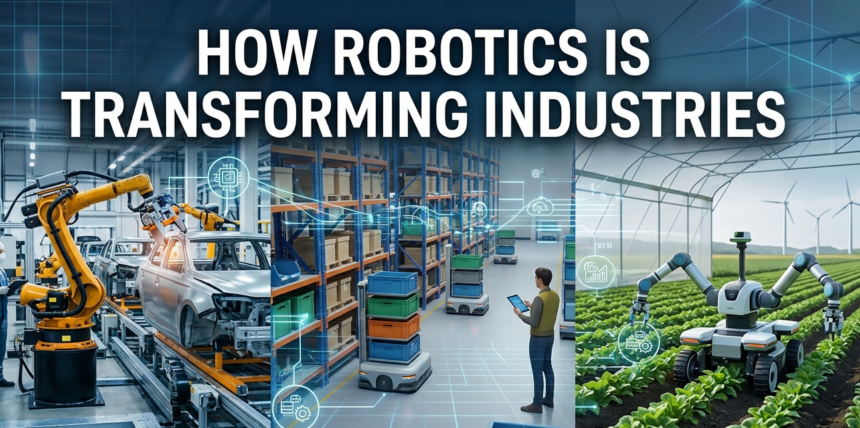
Introduction to Robotics in Industries
Robotics is a multidisciplinary field that integrates engineering, computer science, and technology, enabling the design, construction, and operation of robots. In recent years, robotics has emerged as a transformative force across various industries, streamlining operations, enhancing productivity, and improving overall efficiency. By employing automated systems, industries can execute tasks with precision, reduce human error, and ultimately drive economic growth.
Robotic systems vary widely, encompassing industrial robots, service robots, and collaborative robots (cobots). Industrial robots are typically used in manufacturing settings, performing repetitive tasks such as welding, painting, and assembly. Service robots, on the other hand, operate in environments like hospitals and homes, assisting with tasks from patient care to housekeeping. Cobots are designed to work alongside humans, combining the benefits of human decision-making with robotic efficiency. This variety reflects the adaptability of robotics technology to meet the specific needs of different sectors.
The evolution of robotics can be traced back to the mid-20th century when the first programmable robots were introduced. Over the decades, advancements in artificial intelligence, sensor technology, and machine learning have significantly enhanced the capabilities of robotic systems. Today, robots can perform complex tasks, learn from their environment, and even collaborate with humans to optimize workflow. The advent of Industry 4.0, characterized by smart factories and interconnected systems, further illustrates the significance of robotics in the industrial sector. This technological revolution is not only changing how businesses operate but also influencing job roles and skills required in the workforce.
In summary, robotics plays a crucial role in contemporary industries by enhancing processes and capabilities. As the field continues to evolve, it is expected to further expand its impact, paving the way for new innovations and opportunities in the industrial landscape.
Impact of Robotics on Manufacturing
The advent of robotics has significantly transformed the manufacturing industry, ushering in an era of automated production lines that enhance output and operational efficiency. Automation in manufacturing, facilitated by advanced robotics, enables companies to streamline their processes, reducing human error and ensuring consistent production quality. Robots, equipped with sophisticated algorithms and machine learning capabilities, can undertake complex tasks previously deemed unsuitable for automation.
One prominent application of robotics in manufacturing is in assembly lines. Industrial robots are adept at performing repetitive tasks such as assembling components, welding, and painting with remarkable speed and precision. This level of proficiency ensures that high volumes of products are produced in a shorter time frame, allowing manufacturers to meet increased demand without compromising on quality. The implementation of robotics in assembly also minimizes workplace injuries associated with repetitive strain and heavy lifting, promoting a safer work environment.
Quality control is another facet where robotics demonstrates substantial contributions. Automated systems equipped with sensors and vision technology can effectively monitor products during the manufacturing process. Such systems can detect defects that may go unnoticed by human inspectors, ensuring that only products meeting stringent quality standards proceed to market. This not only reduces the costs associated with defective goods but also bolsters customer satisfaction by delivering superior products.
Moreover, the integration of robotics into manufacturing operations leads to significant cost savings. While the initial investment in robotic technology might be substantial, the reduction in labor costs, increased productivity, and improved quality assurance provide a favorable return on investment. Companies adopting these innovations find themselves in a better position to compete in a global market, driven by enhanced efficiency and reduced operational costs.
Robotics in Healthcare: Enhancing Medical Practices
The integration of robotics into healthcare has revolutionized the way medical professionals deliver care, demonstrating significant advancements in various areas. One of the most notable enhancements is in robotic surgery, where precision and dexterity are paramount. Robotic surgical systems, such as the da Vinci Surgical System, enable surgeons to perform complex procedures with a minimally invasive approach. These systems provide enhanced visualization and instrument control, leading to reduced recovery times, minimized scarring, and overall improved patient outcomes. The precision of robotic-assisted surgeries often results in fewer complications, which is increasingly benefiting surgical patients.
Another significant application of robotics in healthcare is through the use of telemedicine robots. These robots facilitate remote consultations and patient monitoring, bridging the gap between patients and healthcare providers, especially in underserved or rural areas. Telemedicine robots equipped with video conferencing capabilities enable doctors to interact with patients, conduct examinations, and provide immediate care without the need for physical presence. This technology has proven critical during health crises, such as the COVID-19 pandemic, when minimizing contact was essential for safety.
Furthermore, robotic systems have been effectively employed in rehabilitation and elderly care settings. Robots designed for rehabilitation assist patients in regaining mobility and strength after surgeries or injuries by providing guided assistance and feedback during physical therapy sessions. Similarly, in elderly care, robotic companions and helpers have shown promise in improving the quality of life for seniors, offering companionship, reminders for medication, and even assistance with daily activities. Overall, robotics have become a transformative force in healthcare, emphasizing enhanced treatment efficacy and operational efficiencies throughout various medical practices.
Logistics and Supply Chain Automation
The ongoing advancements in robotics are significantly reshaping logistics and supply chain management, enhancing efficiency and accuracy across various processes. Automated warehouses serve as a key component in this transformation. These smart warehouses utilize robotics systems to streamline inventory handling, picking, and packing operations. Robots equipped with advanced sensors and machine learning capabilities can navigate complex storage environments, locating and retrieving items with remarkable speed and precision. This not only reduces labor costs but also minimizes human errors, leading to more efficient operations.
Moreover, automated inventory management systems greatly enhance the oversight of stock levels. Such systems utilize real-time data analytics to monitor inventory, allowing businesses to predict demand more accurately and manage stock replenishment effectively. By integrating robotic technologies into these systems, companies can automate routine tasks such as inventory counting and tracking, thus freeing up human resources for more complex strategic roles. This synergy of robotics and data analysis is pivotal in achieving a lean supply chain.
In addition to automated warehouses and inventory systems, the use of drones and autonomous vehicles for distribution marks a groundbreaking shift in logistics. Drones are becoming increasingly prevalent for last-mile delivery, capable of navigating urban landscapes quickly and delivering packages to remote locations, thus overcoming geographical barriers. Similarly, autonomous vehicles streamline transportation within supply chains, reducing reliance on human drivers and enabling 24/7 operations. This innovative approach not only enhances delivery speed but also significantly reduces operational costs.
Overall, robotics is playing a crucial role in revolutionizing logistics and supply chain automation, leading to improved efficiency, reduced operational costs, and enhanced service delivery. As these technologies continue to evolve, the impact on the industry will likely increase, making adaptation essential for businesses striving to maintain competitiveness in this dynamic landscape.
Agricultural Robotics: Farming of the Future
Agricultural robotics is rapidly transforming the landscape of modern farming, bringing forth innovative solutions that enhance efficiency and sustainability. These robotic systems are revolutionizing various farming tasks, including planting, harvesting, and crop monitoring, significantly altering traditional agricultural practices. By integrating robotics into the agricultural sector, farmers can achieve higher productivity levels while minimizing the environmental impact associated with conventional methods.
One of the key applications of robotic technology in agriculture is the use of automated planting systems. These systems utilize advanced sensors and artificial intelligence to accurately plant seeds in optimal conditions, thereby increasing germination rates and reducing waste. In addition, robots equipped with precision agriculture tools enable farmers to apply fertilizers and pesticides more efficiently, targeting specific areas that require treatment rather than blanket spraying, which conserves valuable resources.
Harvesting is another critical area where agricultural robotics excels. With the advent of autonomous harvesters, crops can be collected faster and with greater precision, minimizing damage and maximizing yield. These robots are designed to operate in diverse weather conditions, extending the harvesting window and allowing farmers to respond promptly to market demands. Furthermore, the integration of drones for aerial monitoring allows for real-time assessments of crop health, enabling timely interventions when issues are detected.
The overall impact of agricultural robotics extends beyond just efficiency; it fosters sustainable farming practices. By reducing herbicide and pesticide usage, these technologies help preserve local ecosystems while also potentially lowering production costs for farmers. As the agricultural sector continues to evolve, the incorporation of robotics signifies a pivotal shift towards achieving sustainable food production goals amidst a growing global population.
The Role of Robotics in Retail
In recent years, robotics has emerged as a powerful tool, significantly transforming the retail landscape. These advancements not only streamline operations but also enhance the overall shopping experience for consumers. From cashier-less stores to innovative inventory management solutions, robotics is paving the way for a more efficient retail environment.
One of the most notable innovations in this sector is the development of cashier-less stores. Retail giants are experimenting with automated checkout systems that utilize advanced technologies, such as computer vision and artificial intelligence. Shoppers can enter the store, select their items, and leave without the traditional checkout process. Sensors and cameras record the purchases made, allowing for a seamless transaction through a mobile app. This not only reduces wait times for customers but also minimizes labor costs for businesses.
Another significant application of robotics in the retail space is the use of inventory robots. These robots are designated for monitoring stock levels and managing inventory more efficiently. They can autonomously navigate store floors, scanning shelves to collect real-time data regarding product availability. By allowing robots to handle repetitive inventory tasks, retailers can dedicate human staff to higher-level customer service roles, thus improving the shopping experience.
Customer service bots also represent a major innovation within the retail environment. These interactive AI systems assist customers with inquiries, recommend products, and even provide personalized shopping experiences. By leveraging data analytics and machine learning, customer service bots can predict customer preferences, offering suggestions that enhance satisfaction and drive sales. The integration of these intelligent systems defines a new era for retail, where human and robotic interactions coexist to elevate service quality.
Ultimately, the introduction of robotics into the retail sector is reshaping the way consumers interact with brands. As these technologies continue to evolve, the potential for enhanced customer experiences grows, emphasizing robotics’ integral role in modern retail operations.
Challenges and Risks of Robotics Adoption
The integration of robotics into various industries offers remarkable advancements in efficiency and productivity. However, it is vital to recognize the challenges and risks associated with adopting these transformative technologies. One prominent concern is job displacement, as the automation of tasks may lead to reduced employment opportunities for certain job categories. Workers may face uncertainty regarding their roles in a robotic-heavy environment, prompting a need for upskilling or reskilling initiatives to help them adapt to new job demands.
Another key issue revolves around cybersecurity. As robotics systems become more interconnected, the potential for cyberattacks increases. Malicious entities can target robot controls or manipulate operational protocols, leading to significant operational disruptions and safety risks. Industries must prioritize securing their robotic systems against cyber threats to ensure reliability and safety in automated processes.
Additionally, ethical considerations play a crucial role in the deployment of robotics. For example, the use of robots in fields such as healthcare raises questions about patient privacy, informed consent, and decision-making processes. Ensuring that robotics applications adhere to ethical standards is essential to maintain public trust and support for these innovations.
Lastly, the costs associated with the initial investment in robotics technology can be prohibitive for some organizations. The price of advanced robotic systems, plus the expenses related to training personnel and maintaining these systems, can create a significant burden for smaller companies. Therefore, careful strategic planning is necessary to justify the investment and maximize the return on investment in robotics.
Future Trends in Robotics
The landscape of robotics is evolving rapidly, underpinned by advancements in artificial intelligence (AI) and machine learning. These technologies are driving robots to become more intelligent, adaptive, and capable of performing complex tasks across various sectors. One of the notable future trends is the increased integration of robotics with AI, enabling machines to learn from their environments and improve their performance over time. This trend is particularly significant in industries such as healthcare, manufacturing, and logistics, where precision and efficiency are paramount.
In the healthcare sector, for instance, robotics is anticipated to revolutionize patient care through telepresence robots that assist healthcare professionals remotely. Additionally, robotic surgical systems are expected to gain further sophistication, allowing for minimally invasive procedures with greater accuracy and reduced recovery times. The amalgamation of robotics and AI will facilitate real-time data analysis, enabling healthcare providers to make swift and informed decisions.
Another emerging trend is the use of autonomous mobile robots (AMRs) in logistics and supply chain management. As e-commerce continues to burgeon, organizations are investing in AMRs to optimize inventory management, reduce labor costs, and enhance delivery efficiency. The ability of these robots to navigate complex environments and perform autonomous tasks will significantly transform warehouse operations.
The agricultural sector is also witnessing the impact of innovative robotics applications. Precision agriculture technologies leveraging robotics and AI are expected to improve crop monitoring and yield prediction. Drones and autonomous tractors can gather vital data on soil conditions and crop health, fostering more sustainable farming practices.
In conclusion, the future of robotics is marked by the continuous convergence of advanced technologies that promise profound impacts across various industries. The fusion of AI and machine learning with robotic applications is set to enhance operational efficiency, reduce costs, and improve service delivery, reflecting the transformative potential of robotics in the modern world.
Conclusion: Embracing the Robotic Revolution
In recent years, robotics has emerged as a transformative force across various industries, prompting a significant shift in how tasks are completed and how businesses operate. As highlighted throughout this blog post, the integration of robotics in manufacturing, healthcare, logistics, and other sectors is redefining productivity and efficiency. Robotic systems enhance precision, streamline operations, and reduce human error, which can lead to improved outcomes and significant cost savings.
However, embracing the robotic revolution does not come without challenges. Organizations must navigate the balance between technology and human labor, ensuring that the introduction of robotic systems complements rather than fully replaces human jobs. It is vital for companies to invest in training and reskilling their workforce to adapt to changing roles, thereby cultivating an environment where human creativity and machine efficiency coexist harmoniously. When implemented thoughtfully, robotics can serve as a tool that augments human capabilities, rather than acting as a substitute.
The benefits of adopting robotic technology go beyond mere cost reductions. Industries that successfully integrate automation can expect heightened innovation, improved safety standards, and the ability to meet consumer demands more effectively. As the landscape of work continues to evolve, the potential for robotics to revolutionize operational strategies is immense. By remaining open to the advances in robotic technology and fostering a culture of adaptability, businesses can position themselves at the forefront of this inevitable shift.
In summary, adapting to the robotic innovation is crucial for industries aiming for sustained growth and competitiveness. The transformative impacts of robotics are profound, offering opportunities for enhanced productivity and new ways of approaching traditional business challenges. By embracing these advancements thoughtfully, organizations can navigate the complexities of this revolution and harness its full potential.