

Introduction to Data Science
Data science is a multidisciplinary field that harnesses techniques and theories from statistics, computer science, mathematics, and domain expertise to extract meaningful insights from structured and unstructured data. With the exponential growth of data generated daily across various domains, including healthcare, finance, and technology, the role of data science has become increasingly significant. By analyzing vast amounts of information, data scientists can help organizations make informed decisions, enhance operational efficiency, and drive innovation.
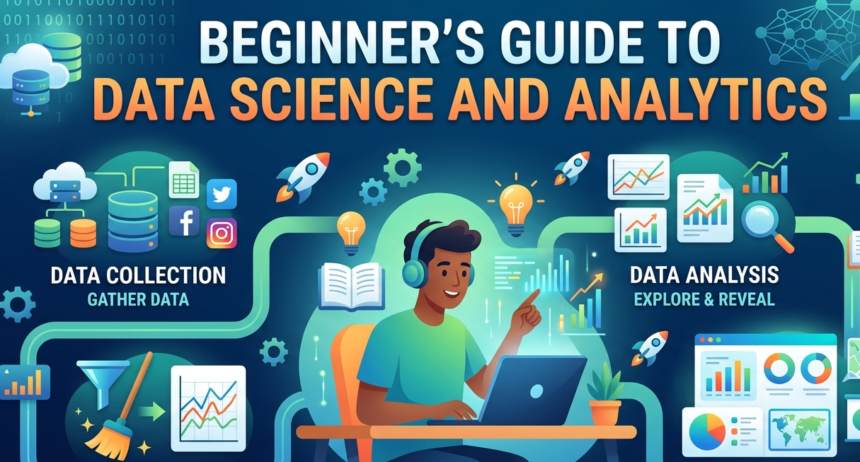
The core components of data science include data collection, data cleaning, data analysis, and data visualization. These processes enable professionals in this domain to transform raw data into comprehensible formats and actionable insights. Through statistical analysis, data scientists can identify trends, patterns, and relationships within datasets, informing strategies and forecasts that impact businesses and society.
Moreover, data science is vital in the modern world due to its versatility and applicability across numerous industries. In healthcare, data-driven analytics can lead to improved patient outcomes and optimized treatments. In finance, predictive modeling can assess risks and enhance trading strategies. Similarly, businesses utilize data science to understand consumer behavior, improve customer experiences, and drive sales growth.
As a result, proficiency in data science is increasingly seen as a valuable skill in today’s job market. The ability to gather insights from raw data empowers professionals to stay competitive and responsive to the demands of a data-driven economy. It emphasizes the importance of acquiring expertise in statistics, programming, and specific domain knowledge, establishing a strong foundation for anyone aspiring to become a data scientist.
Understanding Key Concepts in Data Science
Data science encompasses a multitude of foundational concepts that any beginner must grasp to successfully navigate the field. One of the primary elements is data types, which include numerical, categorical, and ordinal data. Each type has its specific usage and importance in analysis. Numerical data, for instance, can be further divided into discrete and continuous data, allowing for different types of mathematical operations.
Another crucial aspect is exploratory data analysis (EDA). EDA involves summarizing and visualizing datasets to uncover patterns, spot anomalies, and test hypotheses. Techniques such as histograms, box plots, and scatter plots are commonly employed during this phase. EDA serves as a vital foundation for making informed decisions about data processing and modeling strategies. It is essential for a beginner to effectively interpret the visuals generated during EDA sessions.
Once data is collected, data cleaning becomes necessary. This step ensures the dataset is accurate, consistent, and usable. Through data cleaning, one addresses issues such as missing values, duplicate entries, and irrelevant information that could hinder accurate analysis. Learning the methods of data preparation is crucial, as high-quality data directly leads to improved analytical outcomes.
The final concept of paramount importance to adroit data analysis is data visualization. Effective data visualization helps communicate findings clearly and persuasively. By utilizing various tools and libraries, such as Matplotlib and Tableau, data scientists can convert complex data sets into understandable visual formats. This skill enables stakeholders to grasp insights quickly and make data-driven decisions.
Essential Tools and Technologies
In the field of data science and analytics, various tools and technologies play a crucial role in the effective analysis, interpretation, and visualization of data. Among the most popular programming languages are Python and R. Python, known for its simplicity and versatility, is extensively used for data manipulation, statistical analysis, and machine learning. Its rich ecosystem of libraries such as Pandas, NumPy, and Scikit-learn equips data scientists to perform tasks efficiently. R, on the other hand, is particularly strong in statistical analysis and graphical representation. It offers numerous packages like ggplot2 and dplyr that facilitate advanced data analysis and visualization.
In addition to programming languages, SQL (Structured Query Language) is fundamental for managing and querying relational databases. It allows data scientists to retrieve, manipulate, and analyze data stored in various formats within databases. Mastery of SQL is essential for tasks such as data extraction and preparation, which are vital steps in the data science workflow.
Data visualization is another critical aspect of data analysis, enabling stakeholders to interpret complex datasets easily. Tools like Tableau and Power BI are leading platforms for creating interactive visualizations and dashboards. Tableau is renowned for its ability to transform raw data into insightful visuals with minimal effort, empowering users to uncover trends and patterns swiftly. Similarly, Power BI integrates seamlessly with Microsoft products and allows users to create visual reports that can be shared across organizations.
In summary, the landscape of data science is heavily influenced by an array of tools and technologies. Mastering Python, R, and SQL, along with data visualization tools like Tableau and Power BI, equips data professionals with the skills necessary to navigate the complexities of data analysis and derive meaningful insights.
Statistics and Mathematics for Data Science
Data science stands at the intersection of statistics, mathematics, and computer science. To excel in this field, one must grasp fundamental concepts of statistics and mathematics that underpin data analysis. Recognizing the importance of these concepts is paramount for anyone looking to pursue a career in data science.
Probability is one of the foundational branches of mathematics that plays a crucial role in data science. It enables data scientists to make informed predictions and decisions based on uncertain or random phenomena. Understanding probability distributions, such as normal, binomial, and Poisson distributions, allows practitioners to model real-world scenarios and interpret the likelihood of various outcomes effectively.
Hypothesis testing is another key statistical method that is critical for validating assumptions drawn from data. It involves making educated guesses and using sample data to determine the validity of those assumptions. Utilizing concepts such as p-values and confidence intervals, data scientists assess evidence against a null hypothesis, which is essential when drawing conclusions from data analyses.
In addition to probability and hypothesis testing, linear algebra plays a vital role in data science. With datasets typically structured in matrices, a solid understanding of operations on vectors and matrices is imperative. Concepts such as eigenvalues and eigenvectors are particularly useful in dimensionality reduction techniques like Principal Component Analysis (PCA), which simplifies complex datasets without losing vital information.
Incorporating these statistical and mathematical concepts into data science is not just beneficial, but necessary for deriving meaningful insights. A firm foundation in these areas enables data scientists to implement algorithms effectively, optimize models, and ultimately make data-driven decisions based on sound analysis. Therefore, aspiring data scientists should prioritize building their knowledge in statistics and mathematics to enhance their analytical capabilities.
Data Collection and Cleaning Techniques
Data collection is a fundamental step in the field of data science and analytics, as it serves as the foundation for any analytical endeavors. There are various data sources available for practitioners, including API (Application Programming Interface) access, web scraping, and databases, each offering unique advantages. APIs allow for seamless integration of real-time data from external services, enabling access to structured information without extensive manual effort. Web scraping, on the other hand, is a technique used to extract data from websites, which can be particularly useful when the required information is not available through APIs. Databases, such as SQL and NoSQL systems, provide a structured environment where historical data can be stored and accessed efficiently.
Once data is collected, the next critical step is data cleaning, which ensures that the information is accurate and suitable for analysis. One common issue faced during this process is missing values, which can significantly affect the outcome of analyses and models. Various strategies can be employed to handle missing data, including imputation methods, where missing values are replaced with estimates based on the available dataset, or simply removing entries with missing values when appropriate. The choice of method largely depends on the nature of the data and the analysis requirements.
Additionally, outlier detection is another important aspect of data cleaning. Outliers, or anomalous data points, can skew results and lead to misleading interpretations. Techniques such as Z-scores, interquartile ranges, and visual methods, like boxplots, help identify these outliers. Once detected, analysts must decide whether to exclude, transform, or retain them based on their relevance to the research question and data integrity.
Exploratory Data Analysis (EDA)
Exploratory Data Analysis (EDA) is a critical step in the data science and analytics process that allows practitioners to summarize and visualize the main characteristics of datasets. It helps in identifying patterns, spotting anomalies, and testing hypotheses. The primary goal of EDA is to understand the data before performing any formal modeling or analysis.
One key aspect of EDA is the use of descriptive statistics, which provides a numerical summary of the dataset. Measures such as mean, median, mode, standard deviation, and interquartile range enable analysts to grasp the central tendencies and variability within the data. For example, understanding the mean or average of a variable can provide insights into its typical value, while the standard deviation highlights the extent of variance.
Visualization techniques play a significant role in EDA, as they provide intuitive insights into complex datasets. Common visualization methods include histograms, scatter plots, and heatmaps. Histograms allow analysts to understand the distribution of a continuous variable by representing the frequency of observations within specific ranges. In contrast, scatter plots are employed to investigate relationships between two quantitative variables, helping to identify correlations and trends. Heatmaps can effectively illustrate the correlation matrix among multiple variables, making it easier to visualize which variables are significantly related to one another.
In essence, EDA serves as a powerful tool that guides data scientists in their initial understanding of the data. By leveraging descriptive statistics and various visualization techniques, practitioners can shape their analysis and develop an informed approach to data modeling. Overall, EDA is an essential foundation in the data analytics workflow, providing clarity and direction for subsequent analysis efforts.
Introduction to Machine Learning
Machine learning represents a pivotal component within the broader realm of data science and analytics. By enabling systems to learn from and make decisions based on data, it provides a powerful tool for predicting outcomes and automating various processes. At its core, machine learning harnesses algorithms to analyze large datasets, glean insights, and ultimately enhance decision-making capabilities.
There are three primary types of machine learning: supervised learning, unsupervised learning, and reinforcement learning. Supervised learning involves training a model on a labeled dataset, where the inputs and corresponding outputs are known. This approach allows the model to make predictions or classifications on unseen data based on historical examples. Common applications include email filtering, fraud detection, and image recognition.
In contrast, unsupervised learning deals with unlabeled data and seeks to uncover hidden patterns or groupings without pre-existing labels. This type of learning is essential for clustering data points into meaningful categories, identifying anomalies, or discovering underlying structures. Use cases commonly involve market segmentation and customer analysis, showcasing its significance in understanding diverse consumer behaviors.
Reinforcement learning, the third category, is distinct as it focuses on how agents should take actions in an environment to maximize cumulative rewards. It addresses problems where the outcome is not immediately known, relying on trial-and-error mechanisms. Robotics, gaming, and complex decision-making scenarios are typical domains employing reinforcement learning, illustrating its capability to navigate intricate challenges.
Ultimately, machine learning serves as a fundamental building block of data science, elucidating how these advanced techniques can lead to significant advancements in predictive analytics and decision automation. As industries increasingly adopt these methodologies, the relevance and importance of machine learning within data science continue to grow.
Building a Data Science Project
Building a data science project involves a systematic approach that guides practitioners through various stages, each contributing to the effective resolution of complex problems. The data science workflow is a structured framework that encompasses several critical steps, starting with problem definition.
The first step, problem definition, is crucial as it shapes the entire project. Here, practitioners must identify the specific problem they aim to solve, which guides the selection of data and the overall strategy. Clear articulation of the problem statement not only helps in aligning the team but also in communicating objectives to stakeholders.
Following problem definition, data acquisition is the next step. This phase involves gathering relevant data from various sources, whether it be public datasets, company databases, or scraping from web sources. It is essential to ensure that the data collected is representative and sufficient for the analysis phase. The effectiveness of the entire project heavily relies on the quality and quantity of the data acquired.
Once the data is obtained, the data analysis phase begins. In this stage, exploratory data analysis is performed to understand the underlying patterns and structures within the dataset. Tools and techniques such as data visualization and statistical analysis are utilized to uncover insights. This analytical groundwork lays the foundation for the next step, which is modeling.
In the modeling phase, various algorithms and machine learning techniques are applied to the data to create predictive models. Choosing the right model is crucial as it influences the accuracy and reliability of the results. After model development, it is vital to evaluate its performance using suitable metrics and make necessary adjustments to enhance its predictive capability.
The final step in the workflow is deployment, where the model is integrated into a production environment for real-world application. This phase ensures that stakeholders can leverage the insights derived from the data analysis, enabling data-driven decision-making processes.
Career Pathways in Data Science
The field of data science offers a myriad of career pathways catering to diverse interests and skill sets. Among the most sought-after roles are data analysts, data scientists, and machine learning engineers, each of which plays a vital role in the data-driven decision-making process. Understanding these positions can provide aspiring professionals with actionable insights on how to embark on a successful career in this domain.
Data analysts are often the first point of contact in utilizing data. They focus on interpreting complex data sets to assist organizations in making informed business decisions. Their responsibilities typically include data cleaning, analysis, and presenting findings through visualizations. Beginners looking to pursue this career should consider obtaining skills in statistical tools and programming languages like SQL, Excel, and Python.
In contrast, data scientists engage in a deeper level of analysis which includes creating algorithms and predictive models. They are required to have a strong background in statistics, programming, and software engineering. Skills in machine learning, data mining, and data visualization software are essential. Aspiring data scientists might pursue formal education such as a Master’s degree in data science or relevant online courses from reputable institutions.
Machine learning engineers are specialists who focus on designing and implementing algorithms that allow systems to learn from data. This role combines expertise in software development and data science, necessitating knowledge in programming, statistics, and machine learning frameworks such as TensorFlow or Scikit-Learn. Individuals interested in this pathway should enhance their skills through coding bootcamps and specialized machine learning courses.
To embark on a career in data science, it is beneficial to engage with community resources such as local meetups, online forums, and networking events. These environments can provide opportunities for mentorship, collaboration, and continuous learning, which are crucial in a rapidly evolving field. By exploring educational platforms and gaining foundational skills, prospective students can successfully pave their way into the realm of data science and analytics.