Introduction to Cloud Storage
Cloud storage refers to the online storage of data on remote servers, managed and maintained by a third-party service provider. Unlike traditional storage methods, where data is stored on physical devices like hard drives and servers located on-premises, cloud storage enables businesses to store their data across multiple servers located in various data centers globally. This model not only enhances accessibility but also improves data management and security.
At its core, cloud storage functions by allowing users to upload their data to the internet, where it can be accessed and managed through a web interface or specialized applications. Businesses can benefit from this technology by scaling their storage capacity as required, without the need for significant investment in hardware infrastructure. Furthermore, cloud storage solutions often provide redundancy through data replication, ensuring that critical business information remains safe even in the event of hardware failure.
There are primarily three types of cloud storage solutions available for businesses: public cloud, private cloud, and hybrid cloud. Public cloud storage is offered by third-party providers, where multiple organizations share resources. Private cloud storage, on the other hand, is dedicated to a single organization and can offer greater control and security. Finally, hybrid cloud storage combines elements of both public and private, allowing businesses to enjoy the flexibility of public cloud solutions while maintaining sensitive data on private infrastructure.
This section has introduced the concept of cloud storage and outlined its fundamental functionality, setting the stage for a deeper exploration of the numerous advantages it holds for businesses today. As we delve further, we will uncover how utilizing cloud storage can transform operations and improve efficiency in various organizations.
Cost Efficiency in Cloud Storage
Cloud storage solutions have emerged as a strategic approach for businesses seeking to minimize expenses associated with traditional data storage methods. One of the main advantages observed is the significant cost reduction that cloud storage offers through an array of factors, making it an attractive option for companies of various sizes.
First and foremost, scalability is a key component of cloud storage’s cost efficiency. Businesses no longer need to invest heavily in physical hardware to accommodate data growth; instead, they can adjust their cloud storage capacity according to needs. This pay-as-you-go model means organizations can scale their storage solutions without incurring excessive upfront costs. Consequently, this flexibility allows companies to adapt to changing workloads without straining their budgets.
Additionally, reduced hardware expenses directly contribute to cost efficiency. Traditional data storage typically requires significant capital investment in servers, storage devices, and infrastructure. Conversely, with cloud storage, companies rely on third-party providers who handle the underlying hardware. This not only eliminates the need for businesses to purchase and maintain expensive equipment but also allows them to allocate their financial resources to other critical areas, such as innovation and employee development.
Furthermore, the maintenance costs associated with on-premises data storage can be significant, encompassing everything from power consumption to security measures. With cloud providers responsible for maintenance, businesses can enjoy lower operational expenses, including decreased energy costs and reduced IT overhead. As a result, companies can streamline their operations and reduce the burden on their IT teams, allowing higher productivity and efficiency.
In essence, the combination of scalability, reduced hardware, and lower maintenance costs positions cloud storage as a superior cost-efficient alternative to traditional data storage solutions. By adopting cloud storage, organizations can harness financial savings while enhancing their overall business operations.
Scalability and Flexibility
In today’s rapidly evolving business landscape, the scalability and flexibility offered by cloud storage solutions have become critical for organizations of all sizes. Unlike traditional on-premises storage systems, which often require significant upfront investments and long-term commitments, cloud storage enables businesses to adjust their storage capacity to meet changing demands seamlessly.
One of the primary advantages of cloud storage is its ability to scale resources up or down based on the organization’s current requirements. For instance, a company experiencing seasonal fluctuations in data will find cloud solutions particularly beneficial, as they can easily increase storage during peak times and reduce it during quieter periods, thereby optimizing their expenditure on storage costs.
Moreover, cloud storage providers often utilize a pay-as-you-go model, allowing businesses to pay only for the amount of storage they actually use. This pricing strategy eliminates the necessity for companies to invest in large amounts of storage infrastructure that may go underutilized. As data needs grow, organizations can enhance their storage solutions without undergoing complex deployment processes or downtime, ensuring business continuity and productivity.
The flexibility provided by cloud storage also extends to its accessibility. Employees can access files from multiple devices and locations, fostering collaboration and remote work capabilities. This flexibility ensures that teams can work together efficiently, regardless of their physical location, which is increasingly important in today’s global work environment.
Ultimately, the scalability and flexibility of cloud storage empower businesses to stay agile and responsive to market changes while minimizing costs and maximizing efficiency. As organizations continue exploring digital transformation strategies, utilizing cloud storage as a scalable and flexible solution will play a pivotal role in driving their success.
Data Accessibility and Collaboration
Cloud storage offers businesses unparalleled flexibility in terms of data accessibility, an advantage that has revolutionized how organizations operate. With cloud-based systems, employees are no longer tethered to a single location for their data. Instead, they can seamlessly access files and information from virtually anywhere, provided they have internet connectivity. This level of accessibility means that team members can stay productive whether they are in the office, working remotely, or traveling for business. It emphasizes the importance of having vital data at fingertips, fostering a more dynamic work environment.
Additionally, cloud storage enhances collaboration among teams. Multiple users can access the same file simultaneously, enabling real-time editing and sharing of information. This is particularly beneficial for businesses that require constant communication across various departments or even geographical locations. The ability to work together on documents, spreadsheets, and presentations in real-time eliminates the hassles of sending emails back and forth, thereby reducing the chances of version control issues that can arise when dealing with multiple document iterations.
Furthermore, many cloud storage platforms include integrated collaboration tools that allow for comments, annotations, and task assignment directly within the files being worked on. Such features ensure that everyone remains on the same page and fosters a more collaborative atmosphere, which can lead to faster decision-making and problem-solving. Consequently, cloud storage not only serves as a repository for data but also as a pivotal tool in enhancing business efficiency and teamwork.
Data Security and Backup Solutions
In today’s digital age, the security of data is paramount for businesses of all sizes. Cloud storage solutions offer robust security features designed to protect sensitive information from unauthorized access and data breaches. One of the primary security measures is encryption, which ensures that data is converted into a secure format that can only be read by authorized users. This often involves both at-rest and in-transit encryption techniques, ensuring maximum protection during storage and transfer.
Access control is another critical component of cloud storage security. Businesses can implement strict access policies that define who can access specific data, thereby reducing the likelihood of internal and external threats. Roles and permissions can be tailored to the needs of various users, creating a layered security approach that further reinforces data integrity.
Furthermore, cloud storage services frequently incorporate redundancy, which is essential in safeguarding against data loss. Redundancy implies that data is stored across multiple servers or locations, so in the event of hardware failure or natural disasters, businesses can quickly switch to backup copies without significant disruption. This capability is particularly crucial as organizations become increasingly reliant on data for operational efficiency and decision-making processes.
Moreover, many cloud providers offer automated backup solutions that ensure business data is regularly backed up without manual intervention. This saves time and reduces the risk of human error in the backup process. By using these automated systems, businesses can ensure that they have up-to-date copies of their critical information readily available, thus enhancing their overall data protection strategy.
Improved Data Recovery Options
In today’s digital landscape, businesses face an increasing array of threats to their data, including system failures, cyberattacks, and natural disasters. Cloud storage solutions provide a robust framework for improved data recovery options, enabling organizations to safeguard their critical information efficiently. With cloud services, files are not just stored on local hardware; they are duplicated and distributed across secure servers, providing redundancy and enhancing recovery capabilities.
One of the primary advantages of cloud storage is the ability to restore lost files quickly and easily. Traditional data recovery methods often involve labor-intensive processes that can extend recovery time significantly. In contrast, cloud storage solutions allow businesses to access their files from any location, facilitating a straightforward restoration process. Organizations can retrieve their data using a simple interface, minimizing downtime and maintaining operational continuity.
Moreover, cloud storage enhances overall disaster recovery strategies. Many cloud providers offer automated backup features, ensuring that data is consistently up-to-date and easily retrievable in the event of data loss. Automated backups can be scheduled at regular intervals, catering to the specific needs of the business and reducing the risk of outdated information being restored. Additionally, many cloud platforms employ encryption and security protocols that not only protect data but also enhance recovery processes by verifying data integrity.
Ultimately, leveraging cloud storage solutions equips businesses with the tools needed for effective data recovery. In adverse situations, having a reliable and efficient restoration method can mean the difference between minimal disruption and significant losses. By investing in cloud storage, companies can bolster their recovery strategies, ensuring that they are well-prepared to face any data crises that may arise.
Environmentally Friendly Storage Solutions
The growing emphasis on sustainability and environmental conservation has made the choice of data storage solutions increasingly important for businesses. Traditional data storage methods often involve extensive physical hardware, contributing to higher energy consumption and increased carbon footprints. In contrast, cloud storage offers a more environmentally friendly alternative by utilizing centralized data centers optimized for energy efficiency.
One of the primary advantages of cloud storage lies in its capacity to reduce the need for on-premises servers. By transitioning to cloud-based solutions, organizations can significantly minimize their energy usage. Cloud providers typically employ efficient cooling systems and renewable energy sources to power their data centers, thus lowering the overall carbon emissions associated with data management. This shift not only benefits the environment but also aligns with the increasing consumer demand for corporate sustainability initiatives.
Moreover, cloud storage enables businesses to reduce electronic waste. Traditional storage solutions often require frequent hardware upgrades, leading to obsolete equipment that contributes to landfill waste. With cloud storage, the responsibility for hardware maintenance and upgrades falls to the service provider, allowing businesses to focus on their core operations while promoting a circular economy. This transfer of accountability helps extend the lifecycle of equipment and reduces resource consumption.
In addition, cloud storage services often implement advanced technologies such as virtualization and containerization, which optimize resource usage further. By maximizing server utilization and reducing idle capacity, cloud computing plays a critical role in cutting down resource waste. Therefore, the environmental benefits of cloud storage extend beyond mere energy savings, contributing to a more sustainable future by promoting practices that lessen the ecological impact of data storage and management.
Integration with Other Business Tools
One of the pivotal advantages of cloud storage for businesses is its ability to seamlessly integrate with a variety of essential tools and applications. This integration not only enhances productivity but also streamlines various operations that are integral to a business’s success. Many cloud storage providers offer robust APIs and built-in connectors that allow organizations to link their storage systems directly with popular business applications.
These business tools often include project management software, customer relationship management (CRM) systems, and enterprise resource planning (ERP) solutions. By enabling a smooth exchange of data between cloud storage and these applications, businesses can ensure that their teams have immediate access to the latest documents, files, and reports—ultimately driving better collaboration. For instance, when cloud storage integrates with project management platforms, team members can upload and share files within the context of specific projects, ensuring that all members work on the most current information without the need for cumbersome email attachments.
The synchronization capabilities offered by cloud storage mean that any changes made to a document or file are automatically updated across all integrated applications. This real-time collaboration is particularly beneficial for remote teams, allowing for effective communication and reducing the risk of working with outdated versions. Moreover, the superior accessibility afforded by cloud-based systems enables users to access their data from any location and device, thus promoting a flexible work environment.
Further, many modern cloud storage solutions provide advanced security features that can be configured to align with incorporated business tools. Ensuring that every application connected to cloud storage maintains the same level of data protection is crucial for any organization. All these factors culminate to create a more streamlined operational workflow, significantly enhancing business efficiency in the digital age.
Conclusion
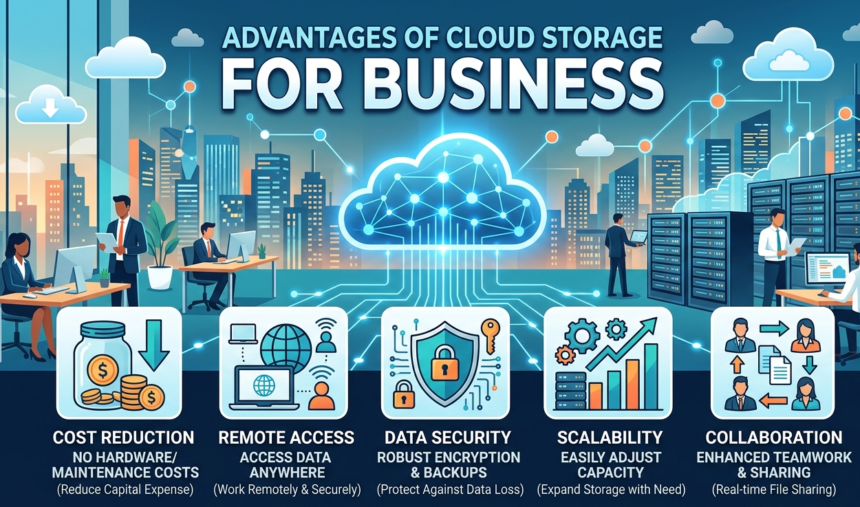
In conclusion, the advantages of cloud storage for businesses are manifold and significant. Cloud storage solutions offer enhanced data security, ensuring that sensitive information is protected against unauthorized access and potential breaches. The scalability of cloud storage allows organizations to adjust their storage needs efficiently, accommodating growth without the need for extensive physical infrastructure investment. Furthermore, the accessibility provided by cloud storage facilitates remote work and collaboration, enabling teams to share and access files from anywhere with an internet connection.
Additionally, the cost-effectiveness of cloud storage can lead to substantial savings for businesses. By minimizing the need for on-premises hardware and associated maintenance costs, organizations can allocate resources more efficiently. This is particularly advantageous for small to medium-sized enterprises that may have limited budgets. The backup and disaster recovery features inherent in many cloud storage services further enhance operational resilience, ensuring that data is safeguarded against unforeseen incidents.
Overall, integrating cloud storage as a key component of a business’s IT strategy not only aids in streamlining operations but also supports a forward-thinking approach to data management that is essential in today’s digital landscape. As businesses continue to evolve in response to technological advancements and changing market conditions, the importance of reliable, flexible, and efficient cloud storage cannot be overstated. Therefore, organizations are encouraged to explore and implement cloud storage solutions to leverage these benefits fully.