

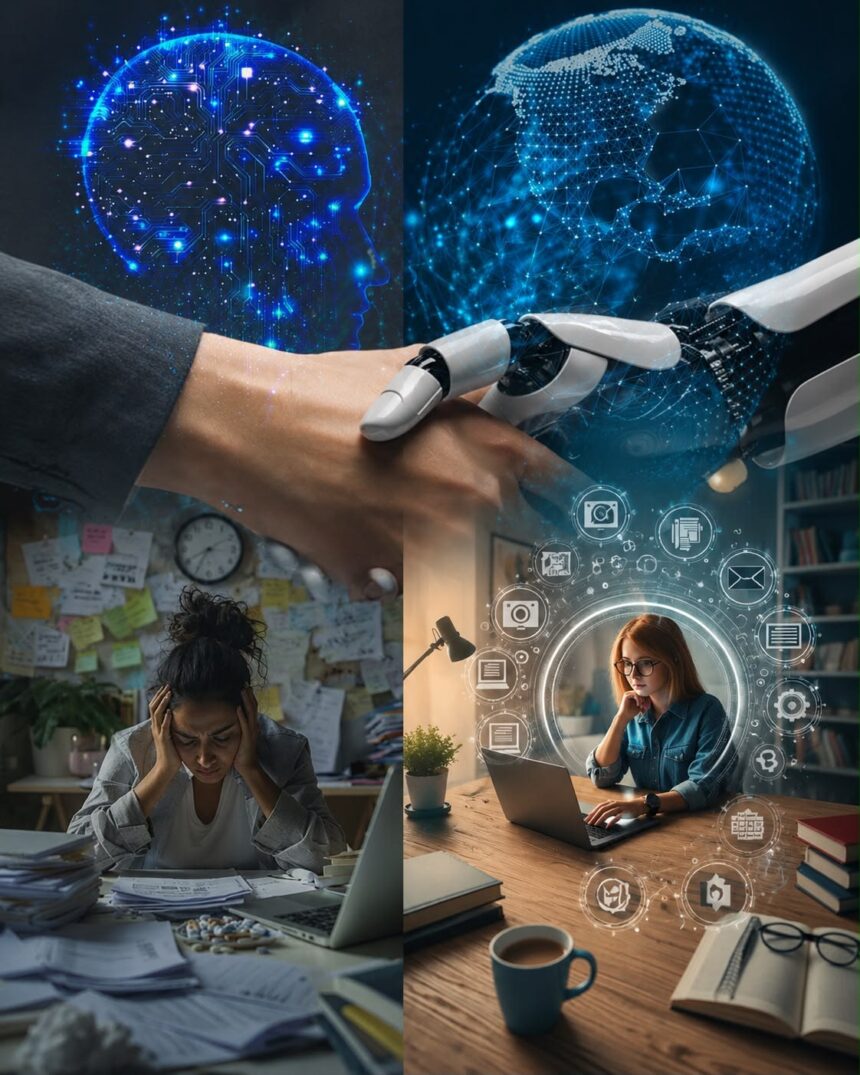
Understanding Artificial Intelligence and Its Evolution
Artificial Intelligence (AI) has emerged as a pivotal element in the technological landscape, redefining the capabilities of machines and their interaction with humans. To grasp the full impact of AI, it is essential to begin with its definition, which refers to the simulation of human intelligence in machines programmed to think like humans and mimic their actions. This definition encompasses a range of technologies, from basic algorithms to complex neural networks.
The historical development of AI can be traced back to the mid-20th century, when pioneers like Alan Turing and John McCarthy laid the groundwork for the field. Turing’s seminal 1950 paper, “Computing Machinery and Intelligence,” proposed the famous Turing Test, which evaluates a machine’s ability to exhibit intelligent behavior indistinguishable from that of a human. McCarthy, who is credited with coining the term “artificial intelligence” in 1956, organized the Dartmouth Conference, marking the official birth of AI as a research discipline.
Throughout the subsequent decades, AI has seen significant milestones that have propelled its evolution. The 1960s to 1970s represented a challenging phase known as the “AI winter,” a period marked by decreased funding and interest due to the limitations of existing technologies. However, breakthroughs in machine learning during the 1980s rejuvenated the field, leading to advances such as expert systems that demonstrated practical applications in various industries.
The turn of the 21st century marked a significant transformation in AI’s trajectory, fueled by the advent of big data and enhanced computing power. Concepts like deep learning, which mimics the neural networks of the human brain, have enabled impressive strides in areas like natural language processing and computer vision. Today, AI plays a crucial role in various sectors, including healthcare, finance, and transportation, continuously evolving and adapting to meet the demands of modern society.
The Role of AI in Modern Technology
Artificial Intelligence (AI) has become a cornerstone of contemporary technological advancements, functioning as a catalyst for innovation across various sectors. The integration of AI into modern technology spans diverse applications, prominently including machine learning, natural language processing (NLP), and automation. Each of these domains leverages AI to enhance user experiences and drive efficiencies, fundamentally changing how businesses operate and individuals interact with technology.
Machine learning, a subset of AI, allows systems to learn from data and improve over time without explicit programming. This capability has led to advancements in predictive analytics, where algorithms can forecast outcomes based on historical data. For instance, in the retail sector, machine learning algorithms analyze consumer behavior to optimize stock levels and personalize marketing strategies, thereby improving sales efficiency and customer satisfaction.
Another significant application of AI is found in natural language processing. NLP enables machines to understand and respond to human language in a way that is both meaningful and contextually relevant. This technology is pivotal for developing virtual assistants like Siri and Alexa, which facilitate seamless communication and access to information for users. By interpreting user inquiries and providing relevant responses, NLP enhances the overall experience, making technology more intuitive.
Automation is also profoundly influenced by AI, transforming traditional workflows across industries such as manufacturing, logistics, and finance. Through intelligent automation, processes that were once labor-intensive can now be completed with remarkable speed and precision, leading to increased productivity. As AI systems take on routine tasks, human workers can focus on more strategic responsibilities, thereby fostering innovation within organizations.
In summary, AI’s integration into modern technology not only enriches user interactions but also streamlines operations across various fields. By harnessing the potential of machine learning, natural language processing, and automation, organizations can achieve greater efficiency and enhance their service offerings, leading to a more interconnected and technologically advanced society.
Challenges and Ethical Implications of AI Technology
The rapid integration of artificial intelligence (AI) into various aspects of daily life and industry poses significant challenges that warrant thorough examination. One of the foremost concerns is data privacy. With the accumulation of vast amounts of personal data to train AI systems, the potential for misuse or unauthorized access becomes a pressing issue. This raises questions about how organizations collect, store, and utilize personal information, necessitating stricter regulations and transparent practices to safeguard user privacy.
Another critical challenge associated with AI technology is job displacement. As automation and intelligent systems become more prevalent, many fear that numerous jobs will be rendered obsolete. This concern is particularly acute in sectors such as manufacturing and customer service, where AI can perform tasks more efficiently than human workers. Consequently, there is an urgent need for strategies that address reskilling and upskilling of the workforce, ensuring that individuals are equipped to thrive in an AI-driven economy.
Ethical considerations also play a vital role in the conversation surrounding AI. Decision-making processes implemented by AI systems can inadvertently reflect biases present in the training data, leading to outcomes that adversely affect certain groups. This calls for rigorous ethical standards in the development of AI to ensure fairness and equity. Developers must prioritize the creation of algorithms that are transparent, responsible, and inclusive, thereby promoting trust in AI technologies.
In conclusion, the challenges associated with artificial intelligence encompass data privacy concerns, job displacement fears, and ethical implications in decision-making. Addressing these challenges through responsible AI development is crucial for maximizing the benefits of AI while minimizing its risks.
The Future of AI and Technology Synergy
The intersection of artificial intelligence (AI) and technology is characterized by rapid growth and continual evolution. As we look to the future, several predictions can be made concerning how AI will catalyze further advancements in technology across various sectors.
One notable area likely to see profound changes is healthcare. AI technology is already being utilized in diagnostic tools, personalized medicine, and patient management systems. Future innovations may include more sophisticated algorithms capable of analyzing vast datasets to predict patient outcomes and automate routine tasks, thereby enhancing the efficiency of healthcare professionals. The integration of AI in telemedicine is expected to grow, allowing for more accessible healthcare solutions around the globe.
In the realm of education, AI’s potential impact is equally significant. Future educational technologies will likely harness AI to provide tailored learning experiences for students. This could include intelligent tutoring systems that adapt to individual learning styles and paces, as well as the automation of administrative tasks within educational institutions, allowing educators to focus more on teaching rather than on paperwork.
Additionally, the manufacturing sector is expected to witness remarkable transformations due to AI advancements. The rise of smart factories, utilizing AI-driven robotics and machine learning, will enable greater efficiency, reduced waste, and enhanced supply chain management. Automation powered by AI can optimize production schedules and improve quality control, leading to cost savings and a more agile manufacturing environment.
Moreover, AI is anticipated to play a significant role in shaping the future of transportation. With the development of autonomous vehicles and intelligent traffic management systems, AI could lead to safer and more efficient transportation networks in urban areas, reducing congestion and minimizing accidents.
As these examples illustrate, the future synergy between AI and technology holds promise for extraordinary innovations. Continuous research and development will be essential in realizing this potential, paving the way for transformative effects across multiple domains in the years to come. In conclusion, the ongoing evolution of AI will likely lead to a landscape where technology is intricately interwoven with intelligent systems, reshaping our world in unprecedented ways.