
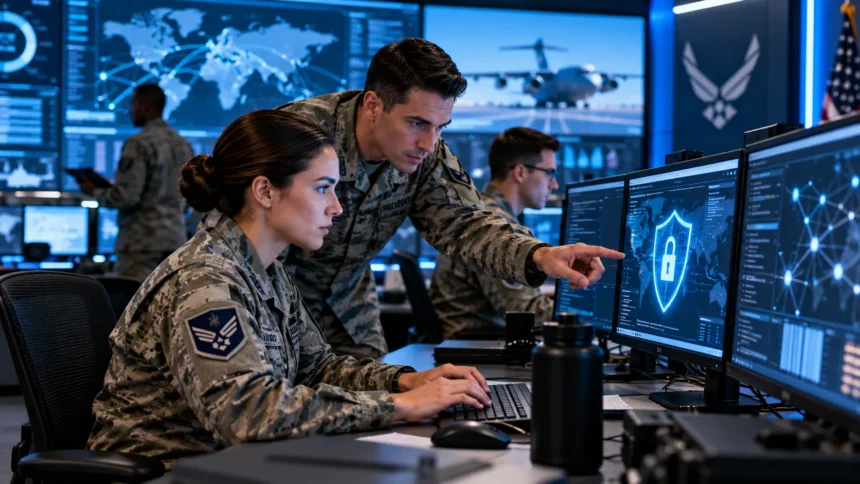
Cybersecurity plays an essential role in modern military operations because defense organizations depend on digital networks, communication systems, and advanced technologies. The United States Air Force uses cybersecurity to protect sensitive information, maintain secure communications, and support operational readiness. Understanding what cybersecurity in the Air Force means helps explain how digital protection contributes to national security and military effectiveness.
Modern Air Force operations depend on interconnected systems that support aircraft maintenance, logistics, intelligence analysis, communication, and mission coordination. These technologies improve efficiency but also introduce risks associated with unauthorized access, malicious software, and digital disruptions. Cybersecurity professionals work to reduce these threats while maintaining the reliability of important information systems.
What Is Cybersecurity in the Air Force?
Cybersecurity in the Air Force refers to the policies, technologies, personnel, and procedures used to protect military information systems from cyber threats. It focuses on maintaining the confidentiality, integrity, and availability of digital information and essential networks. These protections help support communication, operational coordination, and the secure functioning of systems used across the organization.
Air Force cybersecurity includes network protection, information assurance, vulnerability management, incident response, and secure system administration. Cyber professionals monitor digital environments, identify suspicious activity, and help resolve security weaknesses. Their responsibilities often involve collaboration with intelligence specialists, technical support teams, and operational personnel to maintain reliable information services.
The Air Force also conducts broader cyberspace operations as part of its military responsibilities. Cybersecurity focuses on protecting authorized systems and information, while cyberspace operations can include additional activities governed by military authorities. Understanding this distinction helps explain why cybersecurity is both a specialized technical profession and an important element of military readiness.
Why Is Cybersecurity Important in the Air Force?
Cybersecurity is important because military organizations rely on secure information systems to coordinate activities and communicate effectively. Unauthorized access or major network disruptions can interfere with administrative functions, operational planning, and essential support services. Maintaining strong security controls helps reduce these risks while ensuring that authorized personnel can access the information required for their responsibilities.
Protecting sensitive information is another major cybersecurity priority within the Air Force. Military networks may contain confidential personnel records, operational data, technical documentation, and other protected information. Security measures help prevent unauthorized disclosure, inappropriate modification, and accidental exposure of information that could affect individuals or organizational activities.
Cybersecurity also contributes to operational resilience by helping military systems remain dependable during unexpected disruptions. Effective monitoring, incident response, and recovery planning support the restoration of important services when problems occur. As the Air Force continues adopting digital technologies, maintaining secure and reliable information infrastructure becomes increasingly important for everyday operations.
What Does an Air Force Cybersecurity Specialist Do?
An Air Force cybersecurity specialist helps protect military computers, networks, and information systems against unauthorized access and other security risks. Depending on the assigned specialty, responsibilities may include monitoring network activity, reviewing security alerts, and maintaining approved protective technologies. These tasks require technical knowledge, careful judgment, and consistent attention to information security procedures.
Cybersecurity personnel also help identify vulnerabilities and coordinate appropriate corrective actions. They may work with system administrators to maintain secure configurations, support authorized assessments, and document security concerns. When unusual activities are detected, specialists follow established reporting and response procedures to help protect affected systems and maintain organizational accountability.
Some cybersecurity positions emphasize technical operations, while others involve security policy, risk management, training, or leadership. Daily responsibilities depend on the individual’s qualifications, assigned unit, and mission requirements. Regardless of specialization, effective communication and teamwork remain essential because protecting complex networks requires cooperation across multiple professional disciplines.
Types of Cybersecurity Operations in the Air Force
Air Force cybersecurity activities include defensive network operations that help protect authorized digital infrastructure. These operations involve maintaining visibility into network conditions, identifying potential security incidents, and supporting appropriate responses. Defensive teams also contribute to system resilience by helping organizations understand risks and strengthen security practices across important information environments.
Cybersecurity support activities include account administration, technical maintenance, system configuration, and communication infrastructure management. These functions may not always involve responding directly to cyber threats, but they contribute significantly to maintaining secure operations. Reliable technical support helps reduce unnecessary vulnerabilities and ensures that protective systems operate as intended.
The Air Force also participates in joint cyberspace missions alongside other military organizations. The Sixteenth Air Force, also known as Air Forces Cyber, plays an important role in the service’s broader information warfare and cyberspace responsibilities. These activities operate under established military authorities and involve specialized personnel with different technical and operational responsibilities.
Common Cybersecurity Threats Faced by the Air Force
Military information systems can face threats similar to those affecting businesses and other large organizations. Phishing emails, malicious software, stolen credentials, and software vulnerabilities are examples of common cybersecurity concerns. Attackers may attempt to compromise accounts, obtain protected information, or interfere with the availability of important digital services.
Ransomware and other disruptive malware can also create significant operational challenges when they affect essential systems. Malicious software may interrupt services, damage data, or create difficulties for technical support teams. Strong security monitoring, reliable backups, and tested recovery procedures help organizations reduce the consequences of certain incidents and restore affected services appropriately.
Human mistakes and unauthorized insider activities represent additional information security risks. Employees may accidentally disclose information, mishandle sensitive documents, or use systems in ways that create vulnerabilities. Clear procedures, access restrictions, and regular awareness training help reduce avoidable mistakes while encouraging personnel to report suspicious activities promptly.
How Does the Air Force Protect Its Digital Networks?
Air Force network protection uses multiple security controls designed to reduce unauthorized access and limit the effects of cyber incidents. These measures may include firewalls, encryption, identity management, endpoint protection, and network monitoring systems. Combining different protective technologies creates layers of security that support the reliability of important military information services.
Access management is particularly important because not every user requires permission to view or modify every system. Security administrators apply authorization rules based on assigned responsibilities and operational needs. Multifactor authentication and carefully managed credentials provide additional protection by making it more difficult for unauthorized individuals to gain access through compromised passwords.
Continuous monitoring helps security personnel identify unusual activity and investigate possible problems. Technical teams also maintain approved software updates and review security configurations to reduce known vulnerabilities. When incidents occur, established procedures support containment, investigation, service restoration, and the improvement of protective measures without unnecessarily disrupting authorized operations.
Essential Skills Required for Air Force Cybersecurity
Technical knowledge is an important foundation for professionals interested in Air Force cybersecurity careers. Relevant subjects include computer networking, operating systems, information security principles, and secure system administration. Understanding how digital infrastructure operates helps specialists identify technical problems and communicate effectively with other professionals responsible for maintaining critical systems.
Analytical thinking and problem-solving skills are equally valuable because cybersecurity challenges often involve incomplete or changing information. Specialists need to recognize unusual patterns, assess potential consequences, and follow appropriate procedures. Attention to detail also matters when reviewing system configurations, documenting findings, or communicating concerns to supervisors and technical colleagues.
Communication, teamwork, and professional responsibility are essential qualities in military cybersecurity environments. Personnel may need to explain technical issues to individuals with different levels of expertise. Strong ethical judgment, confidentiality awareness, and a willingness to continue learning help cybersecurity professionals handle sensitive information and adapt to evolving technologies.
Air Force Cybersecurity Training and Education
Air Force cybersecurity training depends on whether an individual enters an enlisted specialty or an officer career field. Enlisted personnel generally complete basic military training followed by specialized technical instruction associated with their assigned role. Training may cover information systems, networking concepts, security practices, and the operational responsibilities relevant to their specialty.
Cyber-related technical training is offered through established military education programs, including programs associated with Keesler Air Force Base in Mississippi. Officer pathways have different educational and professional requirements, often involving relevant university qualifications and specialized military instruction. Exact course lengths, eligibility standards, and assignment opportunities can change according to current service requirements.
Professional development continues beyond initial technical education because cybersecurity technologies and threats evolve. Personnel may pursue additional qualifications, advanced training, or specialized responsibilities during their careers. Practical experience, structured learning, and responsible use of approved training environments help develop the knowledge necessary for maintaining secure information systems.
Air Force Cybersecurity Jobs and Career Opportunities
The Air Force offers several cyber-related career specialties involving information systems, communication networks, and cyberspace operations. Enlisted cyber system operations positions focus on supporting and maintaining essential technical infrastructure. Other career fields involve cybersecurity, network management, intelligence-related responsibilities, or specialized cyberspace activities depending on service needs.
Officer positions can involve planning, leadership, coordination, and oversight of cyber-related operations. These roles often require a relevant educational background and completion of applicable military training programs. Career opportunities vary by qualifications, assignment availability, security requirements, and whether a person serves on active duty, in the Air National Guard, or in the Air Force Reserve.
Military cybersecurity experience can also provide transferable knowledge for civilian technology careers. Skills involving network administration, security monitoring, risk management, and technical communication are relevant across many industries. However, civilian employers may require additional qualifications, certifications, or practical experience depending on the responsibilities associated with a particular position.
The Role of Artificial Intelligence in Air Force Cybersecurity
Artificial intelligence is becoming increasingly relevant to cybersecurity because large networks generate substantial amounts of technical information. AI-assisted tools can help analyze activity, identify unusual patterns, and prioritize potential security concerns. These capabilities may support cybersecurity personnel by making certain monitoring and investigation processes more efficient.
Machine learning can also contribute to identifying behavior that differs from established patterns within digital environments. However, automated systems can generate inaccurate alerts or overlook threats that do not match expected characteristics. Human oversight remains important for interpreting findings, confirming security concerns, and making decisions that affect critical services.
The use of artificial intelligence also introduces new security and governance challenges. Organizations must consider data protection, system reliability, accountability, and the possibility of inaccurate automated outputs. Responsible implementation requires careful testing, appropriate access controls, and ongoing evaluation so that AI supports cybersecurity objectives without creating unnecessary additional risks.
Challenges of Maintaining Cybersecurity in the Air Force
One major challenge involves protecting complex digital environments containing different technologies, devices, and information systems. Large organizations may operate legacy infrastructure alongside modern cloud platforms and specialized technical equipment. Maintaining consistent security across these environments requires careful coordination, reliable policies, and ongoing investment in technical expertise.
Cyber threats also change as attackers develop new methods of exploiting software weaknesses or manipulating users. Security teams must remain informed about emerging risks while managing routine operational responsibilities. Balancing necessary security controls with the availability of essential services can be challenging, particularly when systems must support demanding organizational requirements.
Another challenge involves maintaining a workforce with the knowledge needed to manage increasingly sophisticated technologies. Cybersecurity professionals require continuing education and opportunities to develop specialized skills. Effective leadership, appropriate resources, and collaboration with trusted technology partners can help organizations address these challenges while maintaining strong security standards.
The Future of Cybersecurity in the Air Force
The future of Air Force cybersecurity will likely involve greater emphasis on automation, modern identity management, and improved protection for interconnected systems. Technologies such as artificial intelligence and advanced security analytics may support faster recognition of suspicious activity. However, these tools will still require trained personnel, suitable governance, and careful operational evaluation.
Zero-trust security principles are also influencing how organizations approach network protection. This model emphasizes verifying access requests and limiting permissions rather than automatically trusting users or devices based on network location. Applying appropriate identity controls, continuous evaluation, and system segmentation can help reduce unnecessary exposure within complicated digital environments.
Cybersecurity will remain important as the Air Force continues modernizing communication systems, technical infrastructure, and information management capabilities. Protecting these investments requires adaptable security strategies and continued professional development. Organizations that emphasize resilience, responsible innovation, and effective coordination will be better prepared to manage evolving digital security challenges.
Conclusion
Cybersecurity in the Air Force involves protecting military networks, sensitive information, communication systems, and essential digital infrastructure. Its purpose is to reduce cyber risks while helping authorized personnel maintain access to dependable technology. Security specialists contribute through network monitoring, technical maintenance, incident response, and the implementation of approved protective measures.
Air Force cybersecurity careers require a combination of technical knowledge, analytical thinking, communication skills, and professional responsibility. Training opportunities vary across enlisted and officer pathways, while continuous learning remains important throughout a cybersecurity career. Understanding security fundamentals can help individuals explore professional opportunities involving military technology and information protection.
As digital technologies continue evolving, cybersecurity will remain a critical element of Air Force readiness and organizational resilience. Artificial intelligence, improved authentication, and modern security architectures offer opportunities to strengthen protection. By combining skilled personnel with appropriate technologies and policies, the Air Force can support more secure and reliable digital operations.
Frequently Asked Questions (FAQs)
What is cybersecurity in the Air Force in simple words?
Cybersecurity in the Air Force means protecting military computers, networks, communication systems, and sensitive information from digital threats. It helps maintain secure operations, prevent unauthorized access, and support reliable military technology.
What does an Air Force cybersecurity specialist do?
An Air Force cybersecurity specialist helps monitor networks, maintain protective systems, identify security concerns, and support incident response. Exact responsibilities depend on the assigned specialty, qualifications, and organizational requirements.
Do you need a college degree for Air Force cybersecurity?
Not every enlisted cyber-related position requires a college degree. Officer positions generally have additional educational requirements, while all applicants must meet applicable military eligibility and specialized training standards.
Is cybersecurity a good career in the Air Force?
Cybersecurity can be a rewarding field for individuals interested in technology, problem-solving, and information protection. Military experience may also develop transferable skills relevant to civilian information technology and cybersecurity careers.
What skills are important for Air Force cybersecurity?
Important skills include computer networking, information security, analytical thinking, technical communication, and problem-solving. Attention to detail, professional responsibility, and willingness to continue learning are also valuable for cybersecurity personnel.