
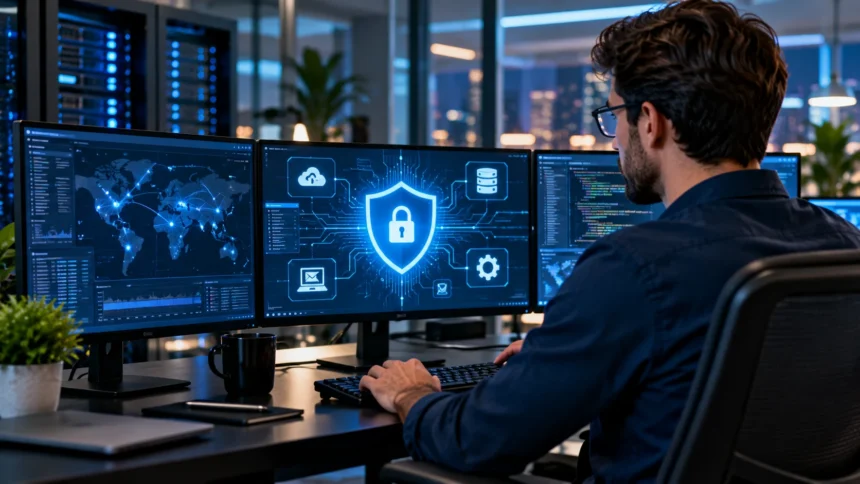
Cybersecurity consists of the technologies, processes, policies, and practices used to protect digital systems from unauthorized access, cyberattacks, data breaches, and other security threats. As individuals and organizations increasingly depend on computers, networks, cloud services, and connected devices, protecting digital information has become essential. Cybersecurity helps maintain the confidentiality, integrity, and availability of important information while supporting reliable technology operations.
Understanding what cybersecurity consists of can help beginners, students, business owners, and technology professionals recognize how different security measures work together. Cybersecurity involves much more than installing antivirus software or creating strong passwords. This guide explains the major components of cybersecurity, different security domains, common cyber threats, protective technologies, and the responsibilities involved in maintaining secure digital environments.
What Is Cybersecurity and Why Is It Important?
Cybersecurity is the practice of protecting computer systems, networks, applications, devices, and information against digital threats. These threats may involve unauthorized access, malicious software, information theft, or disruptions to essential services. Effective cybersecurity combines technical safeguards with organizational policies, employee awareness, and continuous monitoring to reduce security risks.
Cybersecurity is important because modern businesses rely heavily on digital platforms to communicate, store information, and manage daily operations. A successful cyberattack can interrupt services, expose confidential information, and create financial or reputational damage. Organizations therefore need suitable security measures to protect their assets while maintaining reliable access for authorized users.
Individuals also benefit from cybersecurity because personal devices and online accounts contain sensitive information. Email accounts, online banking services, social media profiles, and cloud storage platforms may become targets for cybercriminals. Understanding basic cybersecurity practices helps users recognize potential threats, protect personal information, and make safer decisions when using digital technology.
What Are the Main Components of Cybersecurity?
Cybersecurity consists of several interconnected areas that protect different parts of an organization’s digital environment. These commonly include network security, application security, endpoint security, cloud security, data security, and identity management. Each area addresses particular risks, but effective protection requires these components to work together rather than operate independently.
Security governance, risk management, monitoring, and incident response are equally important cybersecurity components. Governance establishes responsibilities and expectations, while risk management helps organizations identify and prioritize potential threats. Monitoring detects suspicious activity, and incident response provides a structured approach for investigating security events and restoring affected systems.
Human behavior also plays a significant role in cybersecurity effectiveness. Employees, administrators, developers, and everyday technology users make decisions that influence organizational security. Security awareness training, clear procedures, and appropriate access restrictions help reduce avoidable mistakes while strengthening the technical safeguards protecting systems and information.
Network Security and Its Role in Cybersecurity
Network security protects the infrastructure used to connect computers, servers, applications, and other digital devices. Its main purpose is to prevent unauthorized access, reduce exposure to malicious activity, and maintain dependable communication between systems. Organizations use multiple network security measures to protect both internal environments and connections to external services.
Common network security technologies include firewalls, intrusion detection systems, intrusion prevention systems, and secure network segmentation. Firewalls control traffic according to configured security rules, while detection technologies identify potentially suspicious activity. Segmentation separates selected systems or networks, helping limit unnecessary access and reduce the potential impact of security incidents.
Network security also involves monitoring traffic, maintaining secure configurations, and updating networking equipment. Wireless networks require appropriate authentication and encryption to reduce unauthorized access risks. Combining these practices with regular reviews helps organizations maintain visibility over connected systems and respond more effectively when unusual network behavior occurs.
Application Security and Secure Software Development
Application security focuses on protecting software from vulnerabilities, unauthorized access, and malicious activity. Websites, mobile applications, business platforms, and internal systems may contain weaknesses that attackers attempt to exploit. Security measures throughout the software development lifecycle help organizations identify problems early and reduce risks before applications reach users.
Secure software development includes careful design, input validation, access controls, dependency management, and security testing. Developers should consider potential vulnerabilities when writing code and integrating external software components. Activities such as code reviews and authorized security assessments help reveal weaknesses that might otherwise remain unnoticed until an application is deployed.
Application security continues after software becomes publicly available or enters regular business use. Updates, vulnerability management, configuration reviews, and monitoring are necessary because new weaknesses may emerge over time. Organizations that maintain secure development and maintenance practices are better positioned to protect application functionality and the information processed by their systems.
Endpoint Security for Computers and Mobile Devices
Endpoint security protects individual devices that connect to organizational networks or access digital information. These endpoints include desktop computers, laptops, smartphones, tablets, and certain connected devices. Because users interact with these systems regularly, endpoints can become entry points for malware, credential theft, and other security problems.
Organizations commonly use endpoint protection platforms, device management solutions, and endpoint detection and response technologies. These tools help identify suspicious activity, enforce security settings, and support the investigation of potential threats. Device encryption, software updates, and appropriate authentication measures provide additional protection against unauthorized access and information exposure.
Endpoint security also depends on responsible device management and user behavior. Installing untrusted applications, ignoring updates, or using poorly protected devices can increase risk. Clear device policies and regular maintenance help organizations protect computers and mobile equipment while supporting employees who work remotely or access information from different locations.
Cloud Security and Protecting Cloud-Based Systems
Cloud security involves protecting applications, infrastructure, workloads, and information hosted through cloud computing services. Organizations increasingly use cloud platforms for storage, collaboration, software delivery, and business operations. These environments introduce security responsibilities that must be understood alongside the flexibility and scalability provided by cloud technology.
Common cloud security controls include identity management, encryption, access restrictions, configuration monitoring, and logging. Cloud customers and service providers typically share security responsibilities, although the division depends on the service model. Understanding which protections belong to each party helps organizations avoid gaps that could expose sensitive information or important systems.
Cloud environments require continuous attention because configurations, user permissions, and deployed services frequently change. Misconfigured storage, unnecessary access privileges, and poorly managed credentials can create preventable security risks. Regular reviews, automated monitoring, and suitable cloud governance help organizations maintain more secure environments as their technology requirements evolve.
Information Security and Data Protection
Information security focuses on protecting valuable information from unauthorized disclosure, alteration, destruction, and disruption. While cybersecurity emphasizes digital environments, information security also includes broader processes for handling information securely. Organizations must understand what information they possess, where it is stored, and who should be permitted to access it.
Data protection commonly involves encryption, access controls, classification policies, backups, and appropriate retention practices. Encryption helps prevent unauthorized parties from easily reading protected information, while access controls limit who can retrieve or modify it. Data classification helps organizations apply safeguards according to the sensitivity and importance of different information categories.
Information security also includes protecting data throughout its lifecycle, from collection and storage to sharing and disposal. Organizations should limit unnecessary data collection and establish clear handling procedures. These practices support confidentiality, reduce avoidable exposure, and help businesses meet applicable privacy and information protection obligations.
Identity and Access Management in Cybersecurity
Identity and access management, commonly called IAM, controls how users and systems authenticate and access digital resources. Its purpose is to ensure that authorized identities receive appropriate permissions while preventing unnecessary or unauthorized access. IAM is particularly important in organizations with multiple employees, applications, devices, and cloud services.
Common identity security measures include strong authentication, multifactor authentication, role-based access control, and account lifecycle management. Multifactor authentication requires additional verification beyond a single password, providing stronger protection against compromised credentials. Role-based permissions help organizations assign access according to responsibilities rather than granting every user unrestricted privileges.
Effective IAM also involves regularly reviewing permissions and removing access when it is no longer required. Accounts belonging to former employees, unused services, or outdated systems can introduce unnecessary risks. Applying least-privilege principles helps organizations limit exposure while allowing employees and applications to perform their legitimate tasks.
Common Cybersecurity Threats and Attacks
Cybersecurity threats include malicious activities that can compromise systems, steal information, or interrupt digital operations. Common examples include phishing, ransomware, spyware, credential theft, and denial-of-service attacks. Understanding these threats helps organizations identify potential weaknesses and select appropriate protective measures based on the risks they face.
Phishing attacks attempt to deceive users into revealing sensitive information or interacting with malicious content. Ransomware can make important information or systems inaccessible, creating significant operational difficulties. Credential-based attacks target authentication information, while denial-of-service attacks attempt to overwhelm services and prevent legitimate users from accessing them.
Cyber threats constantly evolve as technologies and attacker techniques change. Organizations should therefore avoid relying on a single security product or defensive measure. Combining employee awareness, software updates, secure configurations, monitoring, and access controls provides broader protection against different threats and reduces the likelihood of successful incidents.
Cybersecurity Risk Management and Security Policies
Cybersecurity risk management involves identifying potential threats, evaluating vulnerabilities, and determining which security improvements deserve priority. Organizations cannot eliminate every possible risk, so they must make informed decisions about protecting important assets. This process helps allocate security resources effectively while supporting business operations and long-term organizational goals.
Risk assessments consider the likelihood of security incidents and the potential consequences for information, services, and infrastructure. Security professionals may examine outdated software, excessive user permissions, weak configurations, and insufficient monitoring. Understanding these weaknesses allows organizations to choose appropriate safeguards and determine whether additional controls or operational changes are necessary.
Security policies establish expectations for handling information, managing accounts, using devices, and responding to incidents. Clear policies help employees understand their responsibilities while promoting consistent security practices. Regular reviews are important because business requirements, technologies, and regulatory obligations can change, making older security procedures less effective.
Security Monitoring and Incident Response
Security monitoring helps organizations detect unusual activity and potential threats across their digital environments. Security teams examine information from networks, devices, servers, and applications to identify events that require attention. Continuous visibility makes it easier to recognize suspicious behavior and investigate incidents before they cause more extensive disruption.
Security information and event management systems, commonly called SIEM platforms, collect and analyze security-related information from different sources. Security operations centers use monitoring technologies, investigation procedures, and threat intelligence to prioritize alerts. These capabilities help analysts distinguish meaningful security concerns from ordinary system activity and coordinate appropriate responses.
Incident response is the structured process of managing cybersecurity incidents after they are identified. It generally involves preparation, detection, analysis, containment, recovery, and reviewing lessons learned. A clear incident response plan helps organizations coordinate responsibilities, restore affected services, preserve relevant evidence, and improve security measures after an incident.
The Role of People, Processes, and Technology in Cybersecurity
Effective cybersecurity depends on people, processes, and technology working together. Security tools can identify threats and enforce controls, but employees and administrators must configure and use them responsibly. Similarly, written procedures provide little protection when organizations do not communicate expectations or consistently follow established security practices.
People contribute through security awareness, responsible decision-making, and specialized technical expertise. Processes provide structured methods for managing risks, approving access, maintaining systems, and responding to incidents. Technology supports these efforts through authentication systems, encryption, security monitoring, protective software, and other controls designed to reduce digital threats.
Organizations should regularly evaluate how these three elements support one another. Training alone cannot compensate for insecure systems, while advanced software cannot eliminate every human mistake. Combining practical education, clear responsibilities, suitable security technologies, and continuous improvement creates a more balanced and sustainable cybersecurity approach.
Conclusion
Cybersecurity consists of multiple connected practices that protect digital information, networks, devices, applications, and cloud environments. Network security, endpoint protection, application security, identity management, and data protection address different security needs. Together, these components help organizations maintain confidentiality, integrity, and availability while reducing exposure to common cyber threats.
Effective cybersecurity also requires risk assessments, security policies, employee awareness, monitoring, and incident response planning. Technology provides valuable protection, but human decisions and organizational procedures remain equally important. Maintaining a secure environment requires continuous attention because business operations, digital systems, and potential threats change over time.
Understanding the main components of cybersecurity provides a useful foundation for anyone interested in digital safety or information technology careers. Whether protecting personal accounts or managing organizational infrastructure, the same principles of prevention, detection, response, and improvement remain important. A well-rounded cybersecurity strategy combines appropriate safeguards with responsible practices to support safer digital operations.
Frequently Asked Questions (FAQs)
What are the main components of cybersecurity?
The main components include network security, application security, endpoint security, cloud security, data protection, and identity management. Risk management, security monitoring, and incident response also support comprehensive cybersecurity protection.
What are the three basic principles of cybersecurity?
The three fundamental principles are confidentiality, integrity, and availability, commonly called the CIA triad. They focus on preventing unauthorized disclosure, maintaining accurate information, and ensuring authorized access to systems and data.
What types of threats does cybersecurity protect against?
Cybersecurity protects against threats such as phishing, ransomware, malware, credential theft, unauthorized access, and denial-of-service attacks. Different security technologies and procedures help prevent, detect, and respond to these risks.
Is cybersecurity only about protecting computers?
No, cybersecurity also protects networks, applications, mobile devices, cloud systems, digital identities, and sensitive information. It includes employee training, security policies, risk management, and incident response procedures.
What skills are needed to work in cybersecurity?
Cybersecurity professionals benefit from networking knowledge, operating system fundamentals, analytical thinking, and understanding security principles. Communication, problem-solving, and familiarity with security technologies are also valuable for different cybersecurity roles.