

Understanding the Entrepreneurial Mindset
The entrepreneurial mindset is a distinctive blend of traits that significantly distinguish successful technology entrepreneurs from their peers. This mindset encompasses an amalgamation of resilience, adaptability, and a penchant for calculated risk-taking. Resilience, in this context, refers to the ability to endure setbacks and challenges that are inherently part of the entrepreneurial journey. In the tech industry, where innovation drives success, the path often involves multiple failures before achieving a breakthrough. A resilient entrepreneur is one who does not view failure as a final destination but rather as a critical learning opportunity that fosters growth.
Adaptability is another cornerstone of the entrepreneurial mindset, especially within the rapidly evolving tech landscape. Successful entrepreneurs possess the flexibility to pivot their strategies in response to market changes, customer feedback, and emerging technologies. This characteristic not only enhances their problem-solving capabilities but also positions them to capitalize on new trends and opportunities. In a realm characterized by uncertainty, those who can adjust their approach and embrace change are more likely to thrive.
Moreover, the willingness to take calculated risks is essential for technology entrepreneurs. This does not imply reckless decision-making; rather, it involves assessing potential risks against rewards to make informed choices. Entrepreneurs who meticulously evaluate their options and weigh the implications of their decisions are better equipped to launch innovative products and services that meet market needs. This approach can lead to significant breakthroughs that define the future of technology. By blending resilience, adaptability, and strategic risk-taking, entrepreneurs not only navigate the complexities of the tech industry but also pave the way for lasting success.
Identifying and Validating Your Idea
For technology entrepreneurs, the journey to success begins with a viable idea. Innovation is the hallmark of entrepreneurship, but it is not sufficient to merely possess an original concept. Validating the idea is equally crucial to ensure there is a market demand. This process involves careful research and strategic inquiry to gather insights about potential customers and competitors.
Market research serves as a foundation for assessing whether your idea resonates with an intended audience. Surveys can be an effective tool in this regard, enabling entrepreneurs to gather quantitative and qualitative data. By crafting well-thought-out questions, you can uncover the preferences, challenges, and pain points of your target market. This knowledge will help you shape your product or service to meet their needs more effectively.
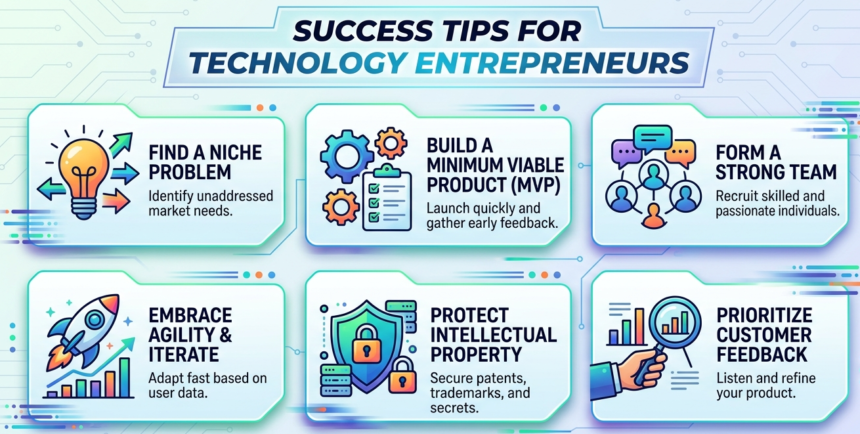
Additionally, employing a Minimum Viable Product (MVP) approach allows technology entrepreneurs to test their ideas with real users. An MVP is a stripped-down version of your product that encompasses the core features necessary to meet basic user requirements. By releasing an MVP, you can obtain immediate feedback which will illuminate areas for improvement and potential validation of your concept.
User interviews represent another valuable method for validating your idea. Engaging with potential customers directly can provide insights that surveys alone may not capture. Conversations with users can reveal deeper emotional responses and experiences related to your concept, which is instrumental in refining your business model.
Ultimately, leveraging these strategies—surveys, MVP testing, and user interviews—will enhance your ability to identify and validate your entrepreneurial idea, ensuring it is better positioned for acceptance in a competitive marketplace.
Building a Strong Network of Mentors and Peers
For technology entrepreneurs, establishing a robust network of mentors and peers is crucial to navigating the challenges of the business landscape. This network serves as an invaluable resource, offering insights and perspectives that can significantly influence an entrepreneur’s journey. Engaging with seasoned professionals in the tech industry provides access to a wealth of experience and knowledge, as mentors can share lessons learned from their own successes and failures. By fostering these relationships, entrepreneurs can avoid common pitfalls and make informed decisions.
Moreover, connecting with fellow entrepreneurs creates opportunities for collaboration and innovation. In the fast-paced technology sector, sharing ideas and discussing industry trends with peers can ignite creative solutions and inspire new ventures. These connections may lead to partnerships or even collaborations on projects, which can amplify the impact and reach of a technology startup. Such alliances often lead to enhanced credibility and market visibility, ultimately positioning the entrepreneur for success.
Attending industry events, conferences, and networking meetups can be instrumental in building these relationships. Actively participating in discussions, panel talks, or workshops not only showcases one’s expertise but also allows for the formation of genuine connections with other industry players. Additionally, leveraging online platforms like LinkedIn can further expand networking opportunities, enabling entrepreneurs to engage with professionals beyond their immediate geographic area.
In conclusion, cultivating a strong network of mentors and peers is essential for technology entrepreneurs. These relationships provide support during difficult times, contribute to personal and professional growth, and can ultimately pave the way for collaborations that enhance business potential. Building a network takes time and effort, but the rewards can significantly outweigh the costs when executed thoughtfully and purposefully.
Mastering the Art of Pivoting
In the rapidly evolving landscape of the technology sector, flexibility is a cornerstone for success. Entrepreneurs often encounter unforeseen challenges that can disrupt their initial plans. Therefore, mastering the art of pivoting is essential for adapting to changing circumstances. A pivot refers to a fundamental shift in business strategy to test a new approach, thereby allowing entrepreneurs to seize new opportunities or respond to setbacks effectively.
Recognizing when a pivot is necessary requires keen observation and an analytical mindset. Entrepreneurs should continuously assess their business environment, customer feedback, and market trends. By keeping an open line of communication with stakeholders, technology entrepreneurs can gather insights that indicate a need for change. Indicators such as declining sales, shifting consumer preferences, or increased competition can signal that a pivot may be required.
Once the decision to pivot is made, implementing the changes without losing momentum is critical. This involves crafting a clear, actionable plan that outlines the new direction and the steps needed to achieve it. Engaging the team in this process fosters a culture of innovation, making it easier to rally support for the pivot. Additionally, setting measurable goals can provide a roadmap to assess progress as adjustments are made. Entrepreneurs should not shy away from experimenting with different approaches, as this can result in valuable learning experiences that enhance their business acumen.
Ultimately, being adaptable and recognizing the necessity to pivot can significantly contribute to a technology entrepreneur’s long-term success. The willingness to embrace change and learn from challenges equips them to navigate the complexities of the tech industry, ensuring continued growth and relevance.
Assembling the Right Team
Building a successful technology startup begins with assembling the right team. A well-rounded team plays a crucial role in driving innovation and achieving business objectives. Identifying the right qualities in team members is essential. Look for individuals who exhibit strong problem-solving skills, adaptability, technical expertise, and a collaborative mindset. These traits ensure that the team can tackle challenges head-on while remaining flexible in a rapidly evolving technology landscape.
Diversity within a team is another critical factor in fostering creativity. A diverse team brings together different perspectives, ideas, and experiences, which can lead to innovative solutions. Including team members from varied backgrounds—whether in their education, cultural heritage, or professional experience—enhances the creative process and encourages out-of-the-box thinking. Emphasizing inclusivity can help create an environment where every voice is heard and valued.
Moreover, fostering a culture of creativity and innovation is paramount for any technology startup. Encourage open communication by creating channels where team members feel comfortable sharing their ideas without fear of criticism. Regular brainstorming sessions and feedback loops can help drive the creative process forward. It is also beneficial to promote a growth mindset, where team members are encouraged to learn from failures and seek continuous improvement. Implementing recognition programs for innovative contributions can further motivate team members to push the boundaries of conventional thinking.
In conclusion, assembling the right team goes beyond just filling roles; it involves selecting individuals who complement each other’s strengths and contribute to a shared vision. By prioritizing diversity, encouraging creativity, and fostering a supportive environment, technology entrepreneurs can significantly enhance their chances of success in an increasingly competitive landscape.
Funding Your Tech Startup
Securing funding is a critical aspect of launching a technology startup. Entrepreneurs have several options, each with its unique advantages and challenges. One of the primary methods is bootstrapping, which involves funding the startup through personal savings or revenue generated from early sales. This approach enables founders to retain full control over their business and financial decisions, but it may limit the speed of growth.
Another popular avenue is acquiring funding from angel investors. These individuals typically provide capital in exchange for equity in the company. To attract angel investors, entrepreneurs should prepare a compelling pitch that outlines their business model, market potential, and team capabilities. A strong value proposition is essential, as it illustrates why the investor’s funding can lead to substantial returns.
Venture capital (VC) is another significant funding source for tech startups. VCs invest pooled funds from various sources into companies with high growth potential. These firms typically look for startups that demonstrate a strong market fit, scalability, and a capable management team. To improve their chances with venture capitalists, entrepreneurs should conduct thorough market research and develop a robust business plan that clearly outlines how the funding will accelerate growth.
Crowdfunding has also emerged as a viable option for tech entrepreneurs, allowing them to raise small amounts of money from many individuals via online platforms. This method not only provides funding but also helps build an initial customer base and validate the product concept. Entrepreneurs should focus on creating engaging content that tells their story and showcases their product to stand out in a competitive crowdfunding environment.
When pitching to investors, whether they are angel investors, venture capitalists, or supporters of crowdfunding, it is crucial to focus on the problem being solved, the unique solution provided by the startup, and the potential for significant returns. A well-prepared pitch, combined with a solid understanding of the funding landscape, can significantly increase the likelihood of securing the necessary capital for a successful tech startup.
Importance of Continuous Learning and Adaptation
In the dynamic realm of technology, where advancements occur at an unprecedented pace, it is imperative for entrepreneurs to prioritize continuous learning and adaptation. Remaining informed about the latest technologies and industry trends is not merely beneficial; it is essential for sustainable success. Technology entrepreneurs must cultivate a mindset centered on lifelong learning, which enables them to stay relevant and competitive in a rapidly evolving landscape.
Engaging in professional development through workshops, online courses, and industry conferences is crucial. These learning opportunities provide insights into emerging technologies, best practices, and the changing needs of consumers. Moreover, they allow entrepreneurs to network with other professionals, fostering collaborations that can lead to innovative solutions. By attending such events, entrepreneurs not only enhance their knowledge but also gain access to valuable resources and mentors.
The advantages of continuous learning extend beyond just staying current; it also aids entrepreneurs in refining their business strategies. As technology evolves, so too do the methods for solving problems and meeting market demands. Regularly updating one’s skills can lead to improved decision-making and greater adaptability when faced with challenges. These qualities are vital for any tech entrepreneur aspiring to navigate the complexities of the industry.
Furthermore, embracing continuous education can help mitigate risks associated with technological disruption. Understanding shifts in consumer behavior and new innovations enables entrepreneurs to pivot their strategies as needed, ultimately ensuring longevity in the market. In an era where stagnation can lead to failure, adapting through knowledge acquisition and application becomes a key differentiator for successful technology entrepreneurs.
Creating a Sustainable Business Model
Developing a viable business model stands as a cornerstone for any technology entrepreneur seeking sustainable success. A comprehensive understanding of crucial elements such as revenue streams, cost structures, and value propositions can significantly enhance the ability to adapt in a dynamic market environment.
First and foremost, identifying multiple revenue streams is essential. Relying solely on one source can create vulnerability, especially in technology sectors that can experience rapid changes and shifts in consumer behavior. Entrepreneurs should explore diverse options such as subscription services, licensing, and consultancy. This diversification not only mitigates risk but also nourishes growth potential, providing stability in various market conditions.
Next, a clear evaluation of cost structures is vital. An entrepreneur must understand both fixed and variable costs to accurately forecast expenses and revenue. Regularly reviewing these costs can unveil opportunities for optimization. This scrutiny helps in streamlining processes and reallocating resources effectively, thus contributing to overall efficiency.
The value proposition is another critical component of a successful business model. It is essential to articulate what unique value the business delivers to its customers. This could include innovative technology solutions, user-centered designs, or exceptional support services. Understanding this proposition ensures that marketing and operational efforts are aligned with customer expectations, fostering loyalty and enhancing customer satisfaction.
Finally, the evolution of a business model over time necessitates continuous evaluation and iteration. Entrepreneurs should regularly assess their business strategies against market trends and consumer feedback. Utilizing performance metrics and seeking stakeholder input can inform necessary adjustments. This adaptability not only reinforces resilience within the business but also positions the venture for sustainable growth as it navigates the complexities of the technology landscape.
Setting Goals and Measuring Success
Goal setting is a fundamental aspect of entrepreneurship, especially in the technology sector, where rapid changes can easily alter the landscape of success. Establishing clear goals provides direction and motivation, ensuring that technology entrepreneurs remain focused on their vision amid competing priorities and distractions. The SMART criteria, which stands for Specific, Measurable, Achievable, Relevant, and Time-bound, is an effective framework used to formulate objectives that are structured and attainable.
Specific goals clearly outline what is to be achieved, reducing ambiguity. For instance, instead of stating “I want to increase website traffic,” a more specific goal would be, “I want to increase website traffic by 20% over the next three months.” Following specificity, measurability allows entrepreneurs to track their progress over time. By defining metrics, such as website visitor counts or sales figures, entrepreneurs can ascertain their advancement toward their targets.
Furthermore, goals should also be realistic and achievable. Setting overly ambitious goals may lead to frustration and diminished motivation if expectations are not met. Therefore, entrepreneurs must ensure that their goals are relevant to their overall business strategy and aligned with their long-term aspirations. Lastly, time-bound objectives help maintain accountability and urgency; deadlines compel action and prevent procrastination.
Utilizing various tools for measuring success is equally important. Analytics software, project management tools, and KPI dashboards can offer valuable insights into performance. Regular evaluations against the set goals enable entrepreneurs to identify areas that may require adjustment, ensuring they remain on track to achieve both personal and business development ambitions. By adopting a systematic approach to goal setting and performance measurement, technology entrepreneurs can enhance their chances of sustained success in an ever-evolving industry.