

Introduction to the Evolving Job Landscape
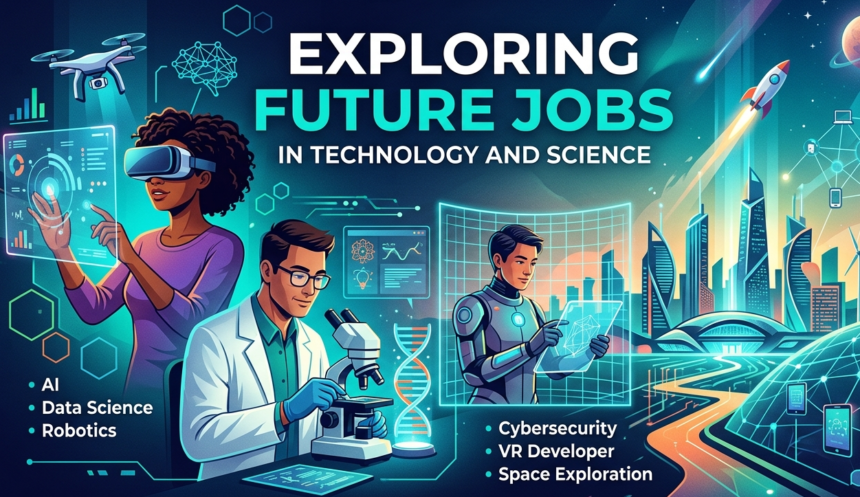
The job landscape in technology and science is undergoing a remarkable transformation, shaped by rapid advancements in various fields. As innovation accelerates, particularly in artificial intelligence, biotechnology, and data science, the demand for skilled professionals is evolving. These sectors are not only creating new opportunities but also redefining existing roles, necessitating a shift in how job seekers and educators approach career preparation.
Artificial intelligence has emerged as a primary driver of change, influencing industries ranging from healthcare to finance. With AI technologies becoming increasingly sophisticated, the need arises for professionals who can design, implement, and manage these systems. For instance, job titles like machine learning engineer and AI ethics consultant are becoming commonplace, indicating a shift towards specialized skill sets that were largely non-existent a decade ago.
Meanwhile, advancements in biotechnology are revolutionizing fields such as pharmaceuticals and agriculture. Innovations in gene editing, regenerative medicine, and personalized medicine are driving labor market demands for biotechnologists and bioinformatics specialists. The integration of these innovations signifies a robust growth trajectory for jobs that require interdisciplinary expertise, combining biology with data analytics and computational skills.
Data science, another cornerstone of the modern job market, continues to expand rapidly as organizations seek to harness vast amounts of information. Data analysts, data engineers, and business intelligence specialists are increasingly sought after, with companies realizing the potential of data-driven decision-making. This trend outlines the necessity for educational curricula to include data literacy and analytics, preparing future professionals to thrive in data-centric roles.
As we explore the emerging careers in technology and science, it becomes essential to recognize the shifting paradigms of education and workforce development. The evolving job landscape demands a proactive approach to skill acquisition, underscoring the importance of continuous learning and adaptability for those entering the workforce.
The Impact of Automation and AI on Job Roles
The rapid advancement of automation and artificial intelligence (AI) is significantly transforming job roles across various sectors. While these technologies offer increased efficiency and productivity, they also pose challenges, particularly concerning traditional job roles facing potential obsolescence. Tasks that once required human intervention, such as data entry or basic customer service, are increasingly being performed by automated systems. This shift raises concerns about job security for employees, as machines and algorithms take over functions previously handled by people.
However, the rise of automation and AI does not solely result in job losses; it also fuels the creation of new roles and opportunities. For instance, as businesses adopt AI technologies, there is a growing demand for data scientists and machine learning specialists who can develop and maintain these systems. Additionally, sectors such as healthcare are experiencing a surge in demand for professionals adept in utilizing AI for diagnostics and patient care management. This evolution underscores the necessity for a workforce that is adaptable and equipped with new skills.
Real-world examples abound, illustrating how companies are integrating AI into their operations. In manufacturing, robotic systems are performing repetitive manufacturing tasks, which reduces the need for human labor in certain roles but also leads to opportunities for workers to engage in more complex tasks, such as equipment maintenance and programming robotics. In the finance sector, algorithms are now tasked with fraud detection and credit scoring, allowing financial analysts to focus on strategic decision-making rather than routine assessments.
In conclusion, the interplay between automation and artificial intelligence presents both challenges and opportunities. As job roles evolve, it is essential for the workforce to embrace lifelong learning and adaptation to thrive in an technology-driven job market.
Emerging Job Titles in Technology
The ever-evolving landscape of technology is paving the way for numerous new job titles, each addressing unique challenges and opportunities in the sector. As we move deeper into the era of digital transformation, understanding these roles becomes crucial for aspiring professionals.
One prominent emerging job title is that of an AI Ethicist. This role centers around ensuring that artificial intelligence technologies are developed and deployed responsibly. AI ethicists evaluate the social implications of AI systems, address issues of bias, privacy, and transparency, and develop guidelines to uphold ethical standards in AI applications. The significance of this role is magnified in a world increasingly relying on AI for decision-making processes.
Another pivotal role is that of a Data Scientist. Data scientists are tasked with interpreting large volumes of data to extract meaningful insights that can inform strategic decisions. They employ statistical analysis, machine learning, and programming skills to build predictive models and solve complex problems. As businesses across various sectors continue to leverage data analytics for competitive advantage, the demand for proficient data scientists is expected to surge.
Moreover, the position of Cybersecurity Analyst is crucial in today’s technology-driven environment. Cybersecurity analysts are responsible for protecting an organization’s networks and data from potential threats and breaches. This involves monitoring security systems, analyzing vulnerabilities, and implementing preventive measures to safeguard sensitive information. Given the rise in cyber threats, this role will be increasingly significant in maintaining the integrity of technological infrastructure.
These emerging job titles underscore the necessity for professionals to adapt and acquire new skills in an ever-changing job market. As technology continues to progress, so too will the opportunities for specialists in these fields.
Exciting Careers in the Life Sciences
The life sciences sector is rapidly evolving, fostering a plethora of job opportunities that have the potential to transform healthcare. Among the most notable emerging positions are genetic counselors, bioinformatics technicians, and precision medicine researchers. Each of these roles plays a crucial part in advancing our understanding of human health and disease.
Genetic counselors are professionals who specialize in interpreting genetic test results, helping patients understand their genetic conditions and the implications for their health and treatment options. As genomic data becomes more integral to personalized medicine, the demand for skilled genetic counselors is expected to rise significantly. Their expertise in genetics is essential for offering informed decisions to patients, enabling tailored approaches to treatment.
Bioinformatics technicians, on the other hand, bridge the gap between biology and technology. They analyze complex biological data, using software tools to derive meaningful insights that aid in research and clinical applications. With the surge in genomic sequencing and data production, the role of bioinformatics technicians is increasingly vital in translating raw data into actionable health information.
Precision medicine researchers focus on creating personalized treatment plans based on an individual’s genetic makeup, lifestyle, and environment. By employing advanced research techniques, they aim to develop targeted therapies that improve patient outcomes. The skills necessary for this role often involve strong knowledge in biology, data analytics, and a thorough understanding of ethical considerations in research.
In these innovative fields, collaboration and continuous education are imperative for professionals seeking to keep pace with advancements. As the life sciences continue to expand, the potential impact of these careers on healthcare delivery and patient outcomes cannot be overstated. Embracing the interdisciplinary approach will enrich the skill sets of those who aspire to integrate their passions for science and technology.
The Role of Education and Lifelong Learning
As we navigate through the rapid advancements in technology and science, it is increasingly clear that the workforce must adapt to these changes through education and continuous skill development. The emergence of artificial intelligence, machine learning, and biotechnology demands that both current and future employees engage in ongoing training to remain relevant. Traditional education systems can provide foundational knowledge, yet the pace of technological evolution often outstrips these programs, leading many to seek alternative learning pathways.
Formal education programs, such as degrees in STEM fields, continue to play a critical role in preparing individuals for careers in technology and science. However, many workers may find that they need to supplement their education with courses focused on specific skills or technologies. This is where boot camps and online courses become invaluable, offering focused, practical training designed to quickly equip learners with in-demand skills. These alternative education models provide flexibility, allowing individuals to learn at their own pace while balancing personal and professional responsibilities.
Self-directed learning also emerges as an essential component of lifelong education. With a wealth of resources available online, professionals can take the initiative to fill knowledge gaps or explore new fields independently. This self-motivation to learn is crucial in a rapidly changing landscape, as the ability to adapt becomes a key asset for success in future jobs. Moreover, companies are increasingly recognizing the importance of investing in their employees’ learning by providing resources for continued education, thus fostering a culture of lifelong learning.
In conclusion, the interplay between education, skill development, and adaptability is pivotal in navigating future careers in technology and science. Workers must embrace various learning opportunities to thrive in an evolving job market, reinforcing the notion that education is a lifelong journey.
Soft Skills That Will Matter in Future Jobs
As technology continues to reshape industries and workplaces, the significance of soft skills is becoming increasingly apparent. While technical expertise is essential for success in science and technology careers, soft skills such as critical thinking, creativity, and emotional intelligence are equally critical for future job roles. These skills enhance collaboration, promote innovative solutions, and foster a positive work atmosphere.
Critical thinking, the ability to analyze information objectively and make reasoned judgments, stands out as an invaluable asset. In a field where data is abundant, professionals who can sift through complex data sets to derive meaningful insights will be in high demand. This skill not only aids in solving problems but also plays a vital role in anticipating potential challenges and formulating appropriate responses. As a result, practitioners in technology and science must hone their critical thinking abilities to make informed decisions.
Creativity, often viewed as a domain of artists, is an essential trait in science and technology fields as well. The ability to generate innovative ideas and think outside conventional boundaries can lead to groundbreaking advancements. In an era where adaptability is key, a creative approach allows individuals to devise unique solutions to emerging problems, thereby enhancing productivity and efficiency. Industry leaders are increasingly recognizing that fostering a culture of creativity among teams can drive substantial progress and competitive advantage.
Additionally, emotional intelligence, which encompasses awareness of one’s emotions and the ability to empathize with others, cannot be overlooked. In collaborative settings often found in tech and science industries, emotional intelligence contributes to effective communication and relationship-building. Professionals adept at navigating interpersonal dynamics can foster teamwork, resolve conflicts amicably, and enhance overall team performance.
In conclusion, while technical skills will remain essential in future roles within technology and science, soft skills such as critical thinking, creativity, and emotional intelligence will be paramount in shaping well-rounded, successful professionals who can thrive in an ever-evolving landscape.
The Importance of Diversity in STEM Careers
Diversity in the fields of science, technology, engineering, and mathematics (STEM) is of paramount importance for fostering innovation and progress. A diverse workforce brings together a wide array of perspectives, experiences, and ideas, which enhances problem-solving abilities and drives creativity. Studies have shown that teams comprising individuals from varied backgrounds are more effective at unlocking novel solutions, as they can approach challenges from multiple angles.
Current statistics reveal a stark contrast between the diversity of the general population and that within STEM careers. For instance, women and minorities remain underrepresented in many STEM fields, particularly in leadership roles. According to the National Science Foundation, women made up only 29% of the science and engineering workforce in 2019, while Black and Hispanic individuals accounted for a mere 12% and 8% respectively. These figures highlight the existing disparity and the critical need for initiatives aimed at increasing representation.
The benefits of incorporating a diverse workforce extend beyond mere representation; they include improved team performance and overall satisfaction. Companies that prioritize inclusivity tend to outperform their competitors, as diverse teams often generate greater innovation and better decision-making processes. As the technology sector continues to evolve rapidly, organizations must recognize that diverse perspectives are essential to navigating complex systems and developing products and services that resonate with a broader audience.
To address the urgency of this issue, a variety of initiatives are underway. Educational institutions and organizations are promoting STEM fields among underrepresented groups through scholarships, mentorship programs, and outreach activities aimed at inspiring future generations. By encouraging diversity in STEM careers, we not only empower individuals but also foster a thriving ecosystem of creativity and innovation essential for addressing global challenges.
Future Trends to Watch in Jobs and Technology
The landscape of employment is continuously evolving, shaped by advancements in technology and ongoing societal shifts. As we look toward the future, several key trends are expected to influence the job markets in profound ways. One prominent trend is the rise of remote work. The COVID-19 pandemic has accelerated the adoption of flexible work arrangements, making it clear that many roles can be executed from a distance. This shift not only broadens the talent pool for employers but also offers individuals greater work-life balance, which is likely to become a foundational element of job structures in the next decade.
Additionally, the demand for renewable energy jobs is poised to surge. As global awareness of climate change increases, governments and organizations are investing heavily in sustainable technologies. This transition to green energy sources will create numerous job opportunities across various sectors, including engineering, manufacturing, and research. The emphasis on sustainability not only reflects a societal shift in values but also a crucial economic transformation that will influence job growth in the years to come.
Another significant trend is the integration of technology in education. Educational institutions are increasingly leveraging technology to enhance learning experiences. This trend encompasses the rise of online learning platforms, digital resources, and interactive educational tools. As technology continues to permeate educational environments, there will be a growing need for qualified professionals who can develop, implement, and facilitate these tech-driven educational initiatives. In summary, the future job market will likely be characterized by remote working arrangements, a robust emphasis on renewable energy, and an educational system that is increasingly reliant on technology, paving the way for innovative career opportunities.
Conclusion: Preparing for the Future of Work
As we stand on the cusp of a new era in technology and science, it is imperative to recognize the importance of adaptability and continuous learning. The rapid advancement of technologies such as artificial intelligence, robotics, and biotechnology is reshaping the employment landscape, creating new opportunities and rendering certain traditional jobs obsolete. In this context, it becomes crucial for individuals to equip themselves with relevant skills and knowledge to navigate the evolving job market.
Staying informed about industry trends and technological advancements is vital for anyone seeking to thrive in the future workforce. Engaging in lifelong learning—whether through formal education, self-directed study, or professional development courses—will enhance an individual’s ability to remain competitive. Networking with professionals in the field and participating in forums or workshops can also provide valuable insights into emerging career paths and industry needs.
Moreover, fostering a mindset of resilience and flexibility is essential. The ability to adapt to change and embrace new challenges will be a key determinant of success in the world of work. As job functions evolve, employees will need to be proactive in updating their skills and being open to new roles that may not even exist today. By taking charge of one’s career path, individuals can position themselves to capitalize on the numerous advancements taking place within technology and science.
In conclusion, preparing for the future of work in technology and science requires an ongoing commitment to learning and adaptability. By actively engaging with changing trends and investing in personal development, individuals can effectively navigate the evolving job landscape and seize the opportunities that arise in this dynamic field.