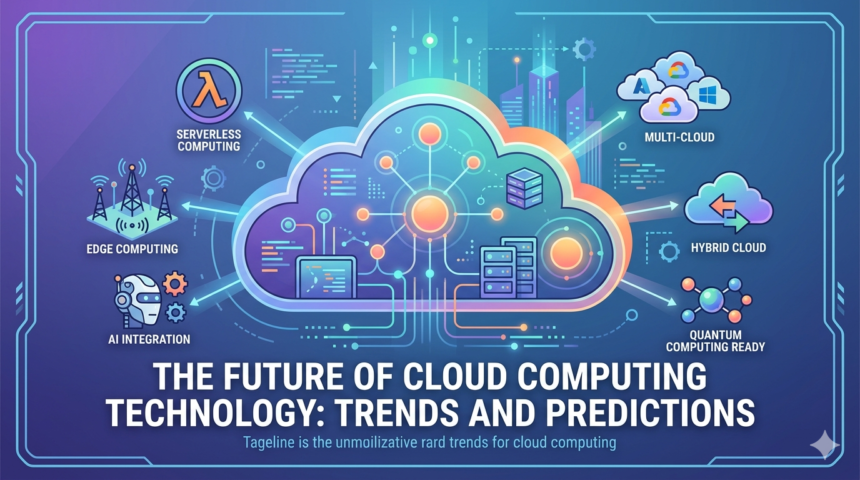
Introduction to Cloud Computing
Cloud computing is a transformative technological paradigm that has reshaped how organizations store, manage, and access data. At its core, cloud computing refers to the delivery of computing services over the Internet, allowing users to access applications, storage, and processing power without the need for local infrastructure. The term “cloud” metaphorically represents the vast array of resources that are available over the Internet, resembling a misty expanse where data floats and can be accessed remotely.
The origins of cloud computing can be traced back to the 1960s when computer scientists envisioned a model for shared resources. However, the practical application gained momentum in the early 2000s with the advent of virtualization technologies and the expansion of broadband Internet. This led to the emergence of various service models, namely Infrastructure as a Service (IaaS), Platform as a Service (PaaS), and Software as a Service (SaaS), each catering to specific business needs by providing scalable resources on demand.
Over the years, cloud services have evolved significantly, becoming more integrated with enterprises’ operational frameworks. With advancements in security measures, regulatory compliance, and service-level agreements, organizations are increasingly migrating their workloads to the cloud. This shift has facilitated better collaboration, enhanced productivity, and cost savings. Furthermore, the rise of hybrid and multi-cloud strategies indicates a trend towards a more flexible architecture, where businesses can tailor their cloud environments to suit varying requirements.
As technological advancements continue to occur rapidly, the future of cloud computing appears promising. Innovations such as artificial intelligence and machine learning are starting to influence cloud service capabilities, making it imperative for businesses to stay informed about ongoing trends and predictions. Understanding these foundational concepts and their evolution not only sets the context for discussing the future of cloud computing technology but also emphasizes its vital role in the modern digital landscape.
Current Trends in Cloud Computing
The cloud computing landscape is continuously evolving, driven by various technological advances and changing business needs. One of the most notable trends is the increasing adoption of hybrid cloud solutions. Organizations are increasingly recognizing the benefits of combining public and private cloud infrastructures to achieve a more flexible and scalable IT environment. This approach allows businesses to maintain control over sensitive data while taking advantage of the cost-effectiveness and scalability of public cloud services.
Additionally, serverless computing is gaining traction as a method for organizations to streamline their operations. This paradigm eliminates the need for developers to manage server infrastructure, allowing them to focus on writing code and developing applications. This shift not only enhances development speed but also optimizes resource usage, as organizations are only billed for actual computation time rather than pre-allocated servers. As more businesses embrace agile methodologies, serverless offerings from major cloud providers are poised to play an essential role in their strategies.
Another significant trend is the integration of machine learning and artificial intelligence within cloud services. Cloud providers are increasingly embedding AI capabilities into their platforms, enabling organizations to leverage advanced analytics without the need for deploying complex infrastructure. This democratization of AI technology empowers businesses of all sizes to gain insights from their data, automate processes, and enhance customer experiences. By harnessing these powerful tools, organizations can stay competitive in a rapidly changing digital landscape.
The Role of Edge Computing
Edge computing has emerged as a pivotal technology that complements cloud computing by processing data closer to the source or edge of the network. This architectural paradigm is designed to enhance cloud services, particularly in terms of reducing latency and improving speed. By decentralizing computing resources and placing them nearer to end-users, edge computing ensures that data is processed quickly, delivering prompt responses that are critical in real-time applications.
One of the most significant advantages of edge computing is its ability to address latency issues inherent in traditional cloud computing models. In scenarios such as autonomous vehicles, smart cities, and industrial IoT applications, even a small delay can result in costly errors or system failures. By facilitating local data processing, edge computing minimizes the distance data must travel, thereby drastically reducing response times and enabling more efficient data management.
Additionally, edge computing plays a vital role in managing bandwidth constraints. As the volume of data generated by devices continues to soar, transmitting this data solely to centralized cloud data centers can overwhelm network resources. Edge computing alleviates this strain by allowing for local data processing and filtering, sending only the necessary insights back to the cloud. This not only optimizes bandwidth consumption but also enhances the overall efficiency of cloud services.
Another critical consideration in the context of modern data privacy concerns is data sovereignty. Edge computing can help organizations comply with regulations by enabling them to process and store data locally, thereby adhering to specific legal jurisdictions. This feature ensures that sensitive information remains within the required geographical boundaries, addressing compliance issues that can arise when using traditional cloud models.
Security and Compliance Challenges
As businesses increasingly transition to cloud computing solutions, the concerns regarding security and compliance have become paramount. The rapid evolution of technology has unfortunately paralleled the development of sophisticated cyber threats, which pose significant risks to sensitive data stored within cloud environments. An essential aspect of maintaining trust among users and clients is the implementation of robust security protocols tailored to address these challenges.
Cyber threats such as data breaches, ransomware attacks, and phishing schemes have become prevalent, making it imperative for organizations to enhance their defenses. In response, cloud service providers (CSPs) have adopted advanced security measures, including encryption, multifactor authentication, and intrusion detection systems. However, the responsibility of ensuring data protection falls not solely on CSPs but also on the organizations that utilize their services. Thus, it is vital for businesses to develop a comprehensive cybersecurity strategy that aligns with the specific compliance requirements of their industry.
Compliance regulations, such as the General Data Protection Regulation (GDPR) and the Health Insurance Portability and Accountability Act (HIPAA), further complicate the security landscape. These regulations necessitate strict adherence to guidelines surrounding data handling and protection, and non-compliance can result in substantial penalties. Organizations must ensure that their cloud solutions are not only secure but also compliant to avoid legal repercussions. Collaboration between organizations and cloud providers is essential in crafting policies that meet these compliance standards while maintaining high levels of security.
The future of cloud computing will hinge on the successful navigation of these security and compliance challenges. By prioritizing security protocols and collaborating effectively with CSPs, organizations can build a resilient cloud infrastructure that fosters trust and protects sensitive data.
Impact of 5G on Cloud Computing
The advent of 5G technology is poised to revolutionize the landscape of cloud computing by offering unprecedented speed and connectivity improvements. With download speeds that can reach up to 10 Gbps, 5G networks dramatically enhance the ability to access cloud services, resulting in smoother and more efficient user experiences. This enhancement is crucial as businesses increasingly rely on cloud-based applications for their operations.
One of the most significant impacts of 5G on cloud computing is the reduction of latency, which is expected to drop to as low as one millisecond. This near-instantaneous communication can enable real-time data processing and analytics, paving the way for sophisticated applications such as autonomous vehicles and smart city infrastructures that rely heavily on cloud data. Additionally, this reduced latency will benefit industries such as healthcare, where timely access to patient data can improve diagnosis and treatment.
The rollout of 5G also facilitates enhanced connectivity for remote workers and distributed teams. With stronger and more reliable connections, employees will be able to access cloud-based tools and resources from virtually anywhere, supporting the trend of remote work and collaboration. This flexibility not only empowers productivity but also opens up new opportunities for businesses to engage with their clients through cloud applications that are more responsive and user-friendly.
Moreover, 5G technology can enhance the performance of existing cloud services by enabling more advanced features and capabilities. For instance, edge computing can be better harnessed, allowing data to be processed closer to the source, thereby reducing the bandwidth needed for data transmission to central cloud servers. This efficiency is immensely beneficial for applications such as Internet of Things (IoT) devices, which generate vast amounts of data that can now be managed more effectively.
In summary, the introduction of 5G technology holds great promise for cloud computing, ushering in a new era characterized by faster speeds, reduced latency, and enhanced accessibility. These advancements will not only improve the performance of current cloud services but will also enable the development of innovative cloud applications, driving progress across various industries.
Sustainability and Environmental Considerations
The future of cloud computing technology is increasingly intertwined with sustainability and environmental considerations. As cloud services continue to gain traction globally, the demand for greener solutions has prompted cloud service providers to adopt practices aimed at minimizing their environmental footprint. This shift is not merely a trend but a necessity, aligning business practices with global sustainability goals.
To address growing environmental concerns, cloud providers are implementing a variety of green technologies. One such initiative focuses on enhancing the energy efficiency of data centers, which are known to consume significant amounts of electricity. By utilizing advanced cooling techniques and renewable energy sources, providers are able to lower their reliance on fossil fuels. For instance, major players in the cloud infrastructure market have begun to rely heavily on wind, solar, and hydroelectric power to operate their data centers. These sustainable energy solutions are not only beneficial for the environment but also help reduce operational costs over time.
Furthermore, cloud computing enables organizations to consolidate their IT infrastructure. By migrating to cloud-based solutions, businesses can increase efficiency, reduce hardware waste, and implement smarter resource allocation strategies. This consolidation leads to effective resource utilization, which results in lower carbon emissions per unit of processing power. As more enterprises shift to these solutions, the overall impact on environmental sustainability becomes increasingly positive.
In sum, the cloud computing industry is making significant strides toward sustainability through adopting greener technologies and optimizing data center operations. This conscientious approach helps mitigate the ecological impact while enabling companies to meet their operational needs efficiently. Stakeholders and consumers alike are beginning to recognize the importance of eco-friendly practices, making sustainability a critical focus for the future of cloud computing technology.
The Rise of Multi-Cloud Strategies
In recent years, the adoption of multi-cloud strategies has become a prominent trend among enterprises, offering enhanced flexibility and control over resources. Organizations have started to recognize the significant advantages of leveraging multiple cloud service providers concurrently, thus avoiding dependency on a single vendor. This approach not only aids in optimizing workloads but also facilitates greater data resilience and disaster recovery capabilities.
One of the key benefits of implementing a multi-cloud strategy is the enhanced flexibility it provides. Companies can choose specific services from various providers, tailoring their cloud infrastructure to better suit their unique operational needs. For instance, a business may opt for a cloud platform known for superior machine learning capabilities while utilizing another provider for its strong security features. This strategic selection empowers organizations to maximize performance and efficiency, ultimately leading to improved uptime and user satisfaction.
Cost management is another significant factor driving the shift toward multi-cloud environments. By spreading workloads across diverse providers, organizations can take advantage of competitive pricing and avoid vendor lock-in. This financial agility allows businesses to optimize resource allocation and reduce overall expenses related to cloud operations. Furthermore, various cloud providers offer specific discounts and pricing models that can be leveraged to further enhance cost savings.
However, managing multiple cloud environments is not without its challenges. Companies may face difficulties such as complex integration processes, the possibility of increased security vulnerabilities, and the need for skilled personnel familiar with various platforms. Organization-wide policies must be well-defined to effectively govern the usage of disparate cloud services while ensuring consistent compliance and security measures.
In conclusion, as businesses continue to embrace multi-cloud strategies, they must weigh the benefits of flexibility, disaster recovery, and cost management against the complexities of navigating multiple cloud platforms. By doing so, organizations can effectively future-proof their cloud strategies in an increasingly interconnected digital landscape.
Future Innovations and Technologies
The landscape of cloud computing is rapidly evolving, with several emerging technologies poised to drive significant advancements in the field. Among these, quantum computing stands out as a revolutionary force that could redefine cloud capabilities. Unlike traditional computing, which relies on bits as the smallest unit of data, quantum computing utilizes qubits that can exist in multiple states simultaneously. This extraordinary property enables quantum computers to perform complex calculations at unprecedented speeds, significantly enhancing processing power for cloud services.
In addition to quantum computing, advanced analytics is expected to play a vital role in shaping the future of cloud technologies. Organizations increasingly rely on data-driven decision-making, and cloud-based analytics platforms provide the necessary infrastructure to manage vast amounts of data. The integration of artificial intelligence (AI) into these platforms can help in identifying patterns and generating insights that were previously unattainable. As machine learning algorithms evolve, their deployment in conjunction with cloud infrastructures will allow businesses to gain deeper insights and streamline operations.
Moreover, the increasing adoption of AI will transform cloud services further by automating routine tasks, improving resource management, and enhancing the user experience. Through natural language processing and predictive analytics, AI integrations in cloud environments will facilitate more intelligent interactions, driving efficiency across industries. These innovations not only enhance the functionality of cloud services but also provide businesses with tools to become more agile and responsive in their operations.
As these technologies continue to mature, cloud computing will see an infusion of capabilities that enhance scalability, security, and performance. The integration of quantum computing, advanced analytics, and artificial intelligence signifies a transformative shift in how cloud services are delivered and utilized, providing organizations with the means to compete effectively in an increasingly data-centric world.
Conclusion and Forward Outlook
The landscape of cloud computing technology is witnessing an unparalleled evolution, shaped by emerging trends and innovations. It is evident from the discussions presented in the previous sections that organizations are increasingly embracing cloud solutions due to their scalability, flexibility, and cost-effectiveness. The shift towards hybrid and multi-cloud strategies, the integration of artificial intelligence (AI) and machine learning (ML), and the growing emphasis on cybersecurity are some of the transformational factors influencing the future of cloud computing.
As organizations navigate this dynamic environment, understanding the key trends is crucial for strategic decision-making. For instance, the rise of edge computing highlights the need for businesses to reconsider their data management strategies, facilitating faster processing and enhancing customer experiences at the forefront of technology deployment. Moreover, with regulatory compliance becoming increasingly complex, adopting robust cloud governance frameworks is essential to mitigate risks while reaping the benefits of cloud solutions.
Furthermore, the future of cloud technology will likely see the proliferation of serverless computing, which simplifies deployment and operational management for developers, thereby accelerating innovation cycles. As more businesses recognize the importance of data-driven insights, cloud platforms that provide advanced analytics capabilities will become integral to business processes.
Organizations aiming to thrive in this evolving landscape should prioritize adaptability, invest in ongoing training for their workforce, and remain open to leveraging new cloud innovations. By doing so, they will not only stay competitive but also position themselves to fully exploit the myriad possibilities that cloud computing presents.
In conclusion, the future of cloud computing holds significant promise, as technology continues to advance and reshape how we think about data, applications, and services. Businesses that are proactive and strategic in their cloud adoption will be best equipped to capitalize on these developments, ensuring sustainable growth and success in an increasingly digital landscape.