
Introduction to AI and Digital Marketing
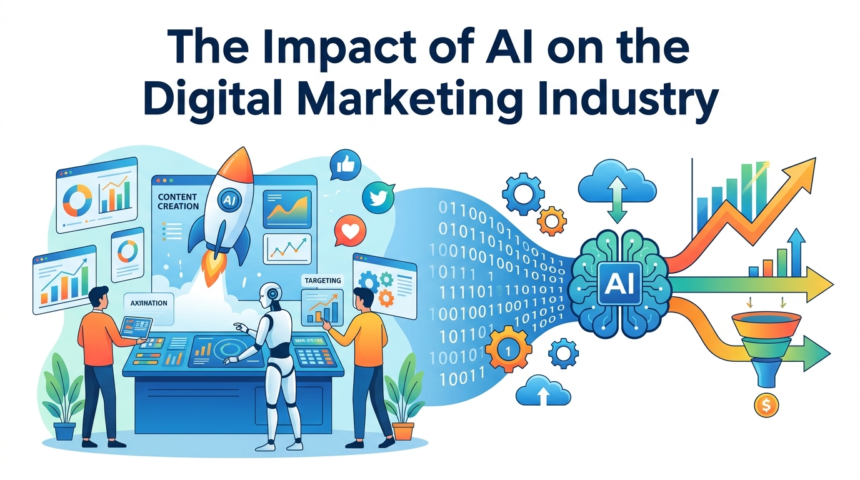
Artificial Intelligence (AI) is increasingly becoming an integral aspect of various industries, particularly in digital marketing. At its core, AI refers to the capability of a machine to imitate intelligent human behavior. This technological advancement enables the analysis of vast amounts of data, the recognition of patterns, and the automation of processes, making it indispensable in today’s fast-paced digital landscape.
The significance of AI in digital marketing cannot be overstated. As businesses strive to reach their target audiences more effectively, AI-powered tools and applications are emerging as essential resources. From predictive analytics to chatbots, AI is transforming how marketers interact with consumers, personalize campaigns, and optimize marketing efforts. These innovations allow for more tailored customer experiences, which are vital for fostering engagement and driving conversions.
Moreover, AI has been adopted across numerous sectors, enhancing productivity and decision-making capabilities. Industries such as healthcare, finance, and retail are utilizing AI algorithms to streamline operations and gain valuable insights into consumer behavior. The marketing sector is no exception, and companies that integrate AI into their strategies often see significant improvements in efficiency, effectiveness, and overall marketing success.
As the digital marketplace becomes increasingly competitive, marketers must leverage the advantages offered by artificial intelligence. With AI technologies evolving rapidly, the potential applications in digital marketing are continuously expanding. In this context, understanding AI’s relevance and applications in marketing strategies is crucial for marketers looking to stay ahead of the curve. The intersection of AI and digital marketing presents both challenges and opportunities, shaping the future of how businesses engage with their customers.
Transformative Effects of AI on Consumer Behavior
The advent of artificial intelligence (AI) in digital marketing has profoundly transformed consumer behavior. This evolution is primarily characterized by the tailoring of marketing experiences to individual preferences, resulting in improved customer engagement and satisfaction. Today’s consumers are inundated with options, making it essential for brands to leverage AI-driven tools to cut through the noise and deliver personalized content.
One prominent example of this personalization is in the use of recommendation algorithms. Platforms such as Amazon and Netflix utilize sophisticated AI systems that analyze user behavior, preferences, and historical purchases to suggest products or content that aligns with individual tastes. This not only enhances the user experience but also drives higher conversion rates, as consumers are presented with offerings they are more inclined to purchase.
Furthermore, AI-powered chatbots are revolutionizing customer interaction. These tools can provide instant responses to queries, guiding consumers towards making informed purchasing decisions. By analyzing previous interactions and purchase history, they can also suggest related products, effectively enhancing the sales process. This immediate engagement promotes a more personalized interaction that traditional marketing methods cannot replicate.
Additionally, AI technologies enable brands to gain deeper insights into consumer preferences through data analytics. By scrutinizing vast amounts of data from various touchpoints, companies can identify trends and behavioral patterns that inform their marketing strategies. This level of insight allows for highly targeted advertising, ensuring that promotional messages resonate with specific consumer segments, thus increasing the likelihood of successful engagement.
Overall, the integration of AI into digital marketing is not merely a trend but a fundamental shift in how brands understand and interact with consumers. By harnessing the power of AI, marketers can create more personalized experiences that not only meet but exceed consumer expectations, significantly influencing consumer behavior in today’s marketplace.
AI in Data Analysis and Insights
Artificial Intelligence (AI) has revolutionized the process of data analysis in the digital marketing industry, enabling professionals to leverage large datasets in ways that were previously unimaginable. The ability of AI tools to sift through vast amounts of customer data quickly and accurately allows marketers to draw actionable insights that drive strategic decisions. By utilizing advanced algorithms, AI can identify patterns, trends, and anomalies that human analysts might overlook, thereby enhancing the decision-making process.
In the realm of data analysis, AI systems are designed to work with structured and unstructured data. This capability is significant as customer data can come from diverse sources, including social media interactions, website analytics, and transaction histories. AI algorithms can process this influx of information in real-time, providing insights that reflect current consumer behaviors and preferences. As a result, marketers are equipped with the information needed to tailor their campaigns more effectively, optimizing resource allocation to enhance engagement.
Moreover, AI-driven tools can predict future customer behaviors by analyzing historical data. This predictive analytics capability empowers marketers to anticipate market trends, thus allowing them to adjust their strategies proactively. By identifying potential changes in customer preferences before they happen, businesses can maintain a competitive edge. AI’s ability to learn and adapt over time means that the insights derived from data analysis continually improve, aligning marketing strategies with evolving consumer needs.
The integration of AI into data analysis not only enhances accuracy but also significantly reduces the time required to generate insights. This efficiency allows marketing teams to focus their efforts on creative and strategic aspects rather than being bogged down in the minutiae of data collection and interpretation. As AI technologies continue to advance, their role in providing pivotal insights into consumer behavior and market dynamics will undoubtedly expand, further driving growth and innovation in digital marketing.
Automation of Marketing Processes
The advent of artificial intelligence (AI) has significantly transformed various aspects of the digital marketing industry, particularly in the automation of marketing processes. By leveraging AI technologies, marketers can automate several routine tasks that traditionally consumed substantial time and resources. These tasks include content creation, social media management, and email marketing, allowing businesses to focus on strategic initiatives.
Content generation is one area where AI excels, utilizing machine learning algorithms to produce written material that meets specific guidelines and audience needs. This technology enables marketers to generate high-quality blog posts, product descriptions, and social media content efficiently. Consequently, it not only streamlines the content creation process but also ensures consistency in messaging across various platforms.
In the realm of social media management, AI tools can analyze user behavior and engagement patterns, optimizing posting times, and potentially enhancing audience interactions. By automating the scheduling of posts and managing customer interactions, businesses can significantly improve their social media presence without the constant manual effort that would typically be required.
Email marketing is another domain witnessing substantial changes due to automation driven by AI. Advanced algorithms can segment audiences more effectively, personalizing email campaigns based on user interactions and preferences. This personalized approach increases the likelihood of engagement and conversions, ultimately leading to better ROI on marketing efforts.
In summary, the automation of marketing processes through AI presents numerous advantages, including time savings and enhanced efficiency. By adopting these technologies, businesses not only streamline their operations but also ensure that they remain competitive in an increasingly digital landscape.
Improving Customer Experience with AI
In the fast-evolving digital marketing landscape, artificial intelligence (AI) plays a pivotal role in enhancing customer experiences. One of the primary ways AI achieves this is through the deployment of chatbots and virtual assistants. These AI-driven tools are designed to provide immediate responses to customer inquiries, significantly reducing wait times and improving satisfaction levels. Customers now engage with brands 24/7, with chatbots capable of handling multiple conversations simultaneously. This ensures that potential issues are addressed promptly, fostering a more positive brand perception.
Moreover, AI technologies contribute to personalized recommendations, tailoring the customer journey based on individual preferences and behaviors. By analyzing data from past interactions, AI can predict what products or services a customer might be interested in. This level of personalization not only enhances the shopping experience but also increases conversion rates, as consumers are more inclined to purchase items that resonate with their needs and desires.
A seamless customer journey is crucial, and AI is at the forefront of facilitating this process. For instance, by integrating AI with customer relationship management (CRM) systems, marketers can gain insights into customer demographics, preferences, and buying patterns. As a result, businesses can craft targeted marketing campaigns that speak directly to their audience. This strategic alignment ensures that all touchpoints, from initial contact to post-purchase follow-up, are optimized for ease and satisfaction.
Overall, the integration of AI in digital marketing not only streamlines customer interactions but also enhances the overall quality of service provided. As companies increasingly embrace AI technologies, the enhancement of customer experience will remain essential. This drive toward personalization and efficiency indicates a promising future, where brands can effectively engage and retain their customers with a higher degree of satisfaction.
Challenges and Ethical Considerations
The integration of artificial intelligence (AI) into the digital marketing industry presents several challenges and ethical considerations that must be addressed. One major concern revolves around data privacy. With the increasing reliance on consumer data to inform marketing strategies, organizations must ensure that they handle personal information responsibly. The General Data Protection Regulation (GDPR) and other privacy laws impose strict regulations on how data is collected, stored, and used. Marketers leveraging AI technologies must prioritize compliance to safeguard consumer trust while avoiding potential legal repercussions.
Another significant issue is the potential for bias within AI algorithms. Machine learning models are trained on existing data, which can inadvertently include biases that reflect historical inequalities or stereotypes. If not correctly managed, these biases can lead to skewed marketing strategies and reinforce discriminatory practices, which can further marginalize vulnerable populations. Therefore, it is crucial for marketers to regularly audit their AI systems and ensure diversity in their training data to promote fair and equitable marketing practices.
Transparency in AI applications is also an essential consideration. Consumers have a growing desire to understand how their data is being utilized and the reasoning behind automated decisions made by marketing algorithms. Providing clear and transparent communication about AI’s role in campaigns can enhance consumer trust and foster a sense of ethical responsibility among organizations. This entails not only sharing information about data usage but also explaining how AI impacts personalization and targeting strategies.
In conclusion, while AI offers immense potential to enhance marketing effectiveness, it is imperative for professionals in the digital marketing sector to address the associated challenges and ethical implications. By prioritizing data privacy, mitigating bias, and promoting transparency, marketers can leverage AI responsibly and ethically, thus cultivating trust with their audiences.
Future Trends of AI in Digital Marketing
The digital marketing landscape is constantly evolving, and the influence of artificial intelligence (AI) is becoming increasingly significant. As we look towards the future, several trends are poised to shape how AI will impact this industry. One of the most promising prospects is the advancement of machine learning algorithms. These algorithms will enable marketers to analyze vast amounts of data faster and more accurately than ever before, providing deeper insights into consumer behavior and preferences.
Another emerging technology is natural language processing (NLP), which allows machines to understand and interpret human language. This capability can lead to more personalized marketing campaigns, as businesses can create highly targeted messages that resonate with individual customers. With the rise of chatbots and virtual assistants, brands will be better equipped to engage with consumers in real-time, providing immediate responses and support tailored to their needs.
Moreover, the demand for augmented reality (AR) and virtual reality (VR) experiences is climbing. These technologies can redefine consumer interactions with products through immersive experiences, enabling potential customers to engage with brands in unique and memorable ways. As digital ad spending continues to increase, it is crucial for marketers to explore these innovative strategies to capture audience attention.
Additionally, shifting consumer expectations will require brands to adopt a more ethical approach to data usage. Transparency in how data is collected and utilized will become paramount, as consumers are becoming increasingly aware of their privacy concerns. Marketers who prioritize data ethics and secure consumer trust will likely gain a competitive edge.
To stay ahead in this rapidly evolving landscape, marketers must continually adapt to these trends by enhancing their AI strategies. Investing in advanced analytics tools, fostering a culture of innovation, and embracing new technologies will enable businesses to maintain relevance and drive growth in the digital marketing sector.
Case Studies of Successful AI Implementations
In the rapidly evolving landscape of digital marketing, many companies have successfully integrated Artificial Intelligence (AI) into their strategies, achieving significant enhancements in performance and customer engagement. These case studies illustrate the tangible benefits that AI can offer to marketers.
One notable example is Netflix, which uses AI to drive its recommendation engine. By analyzing viewer behavior patterns, Netflix can suggest content that is tailored to individual preferences. This personalized approach not only increases viewer engagement and satisfaction but also significantly reduces churn rates. By continuously refining its algorithms based on user interactions, Netflix demonstrates how AI can effectively enhance user experience and retention in digital marketing.
Another example is Sephora, a leading cosmetics retailer that has embraced AI through its Virtual Artist application. This AI-powered tool allows consumers to try on different makeup products virtually through augmented reality. The integration of AI has resulted in increased customer engagement, as users are more likely to purchase products after experiencing them in a virtual setting. As a result, Sephora reported a substantial boost in online sales linked to the usage of its AI-enabled platform.
Coca-Cola also harnessed the power of AI by leveraging chatbots for customer service and marketing campaigns. Through Facebook Messenger, the company engages with customers, providing them with personalized recommendations and promotions. This not only improves the customer service experience but also collects valuable data that Coca-Cola uses to tailor future marketing efforts. The effectiveness of these AI implementations highlights the significant impact AI can have on enhancing digital marketing strategies.
These case studies exemplify the transformational potential of AI in the digital marketing sector. By implementing innovative AI technologies, companies can achieve measurable outcomes, enhance customer experiences, and optimize marketing strategies, thereby standing out in today’s competitive digital landscape.
Conclusion and Takeaways
The integration of Artificial Intelligence (AI) into the digital marketing industry marks a transformative phase in how businesses communicate and engage with consumers. Throughout this exploration, we have highlighted various ways AI technologies such as machine learning, predictive analytics, and chatbots are reshaping marketing strategies. These innovations allow marketers to harness vast amounts of data, creating personalized customer experiences that were previously unattainable.
One key takeaway is the critical role AI plays in optimizing marketing campaigns. By analyzing consumer behavior and preferences, AI enables marketers to develop tailored messages and proposals, maximizing response rates and enhancing conversion metrics. Furthermore, automation—driven by AI—facilitates the efficient deployment of marketing efforts across multiple channels, hence reducing human error and freeing up time for marketers to focus on strategy and creativity.
However, the adoption of AI in digital marketing is not without challenges. Concerns surrounding data privacy, the ethical implications of AI decision-making, and the potential for over-reliance on technology are noteworthy points for marketers to consider. It is essential for professionals in the field to balance technological advancement with human insight, ensuring that AI augments rather than diminishes the value of personal interaction.
In conclusion, the impact of AI on the digital marketing industry is profound and multi-faceted. As marketers navigate this evolving landscape, embracing AI stands as a necessity for maintaining competitiveness. Attention must also be given to the accompanying challenges, as responsible and strategic implementation of AI will be crucial. Ultimately, the synergy between technology and human creativity will define the future of marketing.