

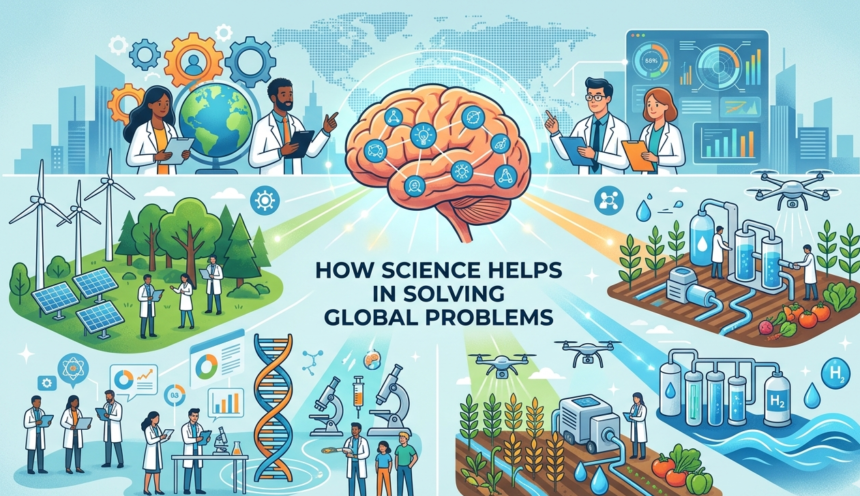
Introduction: The Role of Science in Society
Science fundamentally serves as a cornerstone of modern civilization, providing the tools and methodologies essential for understanding, analyzing, and addressing the myriad challenges faced by humanity. From historical advancements such as the discovery of electricity to contemporary innovations in biotechnology, scientific exploration has continually propelled society forward, reshaping how we interact with the world around us. Particularly in today’s complex landscape, the application of scientific research is crucial for developing sustainable solutions to pressing global issues.
The urgency of employing scientific methods becomes particularly evident in light of contemporary challenges. Climate change, for instance, poses a significant threat to natural ecosystems and human livelihoods, necessitating an urgent and informed response grounded in empirical research. Similarly, the global health crises exemplified by pandemics compel societies to rely on scientific insights for effective prevention and management strategies. The importance of data-driven approaches cannot be overstated, as they inform policies that promote public health and mitigate risk.
Moreover, resource scarcity remains a critical concern, with the demands of a growing population pressing against the limits of our natural environment. Here, science plays a vital role in enhancing resource management through innovations in agriculture, energy efficiency, and sustainable practices. This systemic application of scientific knowledge fosters resilience, ensuring that we can meet current needs without compromising the ability of future generations to thrive.
In conclusion, science not only enhances our understanding of complex global challenges but also drives innovative solutions that can lead to meaningful progress. Recognizing the integral relationship between scientific inquiry and societal well-being underscores the necessity for continued investment in research and education. It is through this lens that we can effectively engage with and address the urgent problems faced by our world today.
Climate Change and Environmental Sustainability
Climate change represents one of the most pressing global challenges of our time, with its far-reaching impacts on ecosystems, weather patterns, and human health. Scientific research and technological innovations are pivotal in our efforts to understand and combat this ongoing crisis. By employing various scientific approaches, we can reduce carbon emissions, promote renewable energy, and enhance environmental preservation.
One of the significant ways science contributes to climate change mitigation is through advancements in renewable energy technology. Innovations such as solar panels, wind turbines, and bioenergy systems provide viable alternatives to fossil fuels, significantly lowering greenhouse gas emissions. Research into energy storage, such as batteries and grid interoperability, has made these renewable sources more reliable, further aiding in the transition towards a sustainable energy future.
Moreover, scientists are actively studying the Earth’s climate systems, utilizing climate modeling and simulation techniques to predict future climate scenarios. Such predictive analytics are crucial for understanding potential impacts on agriculture, biodiversity, and human settlements. The insights gained from these studies inform policymakers and stakeholders about the urgent need for robust environmental regulations and practices.
Moreover, initiatives such as reforestation and the protection of wetlands are integral to enhancing environmental sustainability. Through a thorough understanding of ecological principles, scientists advocate for strategic interventions that restore natural habitats and sequester carbon dioxide from the atmosphere. The restoration of these ecosystems not only aids in combating climate change but also supports biodiversity, contributing to healthy ecosystems.
To encapsulate, the role of science in tackling climate change cannot be overstated. Its contributions through research and innovation help inform effective policies and practices aimed at securing a more sustainable future for generations to come. Successful interventions exemplify how evidence-based strategies can lead to impactful solutions in the face of environmental challenges.
Public Health and Disease Control
Advancements in public health, largely driven by scientific research, have profoundly transformed the way we combat infectious diseases and maintain community health standards. The role of scientists in the development of vaccines has been critical in addressing global health crises, leading to the eradication or management of various illnesses. For instance, the rapid development of COVID-19 vaccines showcased the potential of modern virology and immunology in responding to pandemics. Not only did these vaccines save countless lives, but they also demonstrated the importance of international cooperation and innovative research methodologies.
Understanding infectious diseases is essential for effective public health strategies. Epidemiologists work methodically to track and model disease transmission, providing invaluable insights that inform policies and preventive measures. Recent outbreaks, such as the Ebola virus disease and, more prominently, the COVID-19 pandemic, highlight how predictive modeling and data analysis allow health authorities to make informed decisions. These scientific contributions are crucial in implementing timely interventions, which can significantly reduce infection rates and mortality.
Furthermore, improvements in healthcare systems have been catalyzed by scientific advancements. The integration of technology in health monitoring systems has enabled better disease surveillance and response coordination. Digital health platforms and telemedicine have expanded access to healthcare services, especially in under-resourced regions, demonstrating how science can help bridge gaps in healthcare equity.
Ultimately, the ongoing collaboration between scientists and public health officials is vital for formulating evidence-based policies that not only address current health challenges but also prepare for future pandemics. By leveraging scientific knowledge, society can implement effective preventive measures, ensuring better health outcomes for populations globally.
Food Security and Agricultural Innovation
Food security is a pressing global challenge that requires innovative solutions to ensure sustainable and equitable access to nutrition for the ever-growing population. Scientific advancements play a crucial role in addressing these challenges, particularly through innovations in agriculture. Biotechnological methods are now employed to enhance crop resilience and improve yields in the face of environmental stresses such as climate change.
For instance, genetically modified organisms (GMOs) have shown promise in developing crops that can tolerate drought, pests, and diseases. These advancements not only help increase agricultural productivity but also contribute to reducing food wastage by enabling crops to thrive in suboptimal conditions. Additionally, research into traditional breeding techniques has been revitalized, combining age-old practices with modern science to optimize the traits of staple crops, thereby ensuring food security.
Sustainable farming practices are integral to modern agricultural innovation, ensuring that food production systems remain viable for future generations. Techniques such as permaculture, crop rotation, and agroecology enhance biodiversity and soil health while reducing dependence on chemical fertilizers and pesticides. The integration of research in these practices leads to techniques that are more efficient and environmentally friendly, ultimately contributing to greater food stability.
Moreover, advancements in food preservation and storage technology are pivotal in reducing post-harvest losses and maintaining the nutritional quality of foods. Scientific research has led to improved packaging methods, refrigeration techniques, and biopreservation strategies that extend the shelf life of perishable goods. This ensures that more food reaches consumers in good condition, supporting food security on a systems level.
Through rigorous scientific research and innovation, the agricultural sector continues to evolve, addressing global food security challenges head-on and paving the way for a more sustainable future.
Technology and Infrastructure Development
In recent years, the remarkable intersection of science and technology has profoundly influenced infrastructure development, particularly in developing countries. The focus on engineering and applied sciences has been pivotal in creating systems that enhance the quality of life while addressing urgent global challenges.
One of the most pressing issues is access to clean water, which is crucial for public health and economic growth. Innovative technologies such as advanced filtration systems, solar-powered water pumps, and rainwater harvesting techniques are now being deployed in underserved regions. These solutions not only provide safe drinking water but are also sustainable, reducing reliance on fossil fuels and enhancing community resilience.
Additionally, the shift towards renewable energy sources plays a critical role in infrastructure development. Countries are increasingly investing in solar, wind, and hydroelectric power to meet their energy needs without exacerbating environmental degradation and climate change. The implementation of solar microgrids and wind farms provides local communities with reliable electricity, facilitating economic activities and improving living conditions.
Moreover, the concept of smart cities, driven by the integration of technology into urban infrastructure, presents a transformative opportunity for developing nations. Smart city innovations, such as IoT-enabled traffic management systems, energy-efficient public lighting, and waste management solutions, improve not only urban planning and efficiency but also enhance the overall quality of life for residents. These initiatives involve collaborative efforts between scientists, engineers, and policymakers to ensure the development of sustainable urban environments that can withstand future challenges.
In summary, scientific and technological advancements significantly contribute to infrastructure development in various sectors, including clean water access, renewable energy, and smart city initiatives. The ongoing collaboration between scientific communities and developing nations will be essential in fostering resilient and sustainable infrastructure.
Economic Development and Innovation
The interconnection between science, technology, and economic development is fundamental to the progress of society. Scientific innovation serves as a catalyst for economic growth, unleashing potential across various sectors. As new technologies emerge from research and development, they enable businesses to increase productivity, reduce costs, and ultimately expand their offerings. This dynamic not only spurs job creation but also enhances the overall quality of life for individuals and communities.
Investment in science and technology leads to breakthroughs that can have wide-reaching effects on industries such as healthcare, agriculture, and energy. For instance, advancements in medical research can lead to the development of new treatments, improving health outcomes and reducing healthcare costs. Similarly, innovative agricultural practices derived from scientific studies can boost food production while ensuring sustainable practices are in place, contributing to both food security and environmental stewardship.
Moreover, the importance of STEM education cannot be understated in fostering a vibrant economy. By equipping future generations with critical skills in science, technology, engineering, and mathematics, societies can cultivate a workforce that is adaptable and capable of driving innovation. Encouraging students to pursue careers in these fields not only prepares them for the demands of a competitive job market but also ensures that the workforce is equipped to tackle complex global challenges.
Support for scientific research through government and private investments is crucial. These investments facilitate the development of new technologies, infrastructure, and programs that further enhance economic development. By creating an environment where innovation can thrive, nations can secure long-term economic growth, improve living standards, and maintain a competitive edge in the global marketplace. The symbiotic relationship between scientific progress and economic development remains a key element in addressing contemporary global issues.
International Collaboration for Global Solutions
The complexities of modern global challenges necessitate a concerted effort from nations around the world, underscoring the importance of international collaboration in scientific endeavors. This collaboration is crucial in addressing prominent issues such as pandemics, climate change, and resource scarcity. Through strategic partnerships and shared research frameworks, nations can pool their knowledge and expertise, resulting in more effective solutions to problems that transcend borders.
The World Health Organization (WHO) serves as an exemplary model of international cooperation in the health sector. By coordinating global responses to health emergencies, the WHO enables timely information sharing and the mobilization of medical resources. For instance, during the COVID-19 pandemic, the organization played a pivotal role in facilitating research collaborations among scientists from diverse countries, leading to the rapid development of vaccines and treatments. Such synergy exemplifies how countries can leverage their scientific capabilities collectively to address urgent health crises.
Moreover, international climate agreements, such as the Paris Agreement, highlight the collaborative approach needed to combat climate change. Countries commit to specific targets for reducing greenhouse gas emissions, recognizing that climate change is a global issue requiring joint action. Through collaborations in research and technology transfer, nations can innovate more sustainable practices and share successful methodologies, ultimately working towards a healthier planet.
In addition to these examples, international scientific partnerships often extend to areas such as renewable energy solutions, biodiversity conservation, and food security. By sharing data, resources, and technological advancements, countries can amplify their efforts in developing sustainable solutions, thereby combating global challenges more effectively. Collectively, these initiatives demonstrate the vital role that international collaboration plays in leveraging science as a tool for addressing pressing global problems.
Future Challenges and the Role of Scientists
As we look toward the future, a multitude of global challenges are emerging, requiring the concerted efforts of scientists to address them effectively. Among these challenges, cybersecurity threats represent a significant concern. With our growing dependency on technology, cyber attacks can potentially jeopardize national security, personal privacy, and economic stability. Scientists specializing in computer science, information technology, and related fields are tasked with developing advanced security systems and protocols to safeguard critical data and infrastructures.
Another area of pressing challenges includes space exploration. As humanity ventures deeper into space, the potential risks multiply, ranging from space debris to the physiological effects of prolonged exposure to microgravity. Scientists will play a pivotal role in designing safer spacecraft, creating sustainable life support systems, and developing technologies that can facilitate long-term habitation on other celestial bodies. Moreover, collaborative international efforts in space research can yield insights into climate change and planetary health, benefiting Earth as much as the cosmos.
Furthermore, potential health crises loom on the horizon, including the threat of emerging infectious diseases that may arise due to globalization and climate change. Scientists in fields such as epidemiology, virology, and public health are essential in tracking these threats, developing vaccines, and implementing preventive strategies. Their research will also necessitate a strong focus on ethical considerations, ensuring that advancements in medicine and health research adhere to the highest standards of moral responsibility.
As we confront these challenges, adaptive and forward-thinking scientific practices will be crucial. This includes not only the application of innovative technologies but also interdisciplinary approaches that bridge gaps between various scientific domains. By fostering a collaborative environment, scientists can work together to devise comprehensive solutions to the multifaceted issues of the future, ensuring a resilient and sustainable world.
Conclusion: A Call to Action
In reflecting on the critical role that science plays in addressing global problems, it is evident that scientific inquiry and innovation are indispensable for creating sustainable solutions. From climate change and healthcare to food security and technological advancements, science provides the framework for understanding complex challenges and developing effective strategies for resolution. The insights gained through scientific research empower us to make informed decisions that can lead to positive change on a global scale.
As we navigate these pressing issues, it is crucial for individuals, communities, and governments to remain engaged with scientific progress. Supporting scientific endeavors not only fosters innovation but also cultivates a culture that values empirical evidence and informed debate. By promoting funding for research initiatives, advocating for education in science and technology, and encouraging dialogue between scientists and the public, we can contribute to a more informed society that recognizes the vital contributions of science to our well-being.
Moreover, staying informed about the latest scientific advancements equips us with the knowledge necessary to participate in discussions and advocate for policies that prioritize science-based solutions. Engaging with scientific literature and supporting educational programs can help demystify the complexities of scientific research, making it more accessible to the general public.
In conclusion, the engagement in scientific discussions and action is not merely a responsibility for specialists; it is a collective endeavor that requires the participation of everyone. By advocating for science and its principles, we can collectively address global challenges with confidence and resilience, ensuring a healthier, more equitable future for all. Let us commit to making science a central pillar in our quest to solve global problems, as it is through this commitment that we can foster a brighter tomorrow.