

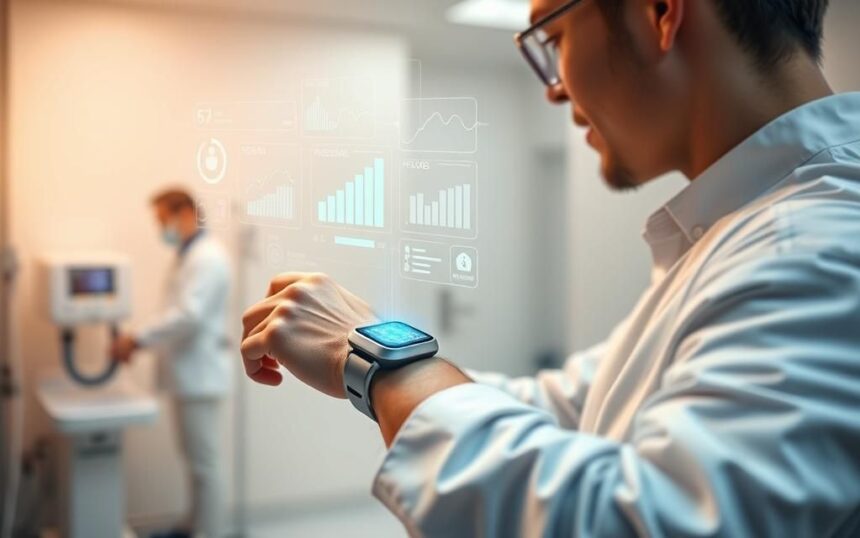
Wearable technology began as a collection of focused, relatively simple tools. Early fitness trackers counted steps, estimated calories, and recorded exercise, while digital watches offered alarms, timers, and basic notifications. Mobile-connected accessories extended these functions by allowing users to view messages, control music, or locate a phone without reaching for a computer. Although limited in capability, these products established an important shift: technology could become part of a person’s routine by remaining close at hand, or directly on the body, throughout the day.
Progress in sensors, wireless connectivity, and miniaturized components has since transformed that initial concept. Modern smartwatches can monitor heart rate, sleep patterns, blood oxygen levels, and movement while also supporting payments, navigation, calls, and applications. Earbuds, rings, glasses, home assistants, and connected appliances now operate as parts of broader digital ecosystems. Cloud computing allows information gathered by one device to be processed and synchronized across many others, creating continuous experiences rather than isolated functions. Artificial intelligence adds another layer by identifying patterns, interpreting commands, and adapting responses to individual habits.
As a result, smart devices are increasingly becoming responsive, context-aware companions rather than passive gadgets. They can recognize whether a user is exercising, commuting, working, or resting and adjust the information or assistance they provide accordingly. This development has implications across health, communication, employment, entertainment, and personal safety. A wearable may encourage movement, filter interruptions, translate a conversation, detect an unusual medical signal, or contact help after an accident. The defining measure of future progress will therefore not be limited to smaller components or faster processors. More important will be technology’s ability to understand circumstances, anticipate needs, and support decisions quietly, reliably, and with minimal effort from the user.
Wearable technology is moving beyond the wrist as designers explore form factors that place computing closer to the senses and the activities it supports. Smart glasses and augmented-reality headsets can present navigation, translation, notifications, and contextual instructions without requiring users to look down at a phone. Their advantages include hands-free access and immediate visual information, but weight, heat, limited battery capacity, privacy concerns, and social acceptability remain significant barriers. Devices that visibly record or overlay information may feel intrusive, particularly in workplaces, schools, or public spaces.
Smaller and less conspicuous products address some of these concerns. Smart rings can monitor movement, sleep, or vital signs while remaining relatively comfortable and discreet, although their compact batteries and limited surfaces restrict functionality. Connected clothing could track posture, temperature, or athletic performance, while intelligent footwear may measure gait, provide navigation cues, or support rehabilitation. These formats distribute sensors across the body, yet they must withstand washing, moisture, impact, and repeated use without becoming uncomfortable or difficult to maintain. Ear-worn devices offer established audio interfaces and can support health monitoring, voice control, and spatial cues, but prolonged wear, sound leakage, and dependence on spoken interaction may limit their appeal.
Skin patches and flexible electronics may eventually provide continuous measurements while conforming to the body, making them useful for medical care and wellness applications. Emerging implantable technologies could offer more persistent monitoring or authentication, though questions about safety, replacement, cybersecurity, and informed consent are especially serious. Rather than concentrating computing in one dominant device, future systems may coordinate glasses, clothing, footwear, earbuds, and patches, assigning each task to the most suitable location. This approach could improve comfort, battery management, and natural interaction, while reducing dependence on a single visible screen. It also complicates awareness: users and bystanders may not know when sensing, recording, or automated analysis is occurring. Clear indicators, accessible controls, strong privacy safeguards, and explicit consent will therefore be essential to making distributed wearables socially responsible as well as technically useful.
Artificial intelligence will make smart devices more useful by enabling them to understand patterns rather than merely respond to isolated commands. Machine learning performed on the device itself can process sensor data locally, allowing wearables and household systems to recognize routines while reducing the need to send personal information to remote servers. Voice recognition will become more reliable in noisy environments, while gesture recognition will let users control devices through subtle movements, glances, or taps. These capabilities could make interaction faster and more accessible, particularly when a person’s hands or attention are occupied.
Context-aware systems will also adjust their behavior according to location, activity, time, stress level, and personal routines. A watch might recommend a quieter route when it detects elevated stress, or a home assistant could prepare preferred lighting and temperature before a resident arrives. Adaptive interfaces may present only the information relevant to the moment, rather than requiring users to navigate complex menus. Devices could summarize messages and meetings, identify recurring tasks, automate routine purchases or reminders, and detect patterns in schedules or energy use. In some cases, assistance may be offered proactively instead of waiting for an explicit request.
Greater personalization, however, must be accompanied by careful safeguards. Predictions should be accurate enough to be useful, yet transparent enough for users to understand why a recommendation was made. People should be able to review, correct, disable, or delete the data and inferences behind automated decisions. Clear boundaries are especially important when devices interpret health, mood, or behavior, since an incorrect conclusion could cause anxiety or lead to inappropriate action. Developers must test systems across diverse populations to reduce algorithmic bias and should distinguish measured information from uncertain interpretation. User control, privacy protections, and appropriate human oversight can prevent convenience from becoming intrusive surveillance or unhealthy overreliance on automated guidance.
Wearable sensors and connected devices are reshaping healthcare by making personal health information available beyond occasional clinic visits. Smartwatches, rings, patches, clothing, and home monitors can measure heart rate, sleep patterns, movement, body temperature, blood oxygen, glucose, blood pressure, and other biological signals. Instead of relying solely on periodic assessments, individuals and clinicians may gain a more continuous view of changes over time. This broader record can reveal patterns that are difficult to identify during a single appointment.
For everyday wellness, continuous monitoring can encourage physical activity, support healthier sleep routines, and help users recognize how stress, diet, or exertion affects their bodies. These functions should, however, be distinguished from clinical diagnosis. A consumer device may estimate a condition or identify an unusual trend without having the accuracy, validation, or regulatory approval required for medical decision-making. Clear communication about these limits is essential, particularly when results could influence treatment choices.
In clinical settings, connected monitoring could support preventive care and chronic-condition management. Professionals may use remotely collected information to follow patients with cardiovascular disease, diabetes, respiratory conditions, or mobility limitations, reducing the need for some in-person visits. Rehabilitation programs could track movement and recovery, while medication reminders and alerts could improve adherence. Faster communication may also allow a care team to investigate meaningful changes before symptoms become severe, provided that appropriate response systems are in place.
Significant challenges remain. Measurements can vary according to skin contact, device position, user behavior, and sensor quality, producing false alarms or missed warnings. Large volumes of data require careful interpretation, secure storage, and integration with medical records. Regulatory oversight must keep pace with rapidly evolving products, while cost, internet access, and digital literacy must not create wider health inequalities. Wearable technology is most valuable when it complements qualified healthcare providers, who can evaluate context, confirm findings, explain uncertainty, and determine suitable care.
Future wearables will operate less as isolated gadgets and more as coordinating points within a connected ecosystem. A watch, ring, headset, or health sensor could exchange information with a smartphone, vehicle, home, workplace, and public infrastructure without requiring users to manage every connection manually. For example, a watch might detect a change in a person’s usual routine, recognize that they are returning home earlier than expected, and securely notify the household system. The home could adjust lighting, temperature, and security settings, while a vehicle prepares preferred seating, navigation, and media controls.
These experiences will depend on interoperability. Common communication standards, shared data formats, and clearly defined device permissions can allow products from different manufacturers to work together reliably. Low-power wireless networks will support sensors that need to operate for months or years, while edge computing will process time-sensitive information near the user instead of sending every request to a distant data center. Cloud services will remain valuable for long-term storage, complex analysis, and coordination across locations, but they should complement rather than replace local capability.
Communication between devices may also make information more fluid across interfaces. An assistant could begin providing travel instructions through a phone, transfer them to a vehicle’s dashboard, and continue with audio prompts through earbuds. In a workplace, a wearable could signal that a meeting has started, a room could configure its display and ventilation, and relevant documents could appear on an approved screen. Public transport systems might similarly share arrival updates with a passenger’s watch or accessibility device.
Seamless connectivity must nevertheless include resilience and user control. Devices should continue essential functions when a network connection or cloud service is unavailable, using local processing and fallback settings. People also need understandable permission controls that specify what information is shared, with whom, and for how long. Reliable device-to-device communication will require strong security, compatibility testing, and graceful recovery from failures. The most useful smart ecosystem will therefore be one that feels effortless without becoming opaque, fragile, or dependent on a single platform.
As physical screens become less central, interaction with smart devices will increasingly rely on natural forms of communication. Voice assistants will allow people to issue conversational commands, ask questions, and manage connected services without reaching for a phone. Hand gestures, eye tracking, and subtle head movements can provide additional control, particularly when speaking is impractical. A glance might select an item, a nod might confirm it, and a small hand motion could adjust lighting or skip a track. Biometric signals, such as muscle activity, heart-rate patterns, or neural and skin responses, may eventually help devices interpret intent and adapt to individual users.
Spatial computing will extend these interactions into the surrounding environment. Information could appear through lightweight mixed-reality glasses, projected surfaces, or context-sensitive visual overlays rather than on a conventional display. Tactile feedback would make these systems easier to understand by using vibrations, pressure, or temperature changes to signal an alert or confirm an action. Such multimodal interfaces could support hands-free control while driving, enable athletes to receive guidance during exercise, help industrial workers operate equipment safely, and give people with limited mobility or vision more flexible ways to interact. In the home, voice, gesture, and environmental sensing could coordinate appliances, security systems, and accessibility features with minimal effort.
However, intuitive control is not automatically reliable or comfortable. Voice recognition may struggle in traffic, factories, or crowded homes, while cameras and microphones raise concerns about surveillance and data ownership. Accidental activation, misunderstood commands, and inconsistent recognition across accents, speech patterns, physical abilities, and cultural gestures could undermine trust. Public use of spoken commands or visible gestures may also create social discomfort. Designers will need clear activation cues, adjustable sensitivity, alternative input methods, and transparent privacy controls.
Effective interfaces must also communicate without producing constant interruptions. Tactile signals, spatial audio, and carefully prioritized visual cues can distinguish urgent information from routine updates. By combining modalities while allowing users to choose how each device responds, future systems can remain accessible, predictable, and unobtrusive rather than replacing screen overload with notification overload.
Wearables and smart devices create privacy risks because they collect information continuously, often in the background. A smartwatch may record heart rate, sleep quality, exercise routines, and stress indicators, while a phone, headset, or vehicle can capture location, voice interactions, movement patterns, nearby devices, and environmental conditions. Combined over time, these signals can reveal where a person lives, works, travels, and socializes, as well as habits that the individual may never consciously disclose.
Some information demands particular care. Biometric identifiers, such as facial characteristics, fingerprints, and gait, cannot easily be replaced if compromised. Health metrics may expose illnesses, fertility information, disabilities, or mental-health conditions. Voice recordings can reveal conversations and identity, while movement patterns may indicate religious attendance, political activity, relationships, or vulnerability. Emotional indicators inferred from behavior, pulse, speech, or facial expression are similarly sensitive because they can be inaccurate yet still influence important decisions.
Effective protection requires more than a lengthy privacy notice. Strong encryption should secure information during transmission and storage, while local processing can reduce the need to send raw data to remote servers. Data minimization should limit collection to what a service genuinely requires. Clear consent, understandable permission controls, strong authentication, and prompt software updates can reduce unauthorized access. Users should be able to review shared information, revoke permissions, and permanently delete stored data. Anonymization can provide additional safeguards, although supposedly anonymous records may sometimes be reidentified when combined with other datasets.
Without meaningful oversight, advertisers and data brokers could use personal profiles for intrusive targeting, while employers or insurers might make unfair judgments based on health, productivity, or lifestyle signals. Criminals could exploit exposed locations, routines, or account credentials, and other third parties might obtain data through opaque partnerships or weak security. Future innovation will therefore depend on trustworthy governance, transparent and comprehensible privacy policies, independent accountability, and genuine user ownership. People should know who controls their information, why it is used, how long it is retained, and how to reclaim it.
The expansion of wearables and smart devices brings environmental costs that are easy to overlook. Mining the rare materials used in sensors, displays, batteries, and processors can damage ecosystems and place pressure on communities near extraction sites. Manufacturing also requires substantial energy and water, while global distribution adds transport emissions. Once products reach consumers, constant connectivity and charging increase electricity demand. Batteries eventually lose capacity, and short replacement cycles can encourage people to discard devices that remain technically usable. Proprietary chargers and sealed components compound the problem by limiting reuse, repair, and recycling.
A more sustainable technology sector would treat longevity as a central design requirement rather than an optional benefit. Manufacturers can provide longer software support, replaceable batteries, modular components, and standardized charging systems. Durable materials and accessible repair documentation would allow users and independent technicians to extend product lifespans. Refurbishment programs could return used devices to the market, while circular manufacturing would recover valuable materials and reduce reliance on new extraction. Better collection systems are equally important, since electronic waste should be directed to certified recyclers instead of being discarded or exported without adequate safeguards. These measures cannot eliminate environmental impact, but they can reduce waste across the product life cycle.
Social sustainability also depends on who can benefit from innovation. Wearables should be designed for people with disabilities, including users who need accessible controls, clear audio or visual feedback, and compatibility with assistive technologies. Older adults may require simpler interfaces, reliable health features, and dependable support. Affordability remains essential for low-income communities, particularly when devices become gateways to health, education, employment, or public services. Language options, culturally appropriate design, and attention to differing expectations can make technology more relevant across regions. Progress should therefore be judged not only by processing power or new features, but by inclusion, durability, repairability, and equitable access. A genuinely transformative future will improve everyday life without shifting its hidden costs onto vulnerable people or the planet.
Wearable technology and smart devices are poised to influence nearly every part of everyday life. In workplaces, they may provide context-sensitive assistance, monitor safety, and support collaboration without requiring constant attention to a screen. In education, connected glasses, sensors, and adaptive interfaces could make learning more interactive and personalized. Fitness and healthcare devices may encourage healthier habits, detect emerging conditions, and help clinicians deliver care beyond hospitals. Smart transportation systems could improve navigation, accessibility, and road safety, while connected tools reshape communication, entertainment, and the ways people express personal identity.
These opportunities will not be realized through novelty alone. Reliable performance must be matched by comfortable, unobtrusive design that people can use throughout the day. Companies will need transparent business models so customers understand how products generate revenue and how their information is used. Responsible artificial intelligence should provide useful assistance without producing opaque decisions, excessive surveillance, or manipulative recommendations. Strong privacy protections, open technical standards, and repairable hardware will also be essential for preventing device ecosystems from becoming unnecessarily costly, restrictive, and wasteful. Thoughtful regulation can establish accountability while allowing beneficial innovation to continue.
Users and institutions will share responsibility for determining which forms of integration are acceptable. Individuals should be able to adjust, pause, or reject automated features, retain meaningful control over their data, and move between services without losing access to essential functions. Employers, schools, and healthcare providers must avoid treating continuous monitoring as a condition of participation. Over the next decade, smart devices may become nearly invisible, woven into clothing, environments, and routines rather than held in the hand. Their lasting value, however, will depend on whether they expand human capability while preserving autonomy, dignity, safety, and meaningful control. The most successful future will therefore be measured not by how much technology surrounds people, but by how effectively it serves human purposes.