

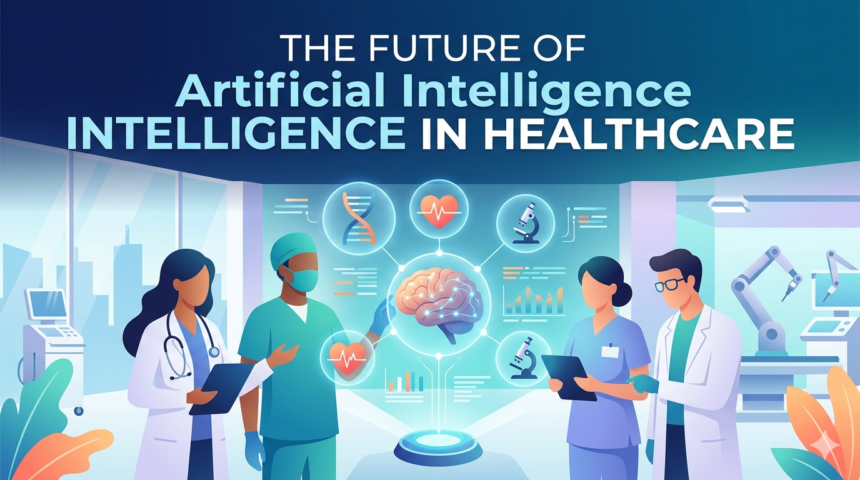
Introduction to AI in Healthcare
Artificial Intelligence (AI) has progressively become an integral part of the healthcare landscape, significantly influencing the way medical professionals diagnose and treat illnesses. The evolution of AI technologies can be traced back several decades, ranging from simple computational algorithms to complex neural networks capable of mimicking human thought processes. Over the years, healthcare systems worldwide have witnessed the adoption of AI tools that enhance the quality of patient care, streamline operations, and improve clinical outcomes.
Currently, AI is utilized in various facets of healthcare, particularly in diagnostics, where machine learning algorithms analyze medical data to detect diseases more accurately and swiftly than traditional methods. For instance, AI-based imaging technologies have demonstrated remarkable precision in interpreting radiological images, identifying conditions such as cancer at an earlier stage, thereby allowing for timely interventions. These advancements signify a shift towards more data-driven decision-making in clinical practice.
Moreover, AI’s role extends beyond diagnostics into treatment recommendations. Intelligent systems can analyze a patient’s medical history, genetics, and lifestyle to offer personalized treatment plans tailored to individual needs. This not only aids healthcare professionals in making informed decisions but also enhances patient engagement by involving them in their care pathways.
Additionally, AI plays a crucial role in patient management. Through data analytics, healthcare providers can predict patient admissions, optimize resource allocation, and facilitate timely follow-ups. This proactive approach helps in minimizing hospital readmissions and improving overall population health outcomes. As AI technologies continue to advance, their transformative potential in healthcare becomes increasingly apparent, indicating a future where AI-assisted services will enhance both efficiency and efficacy in patient care.
Key Technologies Driving AI Innovations
The landscape of healthcare is rapidly evolving thanks to the advancements in artificial intelligence (AI), particularly through key technologies such as machine learning, deep learning, natural language processing (NLP), and computer vision. Each of these technologies plays a critical role in enhancing healthcare delivery and improving patient outcomes.
Machine learning, a subset of AI, enables systems to learn from data and make predictions without explicit programming. This technology is used in predictive analytics, allowing healthcare providers to forecast patient outcomes based on historical data. For instance, machine learning algorithms can analyze trends in patient histories to identify those at risk for conditions such as diabetes or cardiovascular diseases, resulting in early interventions.
Deep learning, a more complex form of machine learning, utilizes artificial neural networks to process vast amounts of unstructured data, such as medical images. In the realm of radiology, deep learning algorithms can analyze X-rays and MRIs with remarkable accuracy, helping radiologists detect anomalies that might be overlooked by the human eye. This not only increases diagnostic precision but also expedites the diagnostic process.
Natural language processing (NLP) is transforming the way healthcare data is documented and analyzed. By interpreting human language, NLP applications can process clinical notes and research articles, enabling healthcare professionals to extract valuable insights from large volumes of unstructured text. This capability assists in clinical decision-making, ensuring that physicians have access to the latest research and patient information.
Lastly, computer vision has emerged as a pivotal technology in healthcare applications by enabling machines to interpret and understand visual data. This technology finds its use in areas such as autonomous surgery and real-time monitoring of patient vitals through video analysis. By leveraging computer vision, healthcare systems can offer improved surgical precision and continue monitoring patients with minimal human intervention.
Enhanced Diagnostic Capabilities
Artificial intelligence (AI) is increasingly revolutionizing the field of healthcare, primarily through significantly enhanced diagnostic capabilities. With the ability to meticulously analyze vast amounts of medical data, AI algorithms improve the accuracy and speed with which healthcare professionals can diagnose conditions, thus streamlining patient care. One prominent area of focus is the use of AI for analyzing medical images, such as X-rays, MRIs, and CT scans. These intelligent systems can detect subtle anomalies that might escape the human eye, leading to earlier detection of diseases such as cancer. Studies have shown that AI-driven diagnostic tools can match or even exceed the performance of human radiologists, assisting them in making well-informed decisions.
In addition to image analysis, AI algorithms are also employed to interpret lab results and electronic health records (EHRs). By synthesizing these complex datasets, AI can identify patterns and correlations that may not be immediately apparent to practitioners. For instance, predictive analytics can be utilized to forecast disease outbreaks or identify patients at high risk of developing certain conditions. Such insights allow healthcare professionals to implement early intervention strategies, thereby improving patient outcomes.
Examples of AI-driven diagnostic tools further emphasize their potential. Companies like Google’s DeepMind and IBM’s Watson Health are developing algorithms that not only enhance diagnostic capabilities but also contribute to personalized treatment plans. These tools leverage machine learning techniques to evolve continuously, becoming more accurate over time as they are fed new data.
Overall, the integration of AI into healthcare diagnostics exemplifies the transformative potential of technology in improving health outcomes. By optimizing diagnostic processes, AI equips healthcare professionals with valuable support, ultimately paving the way for more effective and timely treatments.
AI and Personalized Medicine
The integration of artificial intelligence (AI) into healthcare is revolutionizing the approach to personalized medicine. By leveraging vast amounts of patient data, AI systems are capable of creating tailored treatment plans designed to optimize individual outcomes. These systems utilize predictive analytics to identify potential risks and opportunities for patients based on their unique health profiles, lifestyles, and genetic backgrounds.
One of the primary benefits of AI in personalized medicine is its ability to process and analyze complex datasets efficiently. For instance, AI can evaluate information derived from electronic health records, genomic data, and even wearable technology. This comprehensive data analysis assists healthcare providers in predicting disease risk and understanding the efficacy of various treatments. By identifying trends and patterns, AI empowers practitioners to make informed decisions regarding medication protocols and treatment modalities that are more suited to the individual patient.
Moreover, as AI continues to evolve, its role in improving patient outcomes becomes increasingly significant. The technology allows for real-time data monitoring, which enhances the precision of diagnoses and the effectiveness of treatment plans by adapting to changes in a patient’s condition promptly. Furthermore, it facilitates the identification of adverse drug reactions or other complications that may arise during treatment, enabling swift interventions that can improve overall prognosis.
In the context of preventive healthcare, AI’s predictive capabilities can also help identify at-risk populations, which can lead to timely intervention strategies. Consequently, patients benefit from a more proactive healthcare experience rather than a reactive one, placing emphasis on prevention as well as treatment.
Improving Patient Engagement and Experience
Artificial intelligence (AI) is revolutionizing healthcare by enhancing patient engagement and experience. One of the most prominent applications of AI in this sector is through the implementation of chatbots and virtual health assistants. These digital tools are designed to facilitate communication between healthcare providers and patients. They help to answer queries, schedule appointments, and provide medication reminders, thereby improving access to necessary health services.
Through AI-driven chatbots, patients can receive real-time responses to their health-related questions, significantly reducing the burden on healthcare professionals. This not only allows providers to focus on more complex patient needs but also ensures that patients feel supported and informed throughout their healthcare journey. These technologies are particularly beneficial for individuals managing chronic conditions, as they provide ongoing engagement and timely nudges towards adherence to treatment plans.
Moreover, AI facilitates personalized communication by analyzing patient data to tailor interactions according to individual preferences. This personalization enhances the healthcare experience by fostering a stronger relationship between patients and providers. When patients receive communication that speaks directly to their concerns and preferences, their likelihood of engagement increases, which in turn boosts overall satisfaction with the healthcare services they receive.
Furthermore, improving health literacy is critical in this modern landscape. AI technologies can deliver relevant educational materials and resources tailored to a patient’s specific condition, thereby empowering them to take an active role in their health decisions. By offering accessible information and continuous support, AI not only enhances patient engagement but also drives improved health outcomes.
Operational Efficiency in Healthcare Facilities
The integration of Artificial Intelligence (AI) into healthcare facilities represents a transformative approach to operational efficiency. By harnessing the capabilities of AI, hospitals and clinics can significantly enhance their resource management, scheduling processes, and overall workflow efficiency. A streamlined operation not only alleviates the administrative burden but also contributes to better patient outcomes and satisfaction.
One of the prominent applications of AI in healthcare is predictive analytics, which assists in understanding patient flow and optimizing resource allocation. Through data analysis, AI systems can forecast patient admissions, allowing hospitals to allocate staff and medical supplies more effectively. This ensures that healthcare facilities are well-prepared to accommodate fluctuating demands, which is essential for maintaining operational stability.
Moreover, AI-driven scheduling tools are instrumental in enhancing appointment management. These systems can automatically adjust schedules based on patient needs, staff availability, and hospital resources. By minimizing appointment overlaps and reducing downtime, AI assists in maximizing the utilization of healthcare personnel and facilities, ultimately leading to enhanced service delivery.
The optimization of workflows is another key area where AI makes a notable impact. Machine learning algorithms can analyze existing processes and identify inefficiencies that may not be visible to human administrators. By streamlining these workflows, healthcare providers can reduce administrative costs, improve turnaround time for treatment, and ensure that clinical staff can focus on direct patient care rather than bureaucratic tasks.
In summary, the effective integration of AI in healthcare facilities leads to improved operational efficiency by enhancing resource allocation, streamlining scheduling and optimizing workflows. This not only reduces costs but also contributes to a more effective healthcare delivery system, ultimately benefiting patients and providers alike.
Ethical and Regulatory Considerations
The integration of artificial intelligence (AI) in healthcare brings forth significant ethical implications and regulatory challenges that require careful consideration. One of the foremost concerns is patient privacy. As AI systems often rely on vast amounts of patient data to make informed decisions, ensuring the confidentiality and security of this information is paramount. Healthcare organizations must navigate the complexities of data handling while complying with regulations such as the Health Insurance Portability and Accountability Act (HIPAA) in the United States. These regulations are designed to protect sensitive patient information; therefore, adherence is essential for maintaining trust and ensuring legal compliance.
Another critical issue is the data security of AI-driven systems. Cybersecurity threats are increasingly sophisticated, and healthcare institutions must implement stringent security measures to protect against data breaches that could compromise patient information. The reliance on AI could heighten vulnerabilities if appropriate security protocols are not established. As AI becomes more prevalent in diagnostics and treatment procedures, the potential for unauthorized access to sensitive data raises ethical concerns regarding patient rights.
Moreover, the presence of bias in AI algorithms poses a substantial risk. If AI systems are trained on datasets that do not adequately represent diverse populations, there is a risk that these systems could make inaccurate or unfair recommendations. Addressing algorithmic bias is crucial for ensuring equitable healthcare outcomes, necessitating transparency and thorough testing of AI models to guarantee fairness in the provision of care.
Finally, promoting transparency and accountability in AI applications within healthcare is essential. Stakeholders including healthcare providers, technology developers, and regulatory bodies must collaborate to establish guidelines that foster responsible AI usage. As technology evolves, continuous dialogue about the ethical implications of AI in healthcare is necessary to develop frameworks that uphold patient rights while maximizing the benefits of this transformative technology.
Future Trends and Innovations
As we look toward the future of artificial intelligence (AI) in healthcare, several transformative trends and innovations are emerging, promising to enhance patient care and streamline medical processes. One of the most significant advancements is the integration of AI with genomics, which allows for personalized medicine tailored to an individual’s genetic makeup. This not only improves treatment outcomes but also enables preemptive measures for diseases, as AI systems can analyze vast genetic data sets to identify risk factors.
Telemedicine is another area poised for growth, particularly with the ongoing advancements in AI technologies. Enhanced diagnostic tools powered by artificial intelligence can assist healthcare providers in making accurate evaluations remotely. As the demand for telemedicine rises, the integration of AI will help in monitoring patient conditions, managing chronic diseases, and providing timely interventions, thereby improving overall health outcomes.
Moreover, the convergence of AI with wearable technologies and Internet of Things (IoT) devices is set to revolutionize how data is collected and analyzed in real-time. Wearable devices equipped with AI algorithms can track vital signs and behavioral patterns, providing valuable insights for both patients and healthcare providers. This data-driven approach not only improves patient engagement and adherence to treatment plans but also allows for more informed decision-making in clinical settings.
In addition to these developments, AI’s role in predictive analytics cannot be overstated. By processing large datasets, AI systems are capable of predicting disease outbreaks, optimizing treatment schedules, and enhancing resource allocation in healthcare facilities, ultimately leading to improved patient care and operational efficiency.
The future of artificial intelligence in healthcare holds immense potential, with innovations that are not only changing how healthcare is delivered but also paving the way for a more efficient and effective healthcare ecosystem.
Conclusion: The Path Forward
As we look to the future of artificial intelligence (AI) in healthcare, it becomes increasingly clear that its potential is vast and transformative. The integration of AI technologies can enhance efficiencies, improve patient outcomes, and streamline processes across various healthcare systems. Key areas such as diagnostics, treatment personalization, and operational efficiencies are just the tip of the iceberg, highlighting significant opportunities for stakeholders.
However, embracing AI in healthcare is not merely about adopting advanced technologies; it requires a collaborative effort among healthcare providers, technology developers, regulatory bodies, and patients. Stakeholders must engage in active dialogue and share best practices to ensure that the integration of AI is conducted in a responsible manner. This means prioritizing patient safety, data privacy, and ethical considerations throughout the development and implementation phases.
Moreover, a framework for successful adoption of AI should involve continuous training for healthcare professionals to adapt to new technologies and methodologies. Regular updates to regulatory frameworks are also vital to keeping pace with the rapidly evolving AI landscape. By fostering an environment of innovation while maintaining stringent standards of care, the healthcare industry can harness the full potential of AI.
In summation, the future of AI in healthcare is bright, yet contingent upon thoughtful and responsible implementation. Understanding the delicate balance between technological advancement and ethical considerations will ultimately define the success of AI initiatives. The pathway forward is one that embraces change, encourages collaboration, and remains steadfastly committed to improving health outcomes for all individuals.