

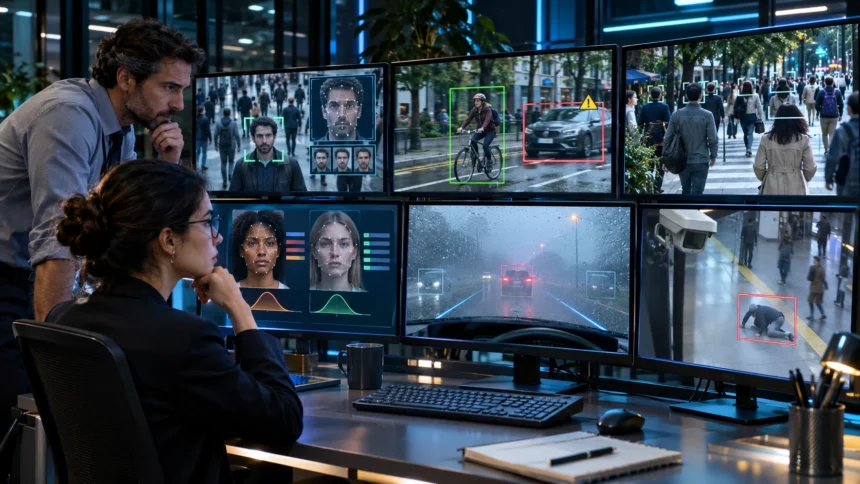
A company installs a computer vision system to improve product quality and reduce manual inspections. Everything works smoothly until the system starts approving defective products. Customers complain, expenses increase, and the business begins questioning its investment.
Situations like this highlight why understanding computer vision risks matters before implementing the technology. Although computer vision can improve efficiency, it also introduces security, privacy, and operational challenges. Ignoring these concerns can lead to expensive mistakes.
Fortunately, businesses can manage many of these risks through careful planning and regular monitoring. Understanding potential weaknesses helps organizations make better decisions about artificial intelligence. This guide explores the major risks of computer vision and practical ways to manage them.
What Are Computer Vision Risks?
Computer vision risks are potential problems associated with machines analyzing images and videos. These risks can affect system accuracy, data security, personal privacy, and business operations. They may arise during development, deployment, or everyday use.
Computer vision technology uses artificial intelligence to recognize objects and interpret visual information. However, these systems depend on algorithms, cameras, and training datasets. Problems within any of these components can affect the entire system.
Common risks associated with computer vision include:
- Incorrect object recognition.
- Personal data exposure.
- Cybersecurity vulnerabilities.
- Biased predictions.
- Unexpected operational expenses.
- Excessive dependence on automation.
- Ethical and legal concerns.
Recognizing these risks early allows businesses to develop appropriate safeguards. It also helps developers create systems that perform reliably under different conditions.
10 Major Computer Vision Risks to Consider
Many organizations focus on the benefits of computer vision before examining its limitations. However, overlooking potential risks can create problems that are difficult to resolve later. Understanding the following concerns can support safer and more effective implementation.
1. Data Privacy and Personal Information Exposure
Computer vision systems frequently collect images and videos containing personal information. Cameras may capture faces, documents, addresses, and other sensitive details. Without appropriate safeguards, this information could become accessible to unauthorized individuals.
Consider a company using cameras to monitor workplace activities. Employees may feel uncomfortable if recordings are collected without clear explanations. Excessive monitoring can also create concerns about how personal information is stored and used.
Businesses should establish privacy policies before collecting visual data. They should limit data collection to what is necessary for the intended purpose. Clear communication can also help individuals understand how their information is handled.
How to manage this risk:
- Collect only necessary visual information.
- Establish clear data retention policies.
- Remove unnecessary personal details.
- Restrict access to sensitive recordings.
- Provide appropriate privacy notices.
- Delete information when it is no longer required.
Responsible data collection helps reduce privacy concerns while supporting legitimate computer vision applications.
2. Cybersecurity Threats and System Vulnerabilities
Computer vision security risks can expose businesses to unauthorized access and data manipulation. Connected cameras, cloud platforms, and processing systems may contain security weaknesses. Poorly protected systems can become targets for cybercriminals.
For example, unauthorized access to a business’s visual monitoring system could expose confidential information. Security incidents may interrupt operations or compromise the reliability of automated decisions. Recovering from these problems can require significant time and resources.
Organizations should apply cybersecurity practices throughout the development and deployment process. Regular software updates, secure communication, and controlled access can reduce exposure. Security assessments also help identify vulnerabilities before they cause serious problems.
How to manage this risk:
- Encrypt images and video recordings.
- Use strong authentication methods.
- Install software and security updates.
- Limit unnecessary network access.
- Monitor unusual system activity.
- Conduct authorized security assessments.
A strong security framework helps protect computer vision systems and the information they process.
3. Incorrect Predictions and Recognition Errors
Computer vision systems cannot guarantee accurate predictions in every situation. Poor lighting, unfamiliar objects, and damaged images may affect recognition performance. Incorrect predictions can create significant problems when businesses depend on automated decisions.
A manufacturing system might incorrectly identify a damaged product as acceptable. Similarly, an inventory management system could miscount items because of overlapping objects. These mistakes can affect productivity, customer satisfaction, and operational expenses.
Developers should test computer vision models under realistic operating conditions. Measuring different types of errors helps organizations understand their potential consequences. Human review should remain available when incorrect predictions could cause serious harm.
How to manage this risk:
- Use representative training datasets.
- Test models under different environmental conditions.
- Review incorrect predictions regularly.
- Establish appropriate confidence thresholds.
- Introduce human verification for important decisions.
- Monitor accuracy after deployment.
Reliable predictions require continuous testing rather than confidence based only on initial performance.
4. Algorithmic Bias and Unfair Outcomes
Computer vision models learn patterns from the information provided during training. When datasets lack diversity, models may perform unevenly across different objects or groups. This limitation can result in inaccurate or unfair outcomes.
For instance, an image recognition system trained on a narrow selection of products may struggle with unfamiliar designs. Systems that analyze people can also produce unequal results across demographic groups. These differences become particularly concerning in sensitive applications.
Reducing algorithmic bias requires representative datasets and careful performance evaluation. Developers should examine results across relevant categories instead of relying solely on average accuracy. Independent reviews can help identify weaknesses that development teams might overlook.
How to manage this risk:
- Collect diverse training datasets.
- Identify underrepresented categories.
- Review image annotations for inconsistencies.
- Measure performance across relevant groups.
- Establish fairness evaluation procedures.
- Maintain appropriate human oversight.
Addressing bias helps improve fairness, reliability, and confidence in computer vision technology.
5. High Implementation and Maintenance Costs
Businesses sometimes underestimate the total cost of implementing computer vision technology. Cameras, computing hardware, software development, and data labeling require financial investment. Ongoing maintenance can increase expenses beyond the original project budget.
A small business may purchase an advanced computer vision solution without considering its computing requirements. Additional hardware and technical support could make the project more expensive than expected. These costs may reduce the financial benefits of automation.
Organizations should evaluate the complete cost of ownership before selecting a solution. Starting with a small pilot project can help determine whether the technology delivers sufficient value. Budget planning should also include future maintenance and system updates.
How to manage this risk:
- Establish a realistic implementation budget.
- Identify hardware and software requirements.
- Start with a limited pilot project.
- Consider suitable lightweight models.
- Calculate ongoing maintenance expenses.
- Measure the return on investment.
Careful financial planning helps businesses avoid unnecessary spending and select solutions that match their needs.
6. Ethical Issues in Computer Vision
Computer vision technology introduces important ethical questions about how visual information is collected and used. Continuous monitoring and automated assessments can affect personal privacy and individual freedom. These concerns become more significant when people have limited control over data collection.
Employees may feel uncomfortable working in environments with excessive camera monitoring. Customers may also question whether businesses are analyzing their activities without appropriate notice. Such practices can damage relationships and reduce public trust.
Organizations should evaluate whether their computer vision applications serve a legitimate and necessary purpose. Technology should support responsible business objectives without creating unnecessary intrusion. Clear ethical guidelines can help prevent inappropriate uses.
How to manage this risk:
- Define the purpose of visual data collection.
- Avoid unnecessary monitoring.
- Communicate how technology is used.
- Establish ethical development guidelines.
- Provide appropriate complaint and review processes.
- Evaluate the potential impact on individuals.
Ethical implementation helps organizations benefit from technology while respecting people’s rights and expectations.
7. Excessive Dependence on Automation
Computer vision can automate repetitive tasks and improve operational efficiency. However, relying entirely on automated systems creates additional risks when technology fails. Employees may become less prepared to identify problems independently.
Consider a warehouse that depends completely on automated product recognition. If the system experiences technical difficulties, inventory operations could face significant delays. Without alternative procedures, employees may struggle to maintain normal operations.
Businesses should treat computer vision as a tool that supports human expertise. Maintaining alternative processes can reduce disruption during unexpected failures. Employees should also receive suitable training to recognize and report system errors.
How to manage this risk:
- Maintain appropriate human supervision.
- Establish backup operational procedures.
- Train employees to recognize system errors.
- Review automated decisions regularly.
- Develop incident response procedures.
- Test business continuity plans.
Combining automation with human expertise creates more resilient and dependable business operations.
8. Environmental Changes and Performance Issues
Computer vision systems often perform differently when environmental conditions change. Rain, fog, shadows, reflections, and camera movement can affect image quality. These variations may reduce the reliability of object detection and image recognition.
A computer vision system designed for an indoor environment may struggle when deployed outdoors. Changing weather and lighting conditions can introduce unfamiliar visual patterns. These differences may result in unexpected recognition errors.
Developers should evaluate how systems respond to realistic environmental variations. Collecting images from different operating conditions can improve model generalization. Regular equipment maintenance can also prevent avoidable image quality problems.
How to manage this risk:
- Train models using diverse environmental conditions.
- Test performance under different lighting conditions.
- Maintain and inspect camera equipment.
- Monitor changes in image quality.
- Apply appropriate image preprocessing techniques.
- Update models when performance declines.
Preparing for environmental changes helps computer vision systems remain reliable beyond controlled testing environments.
9. Legal and Regulatory Compliance Risks
Computer vision applications may be subject to privacy, data protection, and industry-specific requirements. Organizations that collect personal information must understand their applicable legal responsibilities. Failing to meet these obligations can create financial and reputational consequences.
A business collecting visual recordings may face restrictions on how long information can be stored. Different locations may also impose different requirements for processing personal or biometric information. Assuming that the same rules apply everywhere can create compliance problems.
Organizations should consult qualified legal and compliance professionals before deployment. Reviewing applicable requirements helps businesses establish responsible data management practices. Regular compliance assessments can also identify gaps as operations change.
How to manage this risk:
- Identify applicable legal requirements.
- Document visual data collection practices.
- Establish appropriate data protection policies.
- Conduct regular compliance assessments.
- Review third-party service providers.
- Consult qualified legal professionals when necessary.
Understanding legal responsibilities helps businesses avoid unnecessary risks and maintain responsible technology practices.
10. Model Drift and Long-Term Reliability
Computer vision models may become less accurate as real-world conditions change. New products, updated packaging, and different camera settings can introduce unfamiliar visual information. These changes may gradually reduce prediction reliability.
A retail recognition system trained on older product packaging may struggle with newly introduced designs. If nobody monitors its performance, incorrect predictions could continue for months. Businesses may only discover the problem after experiencing operational losses.
Regular monitoring helps developers identify changes in model performance. Collecting representative new data can support model improvements when necessary. Updated models should undergo independent testing before being introduced into production environments.
How to manage this risk:
- Monitor model performance continuously.
- Identify changes in incoming visual data.
- Collect relevant new training examples.
- Review unexpected prediction errors.
- Validate model updates before deployment.
- Maintain previous model versions when appropriate.
Long-term reliability depends on ongoing maintenance rather than a one-time implementation process.
Computer Vision Risks and Their Solutions
Different risks require different management strategies. Understanding their relationship makes it easier to identify appropriate safeguards. The following table summarizes common computer vision problems and practical solutions.
| Computer Vision Risk | Recommended Solution |
|---|---|
| Privacy violations | Data minimization and access controls |
| Cybersecurity threats | Encryption and security assessments |
| Incorrect predictions | Regular testing and human verification |
| Algorithmic bias | Representative datasets and fairness testing |
| High implementation costs | Budget planning and pilot projects |
| Ethical concerns | Responsible data collection policies |
| Automation dependency | Human oversight and backup procedures |
| Environmental changes | Diverse training and realistic testing |
| Legal compliance risks | Compliance reviews and professional advice |
| Model drift | Performance monitoring and validated updates |
How to Reduce Computer Vision Risks Effectively
Managing the risks of computer vision requires a structured approach. Installing advanced software alone cannot guarantee security, accuracy, or reliability. Organizations need clear procedures that address risks throughout the system’s lifecycle.
Start by identifying how incorrect predictions or technical failures could affect your operations. Determine which risks require immediate attention based on their potential consequences. This process helps businesses allocate resources more effectively.
Follow these practical steps:
- Define the purpose of your computer vision system.
- Identify potential technical and operational risks.
- Review training data quality and diversity.
- Establish privacy and security policies.
- Test performance under realistic conditions.
- Maintain appropriate human supervision.
- Develop backup and recovery procedures.
- Monitor system performance after deployment.
- Review applicable compliance requirements.
- Update safeguards as business needs change.
Risk management should remain an ongoing responsibility rather than a temporary development activity.
Are the Benefits of Computer Vision Worth the Risks?
Some businesses hesitate to adopt computer vision because of its potential disadvantages. Privacy concerns, financial requirements, and technical limitations can make implementation challenging. However, these concerns do not automatically outweigh the technology’s benefits.
Computer vision can improve product inspections, inventory management, and operational efficiency. It can also reduce repetitive manual work and support more consistent decisions. The actual benefits depend on the quality and suitability of the implementation.
Businesses should compare expected benefits with potential risks before making investment decisions. A limited pilot project provides an opportunity to evaluate performance without committing excessive resources. This approach supports informed decisions based on measurable results.
Conclusion
Understanding computer vision risks is essential for businesses adopting artificial intelligence technology. Privacy concerns, security vulnerabilities, inaccurate predictions, and ethical issues deserve careful attention. Ignoring these problems can reduce the value of an otherwise useful system.
Fortunately, many risks can be managed through responsible planning and continuous evaluation. Quality training data, cybersecurity measures, human supervision, and regular monitoring contribute to reliable performance. A balanced approach helps organizations protect both their operations and their customers.
Start by conducting a risk assessment for your existing or planned computer vision system. Identify the most significant weaknesses and create a practical plan to address them. Taking preventive action today can help you build a safer and more dependable technology solution.
Frequently Asked Questions
What are the biggest risks of computer vision?
The biggest computer vision risks include privacy violations, cybersecurity threats, algorithmic bias, and incorrect predictions. High implementation costs and changing environmental conditions can also affect system reliability.
Is computer vision a security risk?
Computer vision can introduce security risks when cameras, software, or stored visual information are poorly protected. Encryption, access controls, regular updates, and security assessments can help reduce these vulnerabilities.
What are the ethical concerns of computer vision?
Common ethical concerns include excessive monitoring, unauthorized data collection, biased predictions, and personal privacy violations. Responsible data management and transparent policies help organizations address these concerns.
Can computer vision replace human decision-making?
Computer vision can automate certain repetitive visual tasks. However, human supervision remains important for complex, sensitive, or high-impact decisions where automated predictions may be inaccurate or incomplete.
How can businesses minimize computer vision risks?
Businesses can minimize risks through representative training data, regular security assessments, performance monitoring, and human oversight. Establishing clear privacy policies and backup procedures also supports safer implementation.