

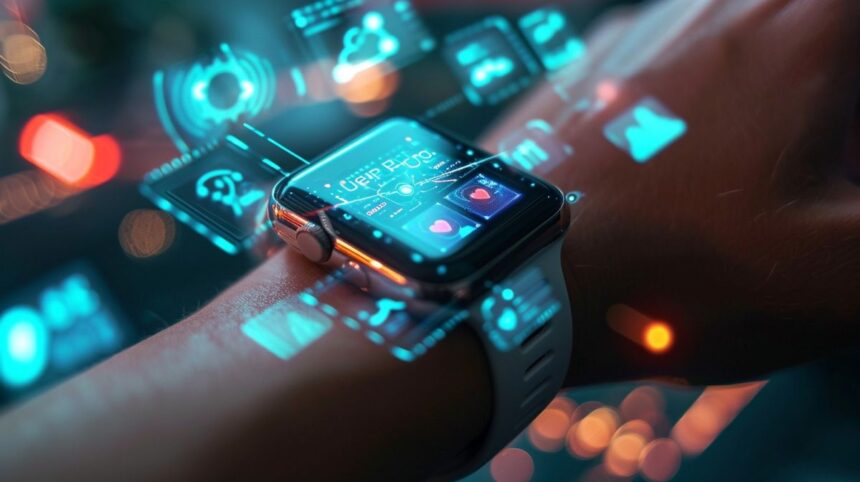
Wearable technology has developed from simple digital accessories into a broad ecosystem of connected devices. Early digital watches introduced electronic timekeeping in a compact format, while later models added calculators, alarms, calendars, and basic data displays. Fitness trackers extended this progression by counting steps, estimating calories, monitoring activity, and encouraging users to set measurable goals. Bluetooth accessories, including wireless headsets and early connected devices, demonstrated how personal electronics could communicate without cables and remain available throughout the day. Although these products were initially viewed as conveniences or novelties, they established the expectation that technology could accompany people rather than remain confined to a desk or living-room screen.
Progress in miniaturized processors and sensors accelerated this transformation. Smaller components made it possible to combine motion detection, heart-rate measurement, GPS, microphones, cameras, and environmental monitoring in lightweight devices. More efficient battery systems extended operating time, while faster wireless communication enabled seamless links with smartphones, home networks, and online services. Cloud computing added another important layer by allowing data to be stored, analyzed, and synchronized across platforms. These advances turned modern smartwatches and health monitors into multifunctional tools that can deliver notifications, support communication, track wellness indicators, and provide context-sensitive information in real time.
The current generation also includes augmented-reality devices, smart rings, connected clothing, and other products designed to blend into everyday routines. Their significance lies not only in what they can do, but in how continuously they operate. Wearables can collect information throughout the day, create more personalized experiences, and help users recognize patterns that may support preventive health decisions. At the same time, they illustrate the rise of ambient computing, in which digital services respond with less direct effort from the user. Convenience, continuous data collection, and increasingly seamless integration are therefore shaping a future where smart devices become less noticeable while playing a larger role in communication, health management, productivity, and daily life.
The next generation of wearable and smart devices will depend on several technologies developing in parallel. Artificial intelligence and machine learning will allow devices to interpret movement, voice, surroundings, and physiological signals with increasing accuracy. Instead of merely recording information, sensors will identify patterns, anticipate needs, and provide personalized assistance. On-device processing will be especially important because it can reduce latency, support reliable operation without a constant connection, and keep sensitive health or behavioral data closer to its source. Cloud connectivity will remain valuable for large-scale analysis, software updates, device synchronization, and the training of more capable models.
Connectivity advances will further expand what these products can do. 5G and emerging wireless standards can provide faster communication, lower latency, and more efficient support for dense networks of connected objects. Improved location awareness will combine satellite positioning with indoor mapping, network signals, and environmental sensing to deliver more precise context. Computer vision and natural voice interfaces will make interaction more intuitive, while spatial computing will blend digital information with physical surroundings through augmented, mixed, and virtual reality. These capabilities could make glasses, earbuds, vehicles, and household systems responsive to both spoken commands and visual cues.
Progress in hardware will be equally significant. Flexible and printed electronics can create lighter, thinner components that bend with the body or integrate into clothing, patches, and other everyday materials. Advanced biometric sensors will monitor cardiac activity, motion, temperature, hydration, and other indicators with less disruption. Researchers are also pursuing non-invasive chemical sensing, which could eventually detect biomarkers through skin, sweat, breath, or other accessible samples. More efficient batteries, improved power management, and energy-harvesting methods will extend operating time and reduce the need for frequent charging. Together, these developments can make computing less visible while increasing its usefulness, comfort, and ability to respond continuously to human needs.
Wearable technology is becoming an increasingly practical health companion, extending personal awareness beyond occasional appointments. Smartwatches, fitness bands, and connected sensors can already measure heart rate, estimate blood oxygen levels, count steps, assess activity intensity, and record sleep patterns. Exercise analysis may identify changes in pace, distance, movement efficiency, or recovery, helping users adjust routines and recognize when rest is needed. These capabilities support everyday wellness decisions without requiring specialized equipment.
The next generation of smart devices is likely to broaden this role. Continuous glucose monitoring, increasingly refined blood pressure trends, skin temperature measurement, stress indicators, and hydration estimates could provide a more detailed picture of changing health conditions. When collected over time, these measurements may reveal patterns that are difficult to notice through occasional self-assessment. Artificial intelligence could then identify unusual changes and encourage users to seek advice before a minor concern develops into a more serious problem.
Such progress requires careful boundaries. Wellness guidance is not the same as a clinically validated diagnosis, and consumer sensors may be affected by movement, skin contact, device placement, or individual differences. Health data should therefore be interpreted responsibly rather than treated as definitive medical evidence. Accuracy testing, transparent limitations, professional oversight, strong privacy protections, and appropriate regulatory approval will be essential, particularly when a device influences treatment decisions or signals a possible emergency.
Wearables may also strengthen remote patient monitoring by allowing clinicians to review selected information between visits. Digital therapeutics could use personalized feedback, reminders, and structured interventions to support conditions such as diabetes, cardiovascular disease, sleep disorders, or anxiety. Combined with secure data sharing and equitable access to connected services, these tools could make preventative care more proactive and accessible. Their greatest value will come not from replacing medical professionals, but from helping individuals and care teams recognize meaningful changes earlier and respond with better-informed support.
Computing is gradually moving beyond the model in which people deliberately open an application, search for information, and interpret a screen. Ambient computing places digital assistance within everyday surroundings, allowing connected devices to respond to context, movement, voice, location, and established routines. A smartwatch might recognize an approaching appointment and display only the relevant travel update, while earbuds could adjust audio or read an important message when the user is walking. The interaction becomes less about operating a device and more about receiving timely support without interrupting an activity.
This shift depends on an ecosystem in which devices cooperate rather than function as isolated products. Smart glasses may provide discreet directions, a vehicle may share journey information with a home assistant, and household systems may prepare lighting, temperature, or appliances according to a resident’s schedule. Voice assistants, gesture controls, and hands-free notifications can make these connections useful when screens are inconvenient, such as while cooking, exercising, driving, or caring for a child. Intelligent automation may also identify patterns and offer contextual recommendations, including reminders to leave, suggestions based on weather, or adjustments that reduce energy consumption.
For this model to earn public trust, convenience must be balanced with transparency and control. People should be able to understand which devices are collecting information, how data is shared, and why a particular recommendation or action has been generated. Clear privacy settings, visible indicators, adjustable automation, and simple ways to pause or disable assistance are essential. Users may want a device to respond to a voice command but not record surrounding conversations, or to receive urgent alerts without being exposed to constant prompts. Thoughtful design should therefore minimize unnecessary interruptions, respect personal boundaries, and keep human choice at the center of connected experiences. The most effective ambient systems will remain present when helpful and quiet when they are not needed.
Smart glasses are moving beyond novelty toward a computing model in which digital information is placed within the user’s physical surroundings. Through augmented reality, a wearer could view turn-by-turn navigation along a pavement, see translated text over a foreign-language sign, or receive step-by-step instructions without consulting a phone. Mixed reality and spatial computing extend this concept by anchoring interactive objects to rooms, tools, and people, allowing digital content to respond to the environment rather than remain confined to a flat screen.
For widespread adoption, wearable displays must become lighter, more comfortable, and less conspicuous. Battery capacity will need to improve without creating excessive weight, particularly around the nose and ears. Wider fields of view, brighter displays, accurate environmental mapping, and reliable operation in changing light will also be important. Natural input methods, including voice, eye movement, hand gestures, and subtle controls, could reduce dependence on touchscreens. Equally significant is appearance: devices that resemble ordinary eyewear may be more socially acceptable than visibly technical headsets.
Potential applications extend across professional and public life. Manufacturing employees could receive contextual guidance while assembling equipment, while healthcare workers might access patient information or anatomical visualisations without interrupting care. Logistics staff could follow warehouse routes, and trainees could practise hazardous procedures in controlled simulations. Tourism could provide historical reconstructions at landmarks, entertainment could blend fictional characters with real settings, and accessibility tools could offer live captions, environmental descriptions, or visual alerts for people with sensory impairments.
These benefits depend on responsible design and social norms. Visual overlays could distract users in traffic or hazardous workplaces, while cameras raise concerns about recording people who have not consented. Clear indicators, privacy controls, and restrictions in sensitive spaces may help establish trust. Communities will also need to negotiate when immersive devices are appropriate in conversation, education, and public life. If digital layers become constant, users may find it harder to distinguish attention to the physical world from engagement with a mediated one. The most successful systems will therefore enhance presence rather than replace it.
The next phase of wearable technology will depend less on individual products and more on the connected device ecosystem surrounding them. A phone, smartwatch, pair of earbuds, vehicle, home system, and workplace platform should function as coordinated parts of one environment rather than as isolated purchases. A user might begin a call on a phone, continue it through earbuds, receive directions through a watch, and have the vehicle adjust its settings automatically. Such seamless handoffs require shared communication standards, cross-platform compatibility, and reliable synchronization across devices with different operating systems and manufacturers.
Interoperability can make technology more convenient while reducing dependence on a single brand. Common data formats and open standards would allow consumers to replace a watch, phone, or home hub without rebuilding an entire digital environment. Unified identity management could provide secure, consistent access across personal and professional systems, while permissions would determine which devices may view health data, location information, credentials, or workplace files. These safeguards are essential because convenience should not come at the expense of privacy. Products from different companies must authenticate one another securely and exchange information predictably.
Significant technical obstacles remain. Fragmented software can prevent otherwise compatible devices from sharing functions, while inconsistent data formats may produce inaccurate health records, duplicated notifications, or incomplete activity histories. Limited battery life, unreliable wireless connections, and network failures can interrupt synchronization at inconvenient moments. Device replacement also creates difficulties when settings, personal profiles, and access rights do not transfer smoothly. Manufacturers, developers, and regulators will therefore need to establish durable standards for compatibility, security, updates, and data portability. If they succeed, connected devices can operate as a flexible, resilient network that serves users across homes, vehicles, workplaces, and changing product choices.
Wearable technology and smart devices can collect biometric, behavioral, location, audio, visual, and environmental information continuously, often in the background. This creates uncertainty about who owns the data, who may access it, and whether users have provided genuinely informed consent. A person may agree to lengthy terms without understanding that sleep patterns, movement, conversations, or health indicators could be retained, combined with other records, or sold to partners. Secondary uses may include targeted advertising, product development, employment assessments, or surveillance. If databases are breached, exposed information can enable identity theft, impersonation, stalking, or financial fraud.
Security risks extend beyond malicious attacks. Weak authentication, insecure wireless connections, outdated software, and excessive permissions can give unauthorized parties access to intimate records or device functions. Algorithmic systems may also draw inaccurate conclusions from incomplete or biased data, potentially affecting medical recommendations, insurance decisions, employment opportunities, or access to services. A misleading health score or behavioral profile can be difficult to challenge, particularly when companies do not explain how conclusions were produced. Responsible design therefore requires strong encryption in transit and at rest, secure authentication, regular software updates, and independent security testing.
Privacy protection should begin with data minimization. Devices should collect only information necessary for a clearly defined function, process sensitive material locally whenever possible, and provide user-controlled permissions that are easy to review and revoke. Clear retention policies should state how long information is kept, when it is deleted, and whether it is shared. Privacy settings should be understandable rather than hidden behind technical language, while meaningful alternatives should exist for people who do not wish to surrender personal data.
Ethical responsibilities also arise in workplaces, schools, homes, and public spaces. Continuous monitoring can pressure employees, intensify anxiety, and normalize surveillance; insurers or employers should not treat automated measurements as unquestionable evidence. Children’s devices require heightened safeguards, especially against profiling and commercial exploitation. Designers must address accessibility without making disabled users accept greater surveillance, and test algorithms for demographic bias. Constant measurement may encourage social comparison and reduce personal autonomy, so innovation should be judged not only by convenience, but also by dignity, fairness, accountability, and the right to live without perpetual observation.
The expansion of wearable technology and smart devices must be assessed against its environmental and social costs. Mining the minerals used in batteries, sensors, processors, and displays can damage ecosystems and place pressure on communities. Manufacturing also consumes substantial water and energy, while complex packaging adds unnecessary waste. Once products reach consumers, charging requirements increase electricity demand, and short upgrade cycles encourage replacement before existing devices have reached the end of their useful lives. Difficult repairs, proprietary parts, and sealed batteries further contribute to the growing volume of electronic waste.
More sustainable design can reduce these pressures without stopping technological progress. Durable hardware should be supported by long-term software updates, replaceable batteries, modular components, and readily available repair information. Manufacturers can increase the use of recycled and responsibly sourced materials, reduce packaging, and improve energy efficiency during operation. Refurbishment programs can extend product lifespans by returning used devices to productive use, while convenient take-back schemes and responsible recycling facilities can help recover valuable materials and prevent hazardous waste from entering informal disposal systems.
Responsible innovation must also include people with different needs and circumstances. Inclusive design can make devices more useful for users with disabilities by providing voice control, tactile feedback, adjustable displays, captions, and compatibility with assistive technologies. Older adults and people with limited digital literacy may benefit from simple interfaces, clear instructions, accessible support, and straightforward privacy controls. Products should accommodate varied body types, skin tones, and mobility requirements through adjustable fittings, representative testing, and sensors designed to perform reliably across users.
Affordability is equally important. Offering lower-cost models, repair options, refurbished equipment, and flexible access to essential features can help prevent smart technology from deepening the digital divide. Future innovation should improve access and usability rather than create new barriers. Environmental responsibility and social inclusion are therefore not separate goals; they are essential measures of whether connected devices genuinely serve the wider public.
For many people, mature wearable technology will become a quiet layer of everyday life rather than a collection of devices demanding constant attention. A watch, ring, or health patch could monitor patterns such as sleep, heart activity, temperature, movement, and stress, then convert them into carefully filtered guidance. Instead of presenting an endless stream of measurements, these systems might highlight meaningful changes, recommend rest, or suggest professional advice when a pattern warrants closer attention. Users would retain control over what is collected, interpreted, and shared.
Interaction with digital services may also become more natural. Voice commands, subtle gestures, and context-aware controls could reduce dependence on keyboards and touchscreens, whether someone is cooking, travelling, exercising, or managing accessibility needs. Smart glasses could provide directions, translations, reminders, or relevant information without requiring users to look down at a phone. Their value, however, would depend on restraint: useful information should appear at the right moment, while distractions and unnecessary alerts remain in the background.
Behind these experiences, coordinated smart devices could anticipate routine needs. A home might adjust lighting and temperature according to occupancy, a vehicle could prepare navigation based on a calendar, and a personal assistant could coordinate appointments, household supplies, and energy use. Such convenience will not be automatic or universal. High prices, unreliable connectivity, limited battery life, and complicated charging routines may still exclude users or create frustration. Devices must also work together across manufacturers rather than forcing households into isolated ecosystems.
Trust will determine whether people accept this more connected environment. Clear privacy choices, strong security, transparent data practices, and reliable performance will be essential, particularly when devices handle health information or observe domestic spaces. Social norms will matter as well: people may object to recording glasses, constant prompts, or workplaces that expect permanent availability. Automation should support judgment, not replace it. The most successful future devices will therefore be unobtrusive, interoperable, secure, sustainable, and genuinely useful, adding dependable assistance without making daily life more complicated or dependent on technology.