

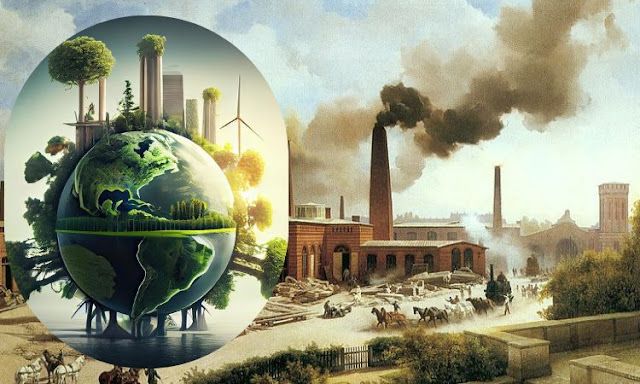
Introduction to Global Warming
Global warming refers to the long-term increase in Earth’s average surface temperature due to human activities, primarily the emission of greenhouse gases. This phenomenon is a critical aspect of climate change, which encompasses various changes in weather patterns, sea levels, and ecosystems driven by the alterations in these temperatures. Understanding global warming is imperative as its implications permeate various facets of life, including environmental health, economic stability, and social equity.
At the heart of global warming lies the greenhouse effect, a natural process essential for maintaining the planet’s temperature. Greenhouse gases, such as carbon dioxide (CO2), methane (CH4), and nitrous oxide (N2O), trap heat from the sun in the atmosphere, preventing it from escaping back into space. While this effect sustains life by keeping Earth warm enough to support ecosystems, the excessive accumulation of these gases—largely from industrial emissions, deforestation, and agricultural practices—has intensified the effect, leading to unprecedented global temperature rises.
Historical climate data paints a stark picture of this warming trend. Research indicates that global temperatures have increased by approximately 1.1 degrees Celsius since the late 19th century. This change, minute in numerical terms, brings profound consequences, manifested through more frequent and severe weather events like hurricanes, droughts, and floods. Additionally, it accelerates the melting of polar ice caps and glaciers, contributing to rising sea levels that threaten coastal communities worldwide.
The urgency to address global warming cannot be overstated. The scientific consensus is clear: immediate, concerted efforts are required to mitigate its effects and foster resilience in affected populations. As we delve further into the intricate mechanisms and consequences of global warming, it becomes evident that our collective response can shape a more sustainable and equitable future for generations to come.
The Greenhouse Effect Explained
The greenhouse effect is a natural phenomenon that plays a crucial role in regulating the Earth’s temperature. It occurs when certain gases, known as greenhouse gases, trap heat in the Earth’s atmosphere. This process is essential for maintaining the warm temperatures necessary for life to flourish, as it keeps the average surface temperature at a level conducive to supporting ecosystems.
Key greenhouse gases include carbon dioxide (CO2), methane (CH4), nitrous oxide (N2O), and water vapor. These gases are capable of absorbing infrared radiation emitted from the Earth’s surface, preventing it from escaping back into space. As a result, this trapped heat warms the lower atmosphere, contributing to what we experience as the greenhouse effect.
Carbon dioxide is the most significant greenhouse gas released through human activities, chiefly from the combustion of fossil fuels for energy, transportation, and industrial processes. The increase in CO2 levels has been particularly alarming, contributing to global warming and climate change. Methane, while present in smaller quantities, is considerably more effective at trapping heat—over 25 times more potent than CO2 over a century. Its primary sources include agricultural practices, landfills, and the production of fossil fuels.
Other greenhouse gases, such as nitrous oxide, emerge from agricultural soil management and the use of synthetic fertilizers. Together, human activities have greatly intensified the concentration of these gases in the atmosphere, disrupting the natural balance of the greenhouse effect. As a result, the Earth’s average temperature has been rising, leading to various climate-related consequences, including extreme weather events, sea level rise, and alterations to ecosystems.
The Role of Human Activities in Global Warming
Human activities have played a critical role in the acceleration of global warming. The industrial revolution, which began in the late 18th century, marked a significant turning point. This period witnessed an unprecedented increase in the burning of fossil fuels, notably coal, oil, and natural gas, all of which release large amounts of carbon dioxide (CO2) and other greenhouse gases (GHGs) into the atmosphere. According to the Global Carbon Project, fossil fuel combustion accounted for approximately 86% of the CO2 emissions in 2020, underscoring the substantial impact of energy production on global warming.
Deforestation is another significant contributor. The World Resources Institute notes that forests play a crucial role in absorbing CO2. In fact, it is estimated that deforestation contributes approximately 10-15% of global GHG emissions. Activities such as logging, agriculture, and urbanization have led to the clearance of vast tracts of forest, reducing the Earth’s capacity to absorb carbon and thus augmenting the greenhouse effect.
Moreover, agricultural practices have been identified as substantial sources of methane (CH4) and nitrous oxide (N2O), potent greenhouse gases with much greater heat-trapping abilities than CO2. The Food and Agriculture Organization reports that livestock production and rice cultivation contribute significantly to these emissions due to enteric fermentation and fertilizer application. For instance, methane emissions from livestock account for about 14.5% of global greenhouse gas emissions.
In conclusion, the interplay between industrialization, deforestation, and fossil fuel consumption illustrates the profound impact human activities have had on the composition of Earth’s atmosphere. These changes not only exacerbate global warming but also pose significant challenges for future climate stability.
Consequences of Global Warming
The repercussions of global warming are profound and multifaceted, impacting various aspects of the environment, economy, and society. One of the most alarming consequences includes rising sea levels, primarily caused by the melting of polar ice caps and glaciers. As ocean levels continue to rise, coastal regions face increased flooding and erosion, threatening habitats, infrastructure, and livelihoods.
Furthermore, global warming is linked to a surge in extreme weather events. Regions that previously experienced mild weather are now subject to severe storms, droughts, and heatwaves, straining resources and causing significant damage to property and ecosystems. Such extreme conditions not only disrupt daily life but also create long-term implications for communities, as they struggle to recover and rebuild after climate-related disasters.
Another critical aspect to consider is the shift in ecosystems due to changing climate conditions. As temperatures rise, many plant and animal species are forced to adapt to new environments or risk extinction. This disruption in biodiversity is not only troublesome for wildlife but also undermines ecosystem services such as pollination, water filtration, and carbon sequestration, which are essential for sustaining human life.
In addition to environmental impacts, global warming poses significant challenges to agriculture and food security. Altered precipitation patterns and increased temperatures can affect crop yields, leading to food shortages and increased prices. This situation raises concerns about the accessibility of nutritious food for vulnerable populations, ultimately threatening public health. The increasing incidence of climate-sensitive diseases, exacerbated by warming temperatures, also poses a risk to human health, highlighting the interconnectedness of these global issues.
Thus, the consequences of global warming span diverse sectors, emphasizing the need for a coordinated response to mitigate its effects and adapt to the changes that are already occurring.
Climate Feedback Loops and Tipping Points
The dynamics of climate change encompass a complex interplay of feedback loops and tipping points that significantly influence global warming. Feedback loops are processes that can amplify or dampen effects of climate change. Positive feedback loops exacerbate warming by facilitating additional changes in the environment, while negative feedback loops tend to counteract them. A prominent example of a positive feedback loop is the melting of polar ice. As temperatures rise, ice sheets and glaciers melt, reducing the Earth’s albedo, or its ability to reflect sunlight. This decline in albedo results in more solar energy being absorbed by the oceans and land surfaces, driving further temperature increases and consequently leading to more ice loss.
Permafrost thawing represents another critical feedback mechanism in the context of climate change. Vast amounts of carbon dioxide and methane are stored in frozen soil, and when permafrost thaws due to elevated temperatures, these greenhouse gases are released into the atmosphere. This release further contributes to global warming, creating an accelerating cycle that poses substantial risks for the climate system. The interplay of these feedback loops elevates the urgency of addressing climate change, as their effects can quickly cascade into broader climatic shifts.
Tipping points also play a crucial role in understanding climate dynamics. A tipping point refers to a threshold at which a small change can lead to dramatic and often irreversible alterations in the state of the system. For instance, the significant reduction of ice sheets and the corresponding rise in sea levels is an irreversible tipping point. Other potential tipping elements include the dieback of the Amazon rainforest and the collapse of the Atlantic Meridional Overturning Circulation, which may trigger profound shifts in global climate patterns. Understanding both feedback loops and tipping points is essential for developing strategies to mitigate global warming and its far-reaching impacts.
Global Warming Predictions and Models
Global warming has prompted scientists to develop sophisticated predictive models that simulate future climate scenarios based on current data trends. These climate models integrate complex algorithms that account for various factors, including greenhouse gas emissions, land-use changes, and oceanic patterns. The primary objective of these models is to provide insights into the potential trajectory of global temperatures, allowing policymakers and society to prepare for forthcoming shifts in climate.
One of the most prevalent modeling frameworks is the Coupled Model Intercomparison Project (CMIP), which includes multiple climate models that have been rigorously tested and validated against historical climate data. These models differ in complexity, with some focusing on specific regions while others assess global conditions. However, it is essential to recognize that uncertainties inherent in these models can lead to varied predictions. Factors such as unforeseen technological advancements, policy changes, and natural climate variability can significantly influence the accuracy of these forecasts.
The potential outcomes of global warming, as projected by these models, often indicate a rise in global average temperatures ranging from 1.5°C to 4.5°C by the end of the century. Such increases pose considerable risks to global ecosystems and human societies, affecting biodiversity, agricultural productivity, and water resources. For instance, higher temperatures could lead to more frequent and severe weather events, including storms, droughts, and heatwaves, which would have profound implications for economies and communities worldwide.
Moreover, marine and terrestrial ecosystems face dire consequences under various warming scenarios. A rise in sea levels, driven by melting ice caps and thermal expansion, threatens coastal habitats and human settlements. Similarly, shifting climate zones could disrupt ecosystems and lead to the loss of species, which is critical as biodiversity is foundational for ecological balance.
Mitigation Strategies for Global Warming
Mitigating the adverse effects of global warming necessitates a comprehensive approach that targets the reduction of greenhouse gas emissions across various sectors. One effective strategy is the transition to renewable energy sources, which include solar, wind, and hydroelectric power. These energy sources are crucial as they produce little to no emissions compared to traditional fossil fuels. Implementing policies that support the development and deployment of renewable technologies can significantly reduce carbon footprints globally.
Investment in energy efficiency is another vital mitigation strategy. By enhancing the efficiency of buildings, transportation systems, and industries, we can substantially decrease energy consumption and associated emissions. This can be achieved through measures such as improving insulation in homes, using energy-efficient appliances, and adopting fuel-efficient vehicles. The widespread adoption of such practices can lead to a considerable reduction in overall energy demand.
In addition, carbon capture and storage technologies (CCS) present an innovative solution for tackling emissions from industrial processes. These technologies capture carbon dioxide produced during energy generation or manufacturing and store it underground, preventing it from entering the atmosphere. Encouraging research and development in CCS can yield significant advancements in how industries manage their emissions.
Furthermore, enhancing reforestation efforts and implementing sustainable land management practices is essential. Trees act as carbon sinks, absorbing CO2 from the atmosphere and helping to mitigate climate change. Thus, protecting existing forests and restoring degraded land can aid in maintaining biodiversity while also sequestering carbon.
In summary, a multifaceted approach integrating renewable energy, energy efficiency, innovative carbon capture technologies, and reforestation efforts is imperative in the fight against global warming. By adopting these strategies collectively, we can effectively mitigate the impacts of climate change and work towards a more sustainable future.
The Role of International Agreements and Policies
International agreements have emerged as essential frameworks for addressing the complex challenge of global warming and climate change. One of the most significant commitments is the Paris Agreement, adopted in 2015, which establishes a collective effort among countries to limit the rise in global temperatures to below 2 degrees Celsius above pre-industrial levels, with a target of 1.5 degrees Celsius. This agreement is notable for its bottom-up approach, allowing countries to set their own nationally determined contributions (NDCs) reflecting their unique circumstances and capabilities.
Each signatory country is required to periodically review and enhance its commitments, showcasing an iterative process aimed at increasing ambition over time. However, challenges such as political will, economic constraints, and differing national priorities complicate the enforcement of these agreements. While many countries have made substantial progress in achieving their NDCs, discrepancies remain between planned initiatives and actual emissions reductions.
Moreover, international collaborations such as the Kyoto Protocol, though historically significant, illustrated the difficulties in imposing binding targets. Some key players, like the United States, withdrew from the protocol, illustrating the challenges that countries face regarding compliance and accountability. The evolving nature of climate science and policy necessitates that countries continuously adapt their strategies in response to growing evidence of climate impacts.
Furthermore, international agreements serve as critical platforms for sharing technology, financial resources, and knowledge between developed and developing nations. This collaborative effort is vital in addressing disparities in capacity to mitigate and adapt to climate change impacts. As nations navigate these complexities, the ongoing dialogue and synergy fostered through global agreements remain imperative in the fight against global warming.
Conclusion and Call to Action
Through our exploration of the science behind global warming, we have identified its significant causes, such as greenhouse gas emissions and deforestation, as well as its devastating impacts on natural ecosystems and human societies. The consensus among scientists underscores the urgent need for addressing climate change to protect our planet. As individuals, we play a crucial role in this endeavor.
This societal challenge requires both collective and individual actions. By adopting sustainable practices, we can contribute positively to reducing our carbon footprint. Simple yet effective steps include reducing energy consumption, opting for public transportation or cycling instead of driving, and supporting renewable energy initiatives. Additionally, being conscious of our consumption patterns, such as reducing waste, recycling, and choosing sustainable products, can significantly impact our environment.
Moreover, advocating for policies that promote environmental sustainability is vital. Engaging with local communities, joining organizations that focus on climate action, and voting for leaders who prioritize ecological issues can lead to larger systemic changes. We are not powerless against global warming; our collective efforts can influence governments and industries toward more sustainable practices.
To conclude, it is imperative that we recognize our responsibility in combating global warming. Each small action contributes to a larger movement toward a sustainable future. The science of global warming is clear, and now it is up to us to act decisively. By working together, individually and collectively, we can mitigate the effects of climate change and create a healthier planet for future generations.