

Introduction to Space Exploration
Space exploration represents one of humanity’s greatest pursuits, reflecting our innate curiosity to understand the universe beyond our planet. From early observations of celestial bodies to groundbreaking missions involving robotic spacecraft and human travelers, the journey into space has evolved dramatically since its inception. This endeavor holds profound significance, as it not only expands our knowledge but also addresses fundamental questions about our existence and potential life beyond Earth.
The origins of space exploration trace back to the early 20th century, highlighted by milestone events such as the launch of the first artificial satellite, Sputnik 1, by the Soviet Union in 1957. This event marked the dawn of the space age, which was soon followed by human spaceflight, beginning with Yuri Gagarin’s historic journey in 1961. These groundbreaking achievements inspired a wave of investment and innovation in technology and science, setting the stage for subsequent endeavors, such as lunar missions and robotic explorations of distant planets.
As technology evolved, so too did our capabilities in space exploration. The establishment of space agencies such as NASA, ESA, and others revolutionized our approach to studying the cosmos. Technological advancements have introduced sophisticated spacecraft, telescopes, and landers capable of probing the depths of space and gathering invaluable data. These instruments have enabled missions to Mars, the exploration of the outer solar system, and even investigations of exoplanets beyond our solar neighborhood.
Recent discoveries, such as the social dynamics of distant planetary systems and the identification of potentially habitable exoplanets, reflect the collective impact of decades of research and exploration. The advancements in space-based technologies not only enhance our understanding of the universe but also inspire future generations to engage in scientific inquiry and exploration.
Recent Milestones in Space Missions
In recent years, significant milestones in space exploration have been achieved, highlighting human ingenuity and the advancing technologies that support it. The Mars Perseverance Rover, launched by NASA in July 2020, represents a noteworthy venture into Martian exploration. Its primary objective is to seek signs of ancient life, collect soil and rock samples, and test new technologies for future human exploration of Mars. The rover has successfully transmitted high-resolution images back to Earth, revealing intriguing geological features and signs of past water activity on the planet’s surface.
Another remarkable development in space exploration is the James Webb Space Telescope (JWST), which was launched in December 2021. As the most powerful space telescope ever built, the JWST aims to complement and expand upon the discoveries made by its predecessor, the Hubble Space Telescope. Positioned at the second Lagrange point (L2), JWST is designed to observe infrared wavelengths, allowing scientists to peer deeper into the universe. Its objectives include studying the formation of galaxies, stars, and planetary systems, thereby enhancing our understanding of the universe’s origins and evolution.
Lunar exploration efforts have also garnered attention, exemplified by NASA’s Artemis program, which aims to return humans to the Moon and establish a sustainable presence. Under Artemis I, an uncrewed test flight, the Orion spacecraft successfully completed its mission, marking a significant step towards human landings on the Moon once more. The program seeks not only to explore the lunar surface but also to prepare for future missions to Mars, which underscores the interconnected nature of these exploration efforts.
These missions collectively represent the forefront of space exploration, pushing the boundaries of our knowledge and inspiring future generations to continue exploring the cosmos. The advancements resulting from these efforts shed light on fundamental questions regarding our place in the universe and the potential for life beyond Earth.
Breakthroughs in Astronomical Observations
Recent advancements in astronomical observations have significantly transformed our understanding of the universe. New telescopes and technologies have emerged, enhancing our capacity to study cosmic phenomena such as supernovae, black holes, and exoplanets with unprecedented clarity and detail. These breakthroughs have not only enriched our foundational knowledge but also stimulated a deeper interest in the field of astronomy.
One notable advancement is the deployment of next-generation space telescopes. For instance, the James Webb Space Telescope (JWST) has revolutionized our ability to observe the universe in the infrared spectrum. This capability allows astronomers to see through cosmic dust, unveiling previously obscured regions of space. With JWST’s high-resolution imaging and spectroscopy, researchers have made substantial progress in identifying and characterizing exoplanets. The data gathered has provided insights into their atmospheres and potential habitability, shaping our understanding of worlds beyond our solar system.
Additionally, ground-based observatories equipped with adaptive optics have considerably improved the clarity of images captured from Earth. This technology compensates for atmospheric disturbances, allowing astronomers to observe distant galaxies and phenomena with a level of detail previously thought unattainable. Such improvements have enhanced our comprehension of phenomena like supernovae, with researchers now able to investigate the elements produced during these cosmic explosions in exceptional detail.
Moreover, the integration of radio astronomy advancements has shed light on the enigmatic nature of black holes. Enhanced imaging techniques, such as those used in the Event Horizon Telescope, have enabled astronomers to capture the first-ever images of a black hole’s event horizon. This remarkable feat not only verifies long-standing theoretical predictions but also opens pathways for further exploration and study.
In conclusion, the latest breakthroughs in astronomical observations underline the importance of continual investment in innovative technologies. These advancements not only deepen our understanding of cosmic events but also pave the way for future discoveries that will further illuminate the complexities of our universe.
Latest Discoveries Related to Exoplanets
In recent years, the field of exoplanet research has experienced significant advancements, leading to the discovery of numerous Earth-like planets situated in habitable zones around their stars. These exoplanets, which are planets outside of our solar system, are of particular interest to scientists as they may hold the key to understanding life beyond our planet.
Various methodologies have been employed to identify these distant worlds. One of the most prevalent techniques is the transit method, which detects the slight dimming of a star’s light as a planet passes in front of it. This method has been instrumental in confirming thousands of exoplanets, including several that resemble Earth in terms of size and temperature. Additionally, the radial velocity method, which measures the gravitational pull of a planet on its host star, has also contributed to our growing catalog of exoplanets.
Recent discoveries have revealed several exoplanets within the ‘Goldilocks Zone’, where conditions could be just right for liquid water to exist. For example, Proxima Centauri b, the closest known exoplanet to Earth, orbits its star within this habitable range. Similarly, the TOI-700 system has showcased multiple Earth-sized exoplanets, sparking interest in their atmospheres and potential to support life.
The implications of these findings are profound, as the search for life outside our planet hinges on understanding these distant worlds. Researchers are now engaged in characterizing the atmospheres of some of these exoplanets, utilizing instruments like the James Webb Space Telescope. This next generation telescope aims to delve deeper into the composition and potential habitability of exoplanet atmospheres, evaluating factors such as chemical signatures and temperature variations.
Overall, as technology progresses and new methods of detection are developed, the discoveries related to exoplanets continue to expand our understanding of the universe and our place within it.
Advanced Space Technology Developments
Recent advancements in space technology have significantly transformed the landscape of space exploration. Among these developments, propulsion systems have emerged as crucial components that enhance the efficiency and feasibility of missions beyond Earth’s orbit. The introduction of ion propulsion and nuclear thermal propulsion systems is particularly noteworthy, as these technologies promise to reduce travel time to distant celestial bodies while minimizing fuel consumption.
In addition to propulsion advancements, artificial intelligence (AI) has been playing an increasingly vital role in space research. AI algorithms are now being utilized for data analysis, enabling scientists to process vast streams of astronomical data at unprecedented speeds. This supplementation of human intellect with AI capabilities enhances decision-making processes, facilitates real-time monitoring of space missions, and aids in autonomous navigation for spacecraft. Furthermore, AI-driven robotics are enhancing our ability to explore environments that are hazardous or unreachable for human beings, such as the surfaces of alien planets or the depths of outer space.
Sustainability is another pressing concern in space exploration. As missions extend further into the cosmos, the need for technologies that support sustainable travel and habitation becomes more urgent. Recent innovations include systems for recycling waste into usable resources aboard spacecraft, as well as advancements in closed-loop life support systems that can sustain human life for extended periods in space. These technologies not only support long-term missions but also play a vital role in preparing for potential human colonization of other planets.
In conclusion, the cutting-edge technologies emerging in propulsion systems, AI applications, and sustainable resource management are transforming the future of space exploration. These advancements hold the promise of making ambitious space missions more feasible while safeguarding the environment of the very realms we seek to explore.
The Role of Private Companies in Space Exploration
The landscape of space exploration is undergoing a significant transformation, largely propelled by the increasing involvement of private companies. Organizations such as SpaceX and Blue Origin have emerged as pivotal players in this domain, demonstrating that the private sector can contribute substantially to both discovery and accessibility in space. The capabilities and innovations introduced by these enterprises have redefined how space missions are planned and executed.
SpaceX, founded by Elon Musk in 2002, has made monumental strides in reducing the costs associated with space travel. Through the development of the Falcon and Starship rockets, SpaceX has successfully accomplished missions to the International Space Station (ISS), while also working towards ambitious plans for Mars colonization. The reuse of rocket components marks a significant technological advancement, allowing for sustainable and economical future missions.
Similarly, Blue Origin, established by Jeff Bezos, has focused on both orbital and suborbital tourism while also developing rockets like New Shepard and New Glenn. Blue Origin’s vision emphasizes the potential for human habitation beyond Earth, aligning with broader exploratory goals that include lunar and Martian missions.
The collaboration between private companies and space agencies, such as NASA, further enhances the scope of discoveries made in space. Public-private partnerships are fostering an environment where innovative solutions and funding avenues are more readily available, thereby accelerating progress in the field. Through this collaboration, private firms can lead the charge in launching satellites, conducting research, and even preparing the groundwork for the future of interplanetary travel.
The integration of private companies into space exploration not only expands our understanding of the universe but also democratizes access to space, paving the way for new entrants in the field. As technological advancements continue, the role of these organizations will undoubtedly grow, presenting exciting prospects for the future of humanity’s exploration of space.
International Collaboration in Space Research
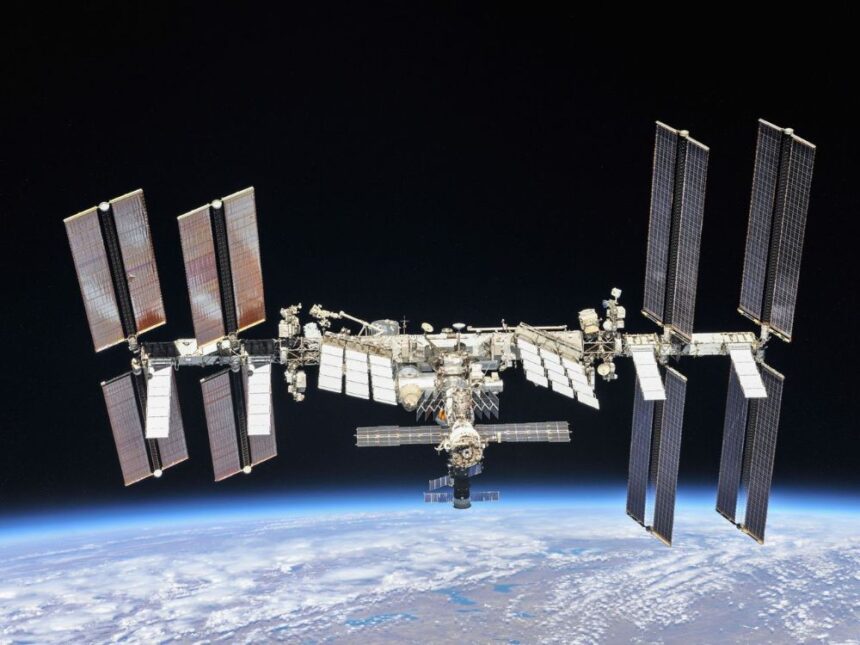
The quest for knowledge beyond our planet has led to remarkable international cooperation between countries and space agencies. This collaboration is not merely about sharing responsibilities, but it also drives innovation, reduces costs, and enhances the potential for groundbreaking discoveries in space exploration. One of the most notable examples of such collaboration is the International Space Station (ISS), which is a joint project involving NASA from the United States, Roscosmos from Russia, ESA from Europe, JAXA from Japan, and CSA from Canada. The ISS serves as a unique microgravity laboratory where scientific research is conducted collaboratively, leading to a deeper understanding of various phenomena including human biology in space, material science, and Earth observation.
Joint missions have become increasingly prevalent in recent years, with several countries pooling their resources and expertise to tackle ambitious projects. For instance, the Mars Sample Return mission, a multi-agency effort involving NASA and ESA, aims to bring Martian soil samples back to Earth for analysis. This collaboration underlines the advantages of a united approach, as it combines cutting-edge technologies and extensive scientific knowledge, ultimately increasing the likelihood of mission success.
Moreover, the sharing of technology and expertise among nations fosters innovation in space exploration. Countries such as India and the UAE, which have established ambitious space programs, benefit from partnerships with more experienced agencies. These collaborative relationships allow for technology transfer and knowledge sharing, accelerating the progress of emerging space programs. Overall, international collaboration in space research not only enhances scientific output but also strengthens diplomatic ties amongst nations, promoting peace and mutual understanding. The collective efforts in space exploration prove that when countries join forces, the possibilities of discovery expand exponentially, illuminating pathways to future advances.
Challenges Facing Future Discoveries
Space exploration has always been fraught with numerous challenges that can hinder advancements and the pursuit of new discoveries. One of the most significant hurdles is funding limitations. The high costs associated with space missions—including research and development, spacecraft construction, and launching expenses—often lead to budget constraints. Many nations are increasingly focused on their domestic issues, resulting in reduced financial resources allocated to space programs. Such funding challenges can delay or even cancel important missions, stalling the potential for groundbreaking scientific knowledge and technological innovation.
Technological hurdles also pose a crucial challenge in the quest for deeper space exploration. As missions stretch beyond the Earth’s vicinity, the technological demands become more complex. Advanced propulsion systems, life support mechanisms, and sustainable resource utilization are just a few areas where innovation is essential. Current technologies must be enhanced to ensure safety and effectiveness for longer missions, such as those planned for Mars or beyond. Spacecraft must be equipped to handle prolonged exposure to the harsh space environment to support human life and ensure mission success.
Moreover, the issue of space debris presents a growing concern that requires international cooperation. As more satellites and missions are launched into orbit, the risk of collisions increases considerably. This debris not only threatens active missions but also poses long-term risks to future explorations. Addressing space debris is not just the responsibility of any single nation but necessitates a collaborative approach. Countries must work together to establish guidelines for safer space operations and develop technologies to mitigate debris risks and ensure the sustainability of space exploration.
The Future of Space Exploration
The future of space exploration is poised on the brink of extraordinary advancements, driven by technological innovations and increased international collaboration. As humanity extends its reach beyond the confines of Earth, several upcoming missions stand out, promising to deepen our understanding of the cosmos. Notably, NASA’s Artemis program aims to return humans to the Moon by the mid-2020s, laying the groundwork for potential manned missions to Mars.
Additionally, private space companies, such as SpaceX and Blue Origin, are launching their own ambitious projects. SpaceX’s Starship is currently under development for missions to Mars, which could enable long-duration human habitation. The implications of these missions extend far beyond mere exploration, as they may pave the way for potential colonization of other celestial bodies. This would not only represent a monumental achievement for science and technology but could also address several pressing concerns, such as overpopulation and resource depletion on Earth.
In parallel, missions aimed at exploring asteroids, such as NASA’s Psyche mission, scheduled to launch in 2022, will offer insights into the building blocks of planet formation. The study of these celestial bodies could yield not only scientific knowledge but also identify resources that may be mined in the future. Furthermore, missions that focus on the outer planets, like the upcoming Europa Clipper, will investigate the potential for life beyond Earth, particularly in the icy moons of the gas giants, which could significantly influence our perspective on life in the universe.
As we look to the future, it becomes evident that continued space exploration holds tremendous potential for humanity. Through these endeavours, we may uncover fundamental truths that challenge our assumptions and expand our understanding of where we fit in the grand tapestry of the universe.