

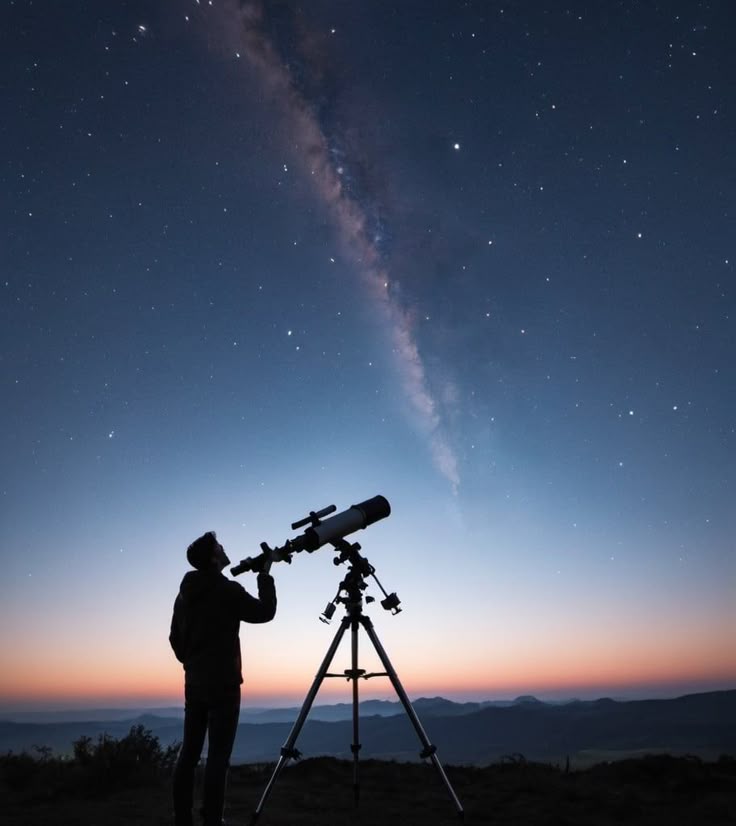
Introduction: The Evolution of Telescopes
The journey of telescopes began in the early 17th century when the first optical instruments were developed, drastically changing our understanding of the cosmos. The earliest known telescope is attributed to Hans Lippershey, a Dutch eyeglass maker who created a simple refractor capable of magnifying distant objects. This innovation sparked interest among scientists, leading to improvements and refinements of the instrument. Notably, Galileo Galilei utilized an improved telescope in 1609, enabling him to make significant astronomical discoveries, such as the moons of Jupiter and the phases of Venus.
Throughout the centuries, telescope technology has continuously evolved, reflecting advancements in materials and optics. By the 18th century, Sir Isaac Newton introduced the reflecting telescope, which utilized mirrors instead of lenses to gather light. This innovation not only reduced optical distortions but also allowed for larger apertures, crucial for observing faint celestial objects. The adoption of reflecting telescopes laid the groundwork for more intricate designs, such as the compound telescope, which combines refracting and reflecting elements.
AD
The 20th century heralded a new era in astronomical observation with the advent of radio telescopes. These instruments detected radio waves emitted by celestial bodies, expanding the range of observable phenomena significantly beyond the visible spectrum. Additionally, significant advances in adaptive optics and spectroscopy enhanced the capabilities of optical telescopes, allowing astronomers to capture clearer images and analyze the composition of distant stars and galaxies.
As technology progressed into the 21st century, space-based telescopes, such as the Hubble Space Telescope, revolutionized our view of the universe. By positioning telescopes beyond Earth’s atmosphere, astronomers gained access to unprecedented clarity and spectral data, enabling groundbreaking discoveries. Thus, the evolutionary path of telescopes highlights their pivotal role in shaping modern astronomy, providing insights into the vastness of space and the fundamental workings of the universe.
Types of Telescopes: A Comprehensive Overview
Telescopes have significantly advanced the field of modern astronomy, allowing scientists to explore and understand the universe in ways previously unimaginable. There are several distinct types of telescopes, each designed for specific observational purposes and capable of detecting various wavelengths of light.
Optical telescopes are the most familiar to the general public. They capture visible light and can be further divided into two main types: refracting telescopes, which use lenses to focus light, and reflecting telescopes, which utilize mirrors. Refractors are known for their sharp images and are often used for observing planets and binary stars. Reflectors, with their larger apertures, are more adept at gathering faint light from distant celestial objects, making them ideal for deep-sky photography.
Radio telescopes, on the other hand, detect radio waves emitted by astronomical objects. This type of telescope has revolutionized our understanding of the universe, enabling astronomers to study phenomena such as pulsars, quasars, and cosmic microwave background radiation. Radio telescopes are typically large dishes that collect radio waves and can operate in various configurations, from single dish instruments to large arrays like the Very Large Array.
Infrared telescopes play a critical role in observing objects obscured by dust clouds in space, such as star-forming regions. By detecting infrared wavelengths, these telescopes allow astronomers to study cooler objects in the universe, including planets, stars, and galaxies. Space-based infrared telescopes, such as the Hubble Space Telescope, provide unmatched clarity and can capture images without atmospheric interference.
Lastly, space telescopes are designed to operate outside the Earth’s atmosphere, providing a clearer view of the cosmos. Instruments like the James Webb Space Telescope can observe a wide range of wavelengths, helping elucidate the structure and evolution of the universe.
The Mechanics of Telescopes: How They Work
Telescopes serve as vital instruments in modern astronomy, allowing astronomers to observe celestial objects that are far beyond the capabilities of the naked eye. The effectiveness of telescopes can largely be attributed to their optical and mechanical components, which work in harmony to amplify distant light sources.</p>
At the core of a telescope’s functionality is the optical system, which generally consists of lenses or mirrors. The primary lens or mirror is responsible for gathering light from astronomical objects and focusing it to create an image. Refracting telescopes utilize lenses for this purpose, while reflecting telescopes employ mirrors. Each design has its strengths; reflecting telescopes, for instance, tend to have larger apertures, allowing for the observation of fainter celestial bodies. This collection and focusing action transform the light from distant stars and galaxies into manageable images for further study.</p>
Another essential aspect of telescope mechanics is the mount, which stabilizes the instrument and enables precise adjustments in alignment. There are various types of mounts, including altazimuth and equatorial, each providing unique advantages. The altazimuth mount allows for movement in both horizontal and vertical directions, making it intuitive for casual observation. Conversely, the equatorial mount is designed to align with Earth’s rotation, which is crucial for tracking celestial objects across the sky. This capability enhances the ability to capture long-exposure images, an important feature for both amateur and professional astronomers.</p>
Finally, detectors play a critical role in modern telescopes. These devices convert light into electronic signals, enabling astronomers to analyze the intensity and wavelength of light from observed objects. Detectors can include charge-coupled devices (CCDs) that provide high-resolution images, essential for detailed astronomical research. Overall, the careful integration of optical and mechanical components ensures that telescopes remain indispensable tools in the exploration of the universe.
Major Telescopes in Use Today
The advancement of astronomy has been significantly propelled by the development of various powerful telescopes, both ground-based and space-based. Among the most prominent is the Hubble Space Telescope, launched in 1990. It has provided astronomers with unprecedented clarity and depth of vision into the universe, allowing for groundbreaking discoveries, including the measurement of the expansion rate of the universe and the identification of exoplanets. Hubble’s location above Earth’s atmosphere eliminates atmospheric distortion, delivering crisp images across various wavelengths, ranging from ultraviolet to near-infrared.
Another vital instrument in modern astronomy is the Very Large Telescope (VLT), located at the Paranal Observatory in Chile. This array of four optical telescopes works in conjunction, effectively increasing its power and image resolution. The VLT has played a crucial role in studying the elements that compose distant galaxies and has been pivotal in the observation of phenomena such as gravitational lenses, which reveal the presence of dark matter in the universe.
Looking ahead, the James Webb Space Telescope (JWST) represents the next generation of astronomical observation. Set to launch as a successor to Hubble, it is designed to observe the universe in infrared light, enabling scientists to see through dense dust clouds and study the formation of stars and galaxies billions of years ago. Its advanced technology promises to address fundamental questions about the cosmos, including the origins of life and the atmospheric compositions of exoplanets.
In summary, modern telescopes like Hubble, VLT, and JWST exemplify the evolution of astronomical tools, each contributing uniquely to our understanding of the universe. These instruments not only enhance our observational capabilities but also deepen our comprehension of cosmic phenomena.
Telescopes and Their Role in Discoveries
Telescopes have played a pivotal role in the advancement of modern astronomy, enabling astronomers to make groundbreaking discoveries that have significantly expanded our comprehension of the universe. One of the most notable achievements facilitated by telescopes is the discovery of exoplanets. Through the utilization of advanced telescopic methods, scientists have identified thousands of planets outside our solar system, vastly increasing the number of known celestial bodies. The Kepler Space Telescope, for instance, has been instrumental in this endeavor, using the transit method to detect subtle dips in a star’s brightness caused by orbiting planets. This transformative discovery has opened up new inquiries regarding the possibility of life beyond Earth.
Another significant contribution of telescopes to astronomical research is the identification of black holes. These enigmatic entities, characterized by their immense gravitational pull, were theorized long before their existence was confirmed. With the advent of sophisticated telescopes such as the Event Horizon Telescope, which provided the first image of a black hole’s event horizon in 2019, the understanding of these cosmic phenomena has deepened remarkably. This breakthrough not only validated existing theories concerning black holes but also raised new questions about their role in galaxy formation and evolution.
Telescopes have also enabled the exploration of cosmic background radiation, providing vital evidence for the Big Bang theory. The Cosmic Background Explorer (COBE) satellite, coupled with advanced observational technologies, has allowed for the detailed mapping of the universe’s early radiation. This evidence is critical for understanding the universe’s origins and its subsequent expansion. Each of these discoveries—exoplanets, black holes, and cosmic background radiation—illustrates the indispensable role that telescopes occupy in the realm of modern astronomy, serving as essential tools for exploring the mysteries of the cosmos.
Challenges in Modern Astronomy: Limitations of Telescopes
The evolution of telescopes has significantly advanced our understanding of the universe; however, various challenges persist that hinder their effectiveness in modern astronomy. One of the foremost limitations is associated with ground-based telescopes, which are vulnerable to atmospheric conditions. Factors such as turbulence in the Earth’s atmosphere can distort the light from celestial objects, thereby affecting the clarity and quality of images captured. This atmospheric interference creates a significant obstacle for astronomers seeking precise data.
Moreover, technological limitations of telescopes play a crucial role in setting boundaries on astronomical observations. While advancements in optics and digital imaging have greatly improved telescope capabilities, these instruments are not without constraints. For instance, the resolution of a telescope—the ability to distinguish between two closely spaced objects—remains finite. It is fundamentally limited by the diffraction of light, which can result in the blending of stellar images, particularly for objects that are extremely far away or dim. Thus, the quest for enhanced resolution continues to motivate innovations in telescope design.
In addition, the need for improved instrumentation to support observation endeavors is pressing. Many existing telescopes employ outdated technologies, which may not meet the modern demands of astronomy. Advancements in cameras, detectors, and spectrographs are essential to capture a broader spectrum of light, including infrared and ultraviolet wavelengths that provide critical data about celestial phenomena. Without continuous updates in technology, telescopes may fail to deliver the depth of information required to unravel the many mysteries of the cosmos.
The Future of Telescopes: Innovations on the Horizon
The landscape of modern astronomy is poised for remarkable evolution, driven largely by advancements in telescope technology. As scientists strive to unravel the mysteries of the cosmos, several innovations on the horizon could significantly enhance our observational capabilities. One key area of development is adaptive optics, which aims to rectify the distortion caused by the Earth’s atmosphere. Current telescopes utilize adaptive optics to produce clearer images, but future enhancements could lead to even more precise observations of distant celestial bodies.
Another frontier in telescopic technology involves the deployment of next-generation space-based observatories. These observatories, positioned outside the Earth’s atmosphere, have the potential to obtain unparalleled clarity in their observations. Future initiatives may include telescopes that operate across a broader spectrum of wavelengths, facilitating the study of various celestial phenomena that are currently obscured by atmospheric interference. This could revolutionize our understanding of exoplanets, the formation of galaxies, and the dynamics of cosmic events.
Furthermore, developments in materials science and engineering could lead to lighter and more portable telescope designs. Innovations such as 3D printing may enable the production of complex optical components at a fraction of the cost and time. Combining such technologies with artificial intelligence could also streamline data analysis, allowing astronomers to sift through vast datasets swiftly and accurately.
In addition, the integration of ground-based and space-based telescopes through collaborative networks may foster an era of unprecedented astronomical synergy. By utilizing the strengths of both platforms, researchers can obtain comprehensive datasets that enhance our understanding of the universe’s intricate structures and dynamics.
Telescopes and Citizen Science: The Engagement of Amateur Astronomers
In recent years, the role of amateur astronomers has expanded significantly, largely due to advancements in telescope technology and accessibility. The proliferation of high-quality telescopes has democratized the field of astronomy, empowering individuals outside of professional institutions to make substantial contributions to scientific research. This shift has been pivotal in the rise of citizen science, a movement that actively engages the public in scientific endeavors.
Amateur astronomers now have the capability to observe celestial events, document astronomical phenomena, and contribute valuable data to larger projects. For instance, many citizen scientists utilize telescopes to track variable stars, discover new exoplanets, and monitor transient events such as supernovae. Their observations can assist professional astronomers in confirming findings, or in some cases, even prompt further investigation into uncharted territories.
Collaborative projects have emerged that bridge the gap between professional and amateur astronomers, illustrating the importance of community engagement in modern astronomical research. Platforms such as Zooniverse allow volunteers to analyze data from telescopes, sharing their findings with a global audience and enhancing our understanding of space. These initiatives show that amateur observations can be both rich and significant, leading to a growing tide of discoveries that may have otherwise gone unnoticed.
Furthermore, the collaboration between amateurs and professionals supports educational endeavors, inspiring a new generation of astronomers. Workshops, online forums, and public outreach programs are some ways telescopes facilitate learning and enthusiasm about the universe. With access to advanced telescopes and collaborative projects, citizen scientists play an integral role in contemporary astronomy, demonstrating that the pursuit of knowledge about our universe is now a shared effort, bridging gaps between amateurs and seasoned professionals.
Conclusion: The Indispensable Contributions of Telescopes in Astronomy
Throughout history, telescopes have played a vital role in the advancement of astronomy, fundamentally altering our understanding of the cosmos. From the rudimentary designs of Galileo Galilei to the sophisticated instruments employed today, telescopes have continuously expanded our ability to observe celestial objects, leading to remarkable discoveries that challenge our perceptions of the universe. These instruments not only allow astronomers to peer deeper into space but also enable them to explore the intricacies of the earliest moments after the Big Bang, the lifecycle of stars, and the behavior of distant galaxies.
The contributions of telescopes extend beyond mere observation; they have catalyzed scientific inquiry, driving technological innovation and inspiring countless individuals to pursue careers in science and engineering. The Hubble Space Telescope, for instance, has not only provided breathtaking images of distant worlds but also has generated invaluable data, leading to groundbreaking research on dark matter and the expansion rate of the universe. Such findings underscore the leading role telescopes play in unraveling the complex narratives of cosmic history.
Looking toward the future, the need for further innovations in telescope technology remains paramount. As we aim to explore uncharted territories of space and time, increasing the sensitivity, resolution, and range of our instruments will be essential. Upcoming projects, such as the James Webb Space Telescope, promise to push the boundaries of our understanding even further, with potential discoveries that could revolutionize our comprehension of life, the universe, and everything in between.
In summary, telescopes are not just tools; they are gateways to the universe, enhancing our comprehension of the celestial sphere. Their indispensable role in modern astronomy beckons both challenges and excitement, as we endeavor to inspire future generations to continue the quest for knowledge among the stars.