
Understanding Artificial Intelligence and Automation
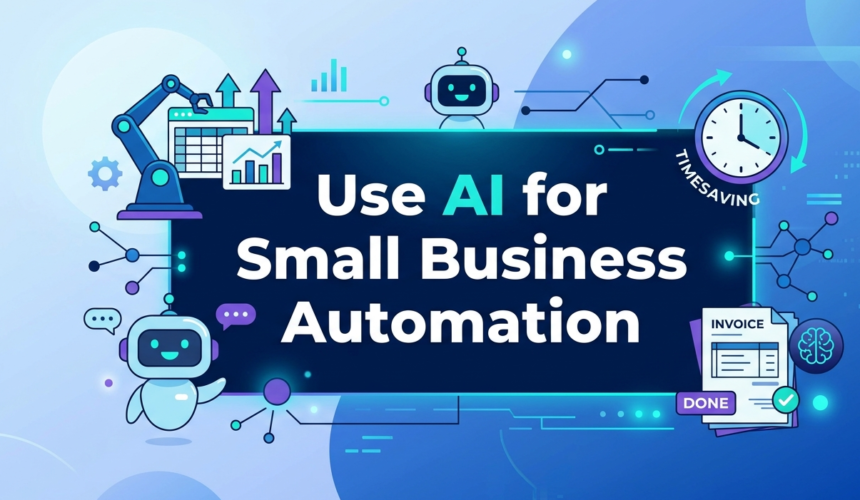
In the realm of small business, artificial intelligence (AI) refers to the capability of computer systems to perform tasks that typically require human intelligence. This includes processes such as understanding natural language, recognizing patterns, and even making decisions based on data analysis. By integrating AI into business operations, small enterprises can enhance their ability to serve customers, streamline internal processes, and gain a competitive edge in the marketplace.
Automation, on the other hand, involves employing technology to perform repetitive and time-consuming tasks without human intervention. It is a vital component of AI applications, as it allows businesses to reduce human error, increase productivity, and allocate resources more effectively. Both AI and automation work in tandem; as AI evolves, the scope of tasks that can be automated continues to expand, enabling small businesses to operate with greater efficiency.
AD
Implementing AI-driven automation can profoundly impact various aspects of a business, including customer service, marketing, and inventory management. For instance, chatbots powered by AI can handle customer inquiries 24/7 while freeing human staff to focus on more complex tasks. Moreover, predictive analytics can automate inventory management by forecasting demand and optimizing stock levels, ultimately reducing overhead costs.
Moreover, automation in financial processes can minimize errors and ensure timely invoicing and reporting. By centralizing data and processes, small businesses can enjoy improved accuracy and transparency in their operations. The intersection of AI and automation thus offers substantial advantages, making it a pivotal consideration for small business owners looking to enhance their operational effectiveness.
Identifying Areas for Automation in Small Businesses
In the modern business landscape, small enterprises are increasingly recognizing the importance of automation to enhance efficiency and reduce operational costs. Automation involves deploying technology to perform repetitive tasks, allowing business owners to allocate resources more effectively. A critical first step in implementing automation is identifying specific areas within the company that can benefit from these technologies.
One of the most impactful areas for automation in small businesses is customer service. Chatbots and automated response systems can handle common inquiries, allowing human representatives to focus on more complex issues that require nuanced interaction. This not only streamlines customer communication but also improves response times, fostering a better customer experience.
Another area ripe for automation is inventory management. Small businesses often struggle with maintaining accurate stock levels. Automation tools can track inventory in real-time, provide alerts for restocking, and generate reports on sales trends. By automating these processes, businesses can minimize human error and maintain optimal inventory levels, thereby enhancing overall operational efficiency.
Marketing is also an area where automation can yield substantial benefits. Utilizing marketing automation software, small businesses can manage email campaigns, social media postings, and customer segmentation without extensive manual effort. These tools can deliver personalized content to target audiences, measure campaign effectiveness, and optimize strategies based on data-driven insights.
Identifying specific activities within operations that can be automated requires an assessment of recurring tasks and processes. Business owners should look for time-consuming activities that can be standardized, as these present ideal opportunities for automation. By streamlining operations in customer service, inventory management, and marketing, small businesses can not only save time and resources but also sustain growth in a competitive marketplace.
Choosing the Right AI Tools for Your Business Needs
In the landscape of small businesses, the selection of appropriate AI tools is critical for enhancing efficiency, improving customer engagement, and ultimately driving growth. One of the first criteria to consider is ease of use. Small business owners often have limited technical expertise, so choosing user-friendly interfaces can significantly reduce the learning curve and facilitate seamless adoption within the team.
Another vital aspect is scalability. As your business grows, the AI tools you choose should be able to scale alongside it. This may involve looking for solutions that can handle increased data volumes or additional functionalities without requiring a complete overhaul of your systems. Opting for scalable tools ensures that your investment in AI can evolve in tandem with your business goals.
Cost-effectiveness is also a determining factor when selecting AI tools. Small businesses typically operate on tighter budgets, so a thorough analysis of both upfront costs and long-term expenditures, including maintenance and subscription fees, is advisable. There are various pricing models available, from one-time purchases to subscription-based services, enabling business owners to choose options that align with their financial capacities.
Several categories of AI tools are especially beneficial for small businesses. Chatbots, for example, can automate customer interactions, providing immediate responses and freeing up human resources for more complex tasks. Customer Relationship Management (CRM) systems equipped with AI capabilities can enhance lead tracking and analysis, optimizing sales processes. Furthermore, data analytics platforms enable small business owners to glean actionable insights from their data, fostering informed decision-making.
By carefully evaluating ease of use, scalability, and cost-effectiveness, along with exploring diverse categories of AI tools, small businesses can significantly leverage AI technology to automate processes and streamline operations, ultimately achieving a competitive edge in the market.
Implementing AI Automation: A Step-by-Step Guide
Implementing AI automation in a small business can significantly increase efficiency and productivity. The process begins with a thorough assessment of current workflows. Identify areas where repetitive tasks exist, as these are often prime candidates for automation. Engage with employees to understand pain points in their daily activities, which can provide insight into where AI tools might be beneficial.
Once workflows have been assessed, the next step is to choose the right AI tools that align with your business objectives. Numerous platforms and software solutions are available, each tailored to various business needs. Research potential tools, considering factors such as ease of integration, scalability, and user reviews. This due diligence ensures that the selected tool effectively meets the unique requirements of your small business.
Training staff is an essential component of the implementation process. Provide comprehensive training sessions for employees to familiarize them with the new AI systems. Focus on illustrating the advantages of these tools, as well as providing hands-on opportunities for employees to engage with the technology. This approach not only aids in reducing resistance to change but also fosters a greater understanding of the AI systems among the team.
After training, begin the integration phase by gradually incorporating the AI tools into existing systems. Start with less critical processes to allow for troubleshooting and adjustments. Monitor the functionality and gather feedback from employees as the integration progresses. This iterative approach helps fine-tune the systems and addresses any unforeseen challenges. By following these systematic steps, small businesses can effectively implement AI automation, leading to enhanced operational efficiency and overall success.
Measuring the Impact of AI Automation
In the realm of small business automation, leveraging artificial intelligence (AI) has become an essential strategy for enhancing efficiency and productivity. However, to understand the true value of these AI implementations, it is imperative for organizations to measure the outcomes effectively. The measurement of AI automation outcomes not only provides clarity on the benefits accrued but also aids in informed decision-making for future investments.
Key performance indicators (KPIs) play a pivotal role in assessing the impact of AI. Among the most critical KPIs small businesses should track are productivity rates. By monitoring productivity, companies can gauge the extent to which AI tools have streamlined operations and improved their output. A noticeable increase in productivity can indicate that AI systems are effectively relieving employees of mundane tasks, allowing them to focus on higher-value activities.
Another vital KPI is customer satisfaction, which can be substantially influenced by automation. AI implementations such as chatbots and personalized marketing campaigns enhance customer interactions and experiences. Tracking metrics such as Net Promoter Score (NPS) or Customer Satisfaction Score (CSAT) can provide valuable insights into how customers perceive the quality of engagement, ultimately reflecting the effectiveness of AI solutions in fulfilling customer needs.
Cost savings are an equally important aspect of measuring AI automation’s impact. By analyzing financial data pre- and post-AI implementation, businesses can derive insights into operational efficiencies gained through reduced labor costs and minimized errors. This financial analysis not only supports budget allocations for AI projects but also strengthens the rationale for further investment in automation technologies.
In conclusion, measuring the outcomes of AI automation is essential for small businesses aiming to evaluate the effectiveness of their technological investments. By focusing on productivity rates, customer satisfaction, and cost savings, organizations can gain a comprehensive understanding of AI’s contribution to their success and refine their strategies accordingly.
Case Studies: Small Businesses Successfully Using AI Automation
In the ever-evolving landscape of small businesses, many entrepreneurs are harnessing the power of artificial intelligence (AI) automation to streamline operations, enhance customer experiences, and drive growth. This section highlights real-world examples of small businesses that have effectively integrated AI automation into their processes.
One notable example is a small retail company that faced significant inventory management challenges. By adopting an AI-driven inventory management system, the business was able to accurately predict stock needs based on sales trends, seasonality, and even customer preferences. The implementation reduced excess inventory by 30% and improved stock availability, leading to a noticeable increase in sales and customer satisfaction.
Another inspiring case is a local coffee shop that introduced AI chatbots to enhance its customer service. These chatbots handled inquiries regarding menu items, order status, and even took reservations. As a result, the shop reported a 40% increase in engagement during peak hours. Customers appreciated the quick responses, which allowed staff to focus on in-person service, ultimately improving the overall dining experience.
Additionally, a small accounting firm adopted AI for processing invoices, which significantly optimized their workflow. The firm utilized AI to automate data entry and invoice reconciliation, reducing the time spent on these tasks by nearly 50%. This not only impacted their efficiency but also allowed accountants to dedicate more time to higher-value client interactions, leading to enhanced service offerings and client satisfaction.
These case studies illustrate the transformative potential of AI automation for small businesses. By addressing specific challenges with tailored strategies, these companies have achieved measurable results and set a benchmark for others to follow. The success stories serve as motivation for small business owners looking to navigate their own AI automation journeys.
Overcoming Challenges in AI Automation Implementation
As small businesses embark on the journey of adopting AI automation, they often encounter several challenges that can impede the implementation process. Understanding these challenges is critical for successful integration of AI technologies into daily operations. One of the most prevalent obstacles is resistance to change among employees. Many individuals may fear that AI will replace their jobs or disrupt established workflows. To mitigate this resistance, companies should foster a culture of open communication, educating employees on the benefits of AI automation and how it can enhance rather than replace their roles. Training programs designed to upskill staff in using AI tools can also play an essential role in easing transitions.
Another significant challenge faced by small businesses is the cost associated with implementing AI solutions. While it is true that initial investments can be substantial, smaller organizations can explore various financing options, such as cloud-based AI services that minimize upfront costs. These providers often offer scalable solutions that can evolve with the business, ensuring that companies only pay for what they need. Additionally, seeking government grants or partnerships with tech companies specializing in AI can help alleviate financial burdens.
Lastly, a lack of technical expertise can hinder the adoption of AI automation. Small business owners often wear multiple hats and may lack the technical background required to implement advanced AI systems effectively. To combat this, collaborating with external consultants or hiring part-time specialists may be advantageous. Moreover, leveraging user-friendly AI platforms designed for non-technical users can streamline the process. By adopting best practices and pro-actively addressing these challenges, small businesses can pave the way for a successful AI automation journey that enhances productivity and efficiency.
Future Trends in AI and Automation for Small Businesses
The landscape of artificial intelligence (AI) and automation continues to evolve rapidly, offering new opportunities for small businesses to enhance operational efficiency and competitiveness. As technology progresses, several key trends are expected to shape the future of these domains, providing smaller enterprises with innovative tools to streamline processes and reduce costs.
One significant trend is the increasing accessibility of AI-driven solutions. Traditionally, AI technologies have been dominated by larger corporations due to resource constraints. However, advancements in cloud computing are democratizing access, enabling small businesses to leverage powerful AI tools without significant upfront investment. This shift allows smaller firms to automate tasks that were previously time-consuming and resource-intensive, potentially leveling the playing field in various industries.
Moreover, the integration of machine learning algorithms into automation processes is likely to become more prevalent. These algorithms continuously learn from data inputs, allowing small businesses to adapt their operations based on real-time insights. For example, predictive analytics can help businesses forecast demand more accurately, thus optimizing inventory management and reducing unnecessary expenses.
Another emerging trend is the rise of AI-enhanced customer interactions through chatbots and virtual assistants. These tools can provide 24/7 customer support and facilitate seamless communication, significantly improving service quality while lowering overhead costs. As natural language processing technology advances, these AI systems will become even more effective in understanding and addressing customer inquiries, fostering stronger customer relationships.
Furthermore, the increasing emphasis on data privacy and ethical AI practices will play a critical role in shaping the future of AI adoption among small businesses. As consumers become more aware of data usage and security, businesses that prioritize ethical AI implementations will likely gain a competitive advantage, thus attracting more customers.
Conclusion: Embracing AI for Growth and Efficiency
Throughout this discussion, we have illuminated the significant role that artificial intelligence (AI) can play in automating processes for small businesses. By harnessing AI tools, companies can achieve remarkable improvements in efficiency, accuracy, and overall productivity.
One of the primary benefits highlighted is the ability to streamline operations. Automation of repetitive tasks, such as data entry and customer service inquiries, allows employees to focus on more strategic activities. This shift not only enhances job satisfaction but also fosters innovation as team members can dedicate their time to initiatives that contribute to growth.
Moreover, AI-enabled analytics provides insights that empower informed decision-making. Small businesses can leverage automated data collection and analysis to identify trends, customer preferences, and operational efficiencies. With these insights, businesses can tailor their offerings to better meet customer needs and improve competitiveness in their markets.
Furthermore, embracing AI technology ensures that small businesses stay relevant in an increasingly digital world. The integration of automation helps to optimize marketing efforts, enhance customer engagement, and ultimately drives sales. As the business landscape continues to evolve, those who adapt to technological advancements will likely emerge as leaders in their respective industries.
In conclusion, the adoption of AI for small business automation is not only beneficial but essential for growth and efficiency. By embracing this technology, small business owners position themselves to leverage innovative solutions that enhance operational performance, improve customer experiences, and drive sustainable growth. As the future unfolds, the focus on AI integration will undoubtedly become a key factor in achieving long-term success in the small business sector.