
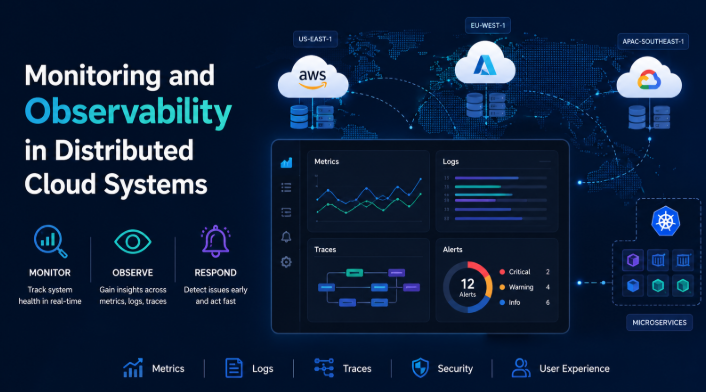
Introduction to Distributed Cloud Systems
Distributed cloud systems are a modern evolution of cloud computing that empower organizations to deploy services across multiple locations while retaining centralized management. Unlike traditional cloud models, which typically rely on a single data center or a limited number of geographically isolated facilities, distributed cloud systems leverage a network of resources spread across various sites, either on-premise or in third-party environments.
This architecture provides notable advantages, including enhanced scalability, improved redundancy, and reduced latency for end-users by processing data closer to its source. With the ability to operate seamlessly across diverse infrastructures, organizations can optimize performance and speed up their response rates, ultimately delivering better service to their customers.
Several use cases exemplify the effectiveness of distributed cloud systems. One prominent scenario is edge computing, where computation and data storage occur at the periphery of the network, close to devices generating data. This setup not only alleviates bandwidth pressure on central data centers but also facilitates real-time processing and analytics, crucial for applications such as IoT and autonomous vehicles. Furthermore, distributed systems are often employed in multi-cloud strategies, enabling companies to utilize resources from different cloud platforms strategically, thereby preventing vendor lock-in and enhancing redundancy.
In contrast, traditional cloud models are generally hampered by their centralized nature, which can lead to performance bottlenecks and single points of failure. Organizations using these systems may find it challenging to scale quickly to meet sudden increases in demand. Understanding the nuances of distributed cloud systems is essential, as it lays the groundwork for effectively implementing monitoring and observability strategies that ensure optimal operation and resource management in this complex environment.
Understanding Monitoring and Observability
In the realm of distributed cloud systems, the concepts of monitoring and observability are paramount for ensuring operational reliability and performance. Monitoring refers to the systematic collection, analysis, and interpretation of data regarding the state of system components. This involves tracking metrics such as CPU usage, memory utilization, and response times to gauge system health.
Conversely, observability is a broader concept that encompasses monitoring but adds a layer of analysis that allows teams to understand the inner workings of complex systems. It enables engineers to derive insights from various outputs, including logs, traces, and metrics, ultimately fostering deeper comprehension of system behaviors. While monitoring can indicate whether a system is running effectively or not, observability provides the context necessary for diagnosing issues and discerning root causes.
The distinctions between monitoring and observability become particularly relevant in distributed environments, characterized by microservices architecture, multiple geographical locales, and dynamic scaling. As applications fragment into smaller, autonomous services, traditional monitoring practices fall short. Consequently, observability emerges as an essential practice that not only monitors metrics but enables a holistic view of system interactions.
Both monitoring and observability serve critical roles in enhancing system reliability. By implementing robust monitoring frameworks, organizations can proactively identify anomalies and address potential threats before they escalate into significant failures. Meanwhile, observability equips teams with the necessary tools to analyze complex interdependencies, allowing them to respond effectively to incidents as they arise. Together, these practices create a resilient infrastructure that supports seamless operation within distributed cloud systems.
Key Challenges in Monitoring Distributed Cloud Systems
Monitoring distributed cloud systems presents several inherent challenges that can impede effective data collection and analysis. One of the most pressing issues is the sheer volume of data generated by numerous interconnected components. Each service and application within a cloud environment produces logs, metrics, and trace information at an unprecedented scale. The vast amounts of data can lead to difficulties in processing and storing information, making timely insights a growing concern. This enormous influx of data necessitates sophisticated storage solutions and analytics tools to ensure that monitoring systems can adequately keep pace.
In addition to data volume, latency is another major challenge in monitoring distributed systems. Latency can occur due to the geographic distribution of cloud resources, where data may need to traverse significant distances before being collected and analyzed. This delay can hinder real-time monitoring capabilities, posing difficulties for organizations that depend on prompt feedback to maintain operational efficiency. Moreover, high latency can impair alerting mechanisms, which are crucial for detecting outages and performance issues within the multi-faceted architecture of cloud services.
Furthermore, the complexity of relationships between distributed components complicates the monitoring landscape significantly. In a typical cloud system, components are often interdependent, with interactions that may not always be apparent. This intricate web of dependencies makes identifying the source of an issue challenging. For example, a problem in one microservice can propagate through the system, leading to cascading failures that are difficult to diagnose. Consequently, effective monitoring solutions must not only track individual components but also understand and visualize the interactions among them to provide comprehensive insights into operational health.
Essential Tools for Monitoring and Observability
In the realm of cloud computing, effective monitoring and observability are crucial to ensuring system reliability and performance. A variety of tools and technologies are available to facilitate these processes, categorized based on their functionalities, such as log management, performance monitoring, and distributed tracing.
Log management tools are essential for collecting, analyzing, and visualizing log data generated by applications and services. Popular solutions like Elasticsearch, Logstash, and Kibana, collectively known as the ELK stack, provide a powerful framework for managing extensive log data. These tools enable teams to filter and search logs, which aids in quickly identifying issues and understanding system behavior.
Next, performance monitoring solutions have emerged to help teams gauge the health of their applications in real time. Tools such as Prometheus and Grafana are known for their ability to collect metrics and visualize data through customizable dashboards. These tools support alerts and notifications, ensuring that any performance anomalies are addressed promptly. Additionally, New Relic and Dynatrace offer comprehensive approaches, providing insights into application performance, user experience, and infrastructure health.
Lastly, distributed tracing is vital in complex cloud architectures, where understanding the flow of requests across multiple services can be challenging. Solutions like OpenTelemetry and Jaeger facilitate tracing requests through various microservices, allowing teams to pinpoint bottlenecks and optimize interactions. These tools are particularly beneficial in pinpointing latencies and failures, leading to a enhanced overall performance of the distributed environments.
By utilizing these essential tools for monitoring and observability, organizations can better manage their cloud systems, ensuring seamless operations, quicker issue resolution, and improved user satisfaction.
Best Practices for Effective Monitoring
Effective monitoring is critical in managing distributed cloud systems, where the complexity and scale can lead to performance bottlenecks and operational challenges. One of the primary practices involves the selection of relevant metrics. Choosing the right metrics means focusing not only on system performance indicators, such as CPU and memory usage, but also on application-specific metrics relevant to the end-user experience. Metrics such as response time, error rates, and transaction volumes should be prioritized to gain insights into how the system operates from a user perspective.
Another essential aspect is the implementation of a robust alerting strategy. Alerts should be judiciously configured to reduce noise while ensuring critical issues are promptly addressed. This can be achieved through thresholds that are aligned with normal operating conditions, as well as incorporating anomaly detection methods that utilize machine learning to adapt to changes in the system’s behavior over time. It is equally important that alerts are actionable, providing context and guidance on how to respond effectively.
Integration of different monitoring tools also plays a vital role in enhancing the observability of distributed systems. Utilizing a combination of infrastructure monitoring, application performance monitoring (APM), and logging solutions can provide a comprehensive view of system health. Tools like Prometheus, Grafana, and ELK Stack (Elasticsearch, Logstash, and Kibana) can be effectively combined to visualize data and glean actionable insights. Centralizing data collection and visualization can facilitate more coherent analysis and quicker incident response.
Implementing these best practices not only fosters a proactive monitoring environment but also significantly enhances the ability to maintain a reliable and efficient distributed cloud system.
Role of AIOps in Monitoring and Observability
Artificial Intelligence for IT Operations, commonly referred to as AIOps, plays a pivotal role in enhancing monitoring and observability within distributed cloud systems. AIOps leverages advanced machine learning algorithms and big data analytics to manage and analyze the vast amounts of operational data generated by complex cloud environments. This capability significantly mitigates the challenges associated with traditional monitoring approaches, which often struggle to keep pace with the dynamic nature of modern IT infrastructures.
AIOps fosters proactive monitoring by continuously analyzing operational data streams in real time. This enables the detection of anomalies and performance issues before they escalate into critical incidents. For instance, machine learning models can identify patterns indicative of potential failures or performance degradation, enabling IT teams to address these issues proactively. By automating the detection process, AIOps reduces the mean time to resolution (MTTR), thereby enhancing overall system performance and reliability.
Moreover, the observability provided by AIOps allows for greater insight into application behavior and resource utilization. With the aid of sophisticated data visualization tools, IT professionals can gain a comprehensive understanding of how applications interact and perform across various components of a distributed system. This not only enhances situational awareness but also aids in capacity planning and resource optimization.
Furthermore, AIOps solutions typically integrate seamlessly with existing IT tools, providing a cohesive approach to monitoring and observability. By effectively correlating data from various sources, including logs, metrics, and traces, AIOps enables organizations to create a holistic view of their IT landscape. This level of insight allows teams to quickly diagnose issues and make informed decisions about system improvements.
In summary, AIOps stands as a transformative approach in the realm of monitoring and observability, empowering organizations to leverage cutting-edge technology to optimize system performance and enhance operational efficiency.
Case Studies of Monitoring in Action
In the realm of distributed cloud systems, effective monitoring and observability have become paramount for organizations seeking to maintain operational excellence and ensure service reliability. Many organizations have faced unique challenges when implementing monitoring frameworks, and studying their approaches can provide invaluable insights.
A notable example can be drawn from Acme Corp, a multinational company that recently transitioned to a distributed cloud architecture to support its global operations. Acme Corp faced significant difficulties in tracking the performance of its numerous microservices, particularly in identifying and resolving latency issues. To address this, they adopted a robust observability platform that integrated distributed tracing, enabling their teams to visualize the flow of requests across service boundaries. This move not only allowed the company to pinpoint bottlenecks but also improved their incident response time significantly.
Another case is Tech Innovations, a startup specializing in IoT devices, which encountered challenges related to the scalability of their monitoring solutions. As their user base grew, their existing monitoring tools struggled to keep pace with the volume of data generated by millions of devices. Tech Innovations implemented a combination of cloud-native monitoring tools and custom dashboards, which facilitated real-time analytics and anomaly detection. This enhancement allowed the company not only to optimize their cloud resources but also to better predict potential system failures before they could impact users.
Moreover, Global Enterprises exemplifies an organization that faced compliance and regulatory challenges in their monitoring efforts. By employing an observability strategy that adhered to industry regulations while providing comprehensive logging and reporting capabilities, they successfully maintained oversight across all operations without compromising on compliance requirements. Consequently, this enabled them to improve overall operational visibility while ensuring they met essential audit standards.
These case studies illustrate that while challenges in monitoring distributed cloud systems are prevalent, the implementation of tailored observability solutions can lead to substantial improvements in system performance and reliability. Each organization exemplifies diverse challenges and innovative strategies that align with their unique operational goals. This highlights the importance of adopting the right tools and practices in achieving effective monitoring in distributed cloud environments.
Future Trends in Monitoring and Observability
The evolution of distributed cloud systems is driving a significant shift in the methodologies and technologies employed for monitoring and observability. In particular, the emergence of serverless architectures and edge computing are shaping the future landscape of these practices.
Serverless architectures, which abstract away server management, allow developers to focus on writing code while the underlying infrastructure is managed by cloud service providers. This shift necessitates a transformation in monitoring strategies as traditional server-centric metrics become less relevant. Instead, observability integrates event-driven analytics, enabling organizations to monitor function executions, resource consumption, and latency in real-time, ensuring operational efficiency across distributed environments.
Moreover, with the proliferation of edge computing, where data processing occurs closer to the source, monitoring becomes more complex yet critical. Edge deployments often function in environments with constrained resources and varying network conditions. Here, emerging technologies such as distributed tracing and telemetry play a crucial role in providing insights into application performance at the edge. Leveraging these tools allows businesses to gain visibility into user experiences and system behaviors, facilitating proactive troubleshooting and improved service delivery.
Artificial intelligence (AI) and machine learning (ML) are also pivotal in refining monitoring and observability practices. These technologies can analyze vast datasets generated by distributed systems, enabling predictive analytics and anomaly detection. By identifying patterns and predicting performance issues before they impact users, organizations can enhance reliability and streamline operations within distributed cloud systems.
As organizations increasingly adopt multi-cloud and hybrid cloud strategies, the demand for unified monitoring solutions becomes apparent. These tools must aggregate observability data from disparate environments, presenting a holistic view of systems and facilitating cross-platform monitoring.
Conclusion and Key Takeaways
In the rapidly evolving landscape of distributed cloud systems, effective monitoring and observability stand as critical pillars for maintaining system reliability and performance. As organizations increasingly rely on cloud-based architectures, the complexity of managing these systems intensifies. Robust monitoring practices enable teams to gain deep insights into system behavior, application performance, and user experiences, all of which are essential for quick identification and resolution of issues.
Observability goes hand-in-hand with monitoring and refers to the comprehensive visibility of a system’s internal states, allowing for nuanced understanding and proactive management. By adopting observability, organizations can convert raw data into actionable insights, thereby enhancing incident response times and reducing downtime. This becomes particularly important when dealing with microservices and containerized applications, where traditional monitoring tools may fall short.
Key takeaways from this discussion underline the necessity of integrating diverse monitoring tools that accommodate the unique needs of distributed systems. Applying advanced concepts such as distributed tracing can offer developers and operators deeper insights into system behavior and dependencies. Furthermore, the importance of creating a culture of observability within teams cannot be overstated, as continuous learning and adaptation can lead to improved practices and system resilience.
Ultimately, establishing a well-defined monitoring and observability strategy is not merely a technical necessity; it is a fundamental enabler of business performance and customer satisfaction. Organizations that prioritize these practices can significantly enhance their operational agility and mitigate risks associated with distributed cloud systems. Moving forward, it is imperative for stakeholders to invest in and refine their monitoring solutions to align with the complexities of modern computing environments.