Introduction to Microservices Architecture
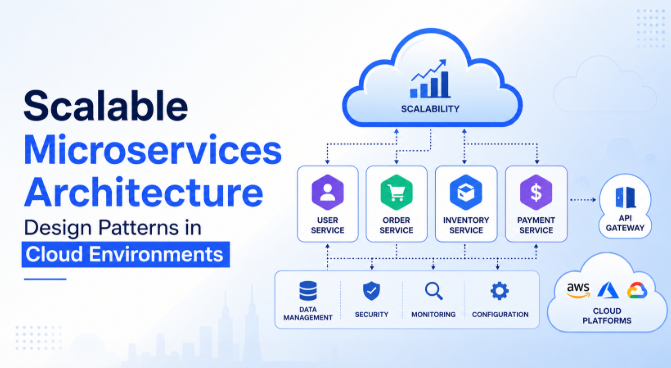
Microservices architecture is an architectural style that structures an application as a collection of small, independently deployable services. Each service is designed to perform a specific business function and operates in a modular fashion, which greatly contrasts with the traditional monolithic architecture where an application is built as a single, unified unit.
A key characteristic of microservices is their ability to be developed, deployed, and scaled independently. By breaking down an application into smaller components, organizations can achieve greater flexibility and ease of maintenance. Each microservice typically communicates with others through well-defined APIs, which facilitates a loose coupling among services. This decoupling means teams can work on different services simultaneously, thereby enhancing productivity and agility.
Microservices architecture is also characterized by its scalability. Services can be scaled independently based on demand, allowing for better resource utilization and performance optimization. In cloud environments, this characteristic is particularly beneficial, as cloud platforms provide tools and infrastructure that support the deployment and scaling of microservices in response to changing loads.
Unlike monolithic systems, where a failure in one component might lead to the entire application becoming inoperative, microservices promote resilience. If one service fails, the others can continue to function, ensuring that the overall application remains operational. This fault tolerance is critical for modern applications, which must provide continuous service in a 24/7 business environment.
In conclusion, microservices architecture represents a shift towards more modular, flexible, and resilient application design. This architectural style prepares organizations to better handle the complexities of modern software demands while laying the groundwork for scalable microservices design patterns suited for cloud environments.
Understanding Scalability in Cloud Environments
Scalability in cloud environments refers to the ability of a system to efficiently manage increasing workloads and adapt to changing demands. It is a fundamental characteristic that allows organizations to enhance their resource capabilities without compromising performance. There are two primary types of scalability: vertical and horizontal. Vertical scalability, often termed “scaling up,” involves adding more resources to an existing server, such as upgrading the CPU or memory. Conversely, horizontal scalability, or “scaling out,” entails adding more servers or nodes to distribute the workload. This distinction is crucial as it influences system design and resource allocation in cloud-native applications.
Elastic scaling is another vital aspect of cloud scalability. This concept allows for the automatic adjustment of resources in real-time based on current demands. For instance, if a web application experiences a sudden surge in traffic, an elastic scaling mechanism will dynamically allocate additional resources to accommodate the increase, ensuring consistent performance and reliability. This capability significantly enhances the operational efficiency and cost-effectiveness of cloud services, as it enables organizations to pay only for the resources they use.
Cloud platforms, such as Amazon Web Services (AWS), Google Cloud Platform (GCP), and Microsoft Azure, provide various tools and services designed to facilitate scalable microservices development. These platforms support both vertical and horizontal scaling, offering options like load balancers and auto-scaling groups. Load balancers distribute incoming network traffic across multiple servers to ensure no single server becomes overwhelmed. Auto-scaling groups monitor application metrics and adjust resources accordingly, allowing businesses to maintain optimal performance even during fluctuations in demand.
Key Design Patterns for Microservices Scalability
Microservices architecture provides robust solutions to build scalable and resilient applications. Achieving scalability in microservices involves adopting specific design patterns that promote efficient resource utilization and fault tolerance. Among these, the Service Discovery pattern stands out as a vital approach. This pattern enables microservices to find and connect with each other automatically without hardcoding the service locations, thus optimizing traffic and load balancing. For instance, tools like Eureka or Consul can automatically register services, allowing dynamic scaling based on demand.
Another prominent pattern is the Circuit Breaker, which enhances system robustness by preventing failure cascades. By introducing a circuit breaker, microservices can detect faults and temporarily prevent calls to failing services, reducing the overall system strain. This can be exemplified by integrating resilience4j or Hystrix in a microservices architecture, which promotes stability and ensures that services remain operational even under heavy load.
The API Gateway pattern acts as a single entry point for clients, streamlining interactions with a microservices ecosystem. It aids in the aggregation of various microservices, providing a unified interface that simplifies client requests while offloading various cross-cutting concerns such as authentication, logging, and rate limiting. Real-world applications often leverage tools like Kong or AWS API Gateway to manage traffic effectively and enhance scalability.
Furthermore, additional patterns such as Database per Service and Event Sourcing may also be integrated to enhance scalability in cloud environments. By allowing each microservice to maintain its own database, it encourages independent scaling and reduces interdependencies. Meanwhile, Event Sourcing promotes communication through asynchronous messaging, enabling services to process requests without waiting for direct responses. This collection of design patterns forms the foundation for a scalable microservices architecture in cloud environments.
Service Discovery Pattern
The Service Discovery Pattern plays a critical role in microservices architecture by enabling services to find and communicate with one another dynamically. As systems evolve and the number of services increases, locating the appropriate service instances can become a challenging task. This is where service discovery comes into play, facilitating the automatic detection of devices and services within a network.
There are two primary approaches to service discovery: client-side and server-side. The client-side discovery pattern requires clients to have the responsibility of determining the network location of the available service instances. This can be achieved through a service registry, which maintains a list of active service instances. The client queries this registry to retrieve the instances’ details and subsequently connects to one of them. This approach emphasizes the agility of clients and decentralizes the service management process.
In contrast, the server-side discovery pattern abstracts the discovery logic from the client. Here, the client sends a request to a load balancer or an API gateway, which then uses the service registry to route the request to an instance of the desired service. This method centralizes the discovery mechanism, allowing for potential optimizations in handling load balancing, as well as providing a single entry point for services. The decision to adopt client-side or server-side discovery may depend on various factors such as the complexity of services, the dynamic nature of service instances, or organizational preferences regarding service manageability.
Overall, implementing a robust service discovery mechanism is essential for ensuring high availability and scalability of microservices in cloud environments. The right choice between client-side and server-side patterns can lead to improved system performance and easier management of service interactions.
API Gateway Pattern
The API Gateway pattern is a critical component in scalable microservices architecture, serving as a unified entry point for all client interactions with microservices. This design pattern streamlines communication by routing requests from clients to various microservices, thereby enhancing the architecture’s scalability and maintainability. An API Gateway can aggregate results from multiple services, which not only reduces the number of client requests but also simplifies the client-side logic.
One of the primary benefits of implementing an API Gateway is its capability to manage security effectively. By acting as a mediator between clients and services, it can enforce authentication and authorization protocols, thereby protecting the microservices from unauthorized access. This centralized security model also aids in reducing the attack surface, allowing developers to maintain security policies in a single location rather than duplicating them across multiple services.
Additionally, the API Gateway pattern enhances performance by managing load balancing and caching functions. By distributing traffic efficiently among microservices, it ensures no single service becomes a bottleneck, increasing overall application responsiveness. Caching frequently requested data at the gateway level decreases latency, which is essential for applications that require real-time data. Furthermore, monitoring and logging features integrated within an API Gateway facilitate performance insights and help in identifying issues across the microservices ecosystem.
In summary, the API Gateway pattern is vital for optimizing communication, security, and performance in scalable microservices architectures. By consolidating interactions through a single entry point, organizations can design more robust, secure, and efficient cloud-based applications that can seamlessly adapt to varying demands.
Database Design Patterns for Microservices
In the realm of microservices architecture, implementing the correct database design patterns is crucial for enhancing scalability and efficiency. One prominent pattern is the Database per Service approach, which allocates a separate database for each microservice. This enables teams to develop, deploy, and scale each service independently, providing significant flexibility and allowing for the use of the most suitable database technology for each application’s needs. However, this decentralized structure can lead to challenges regarding data consistency and complex transactions, as managing cross-service interactions becomes increasingly intricate.
Alternatively, there exists the Shared Database pattern wherein multiple microservices access the same database schema. This design can simplify data management and ensure consistency, particularly when services need to share the same dataset. However, using a shared database can stifle the independence of microservices, creating tight coupling that may hinder the scalability benefits microservices are generally designed to achieve. As changes to the database schema may impact multiple services, this pattern demands meticulous synchronization of changes and comprehensive testing to prevent service disruptions.
Another vital pattern is Event Sourcing, where state changes are tracked as a sequence of events. Instead of persisting the current state, event sourcing captures each change initiated by a microservice, allowing any service to reconstruct the state by replaying events. This pattern not only facilitates robustness and scalability but also enables an effective audit trail and improves flexibility in modifying application behavior. However, it requires an understanding of event design and management, as well as ensuring eventual consistency, which can introduce complexity in state reconciliation.
Event-Driven Architecture in Microservices
Event-Driven Architecture (EDA) is a pivotal design pattern in the realm of microservices, focusing on enhancing scalability and responsiveness. In this architectural style, services communicate through events, which are produced and consumed across various components. This decoupling of services allows for more independent scale and deployment, crucial for organizations seeking to meet varying demands in cloud environments.
At the heart of EDA is the concept of messaging systems, with popular implementations including Apache Kafka and RabbitMQ. These systems facilitate asynchronous communication between microservices, promoting a more resilient architecture by mitigating the risks associated with synchronous calls. For instance, Kafka allows services to publish and subscribe to streams of records in real-time, ensuring that the system remains responsive even during peak loads. On the other hand, RabbitMQ excels in queuing messages, ensuring that no events are lost, hence providing reliability.
Another critical concept within EDA is event sourcing, which involves persisting the state of a service as a series of events. This technique not only aids in reconstructing the current state of an application but also provides a robust audit trail for the changes. By leveraging event sourcing, developers can implement features like undo functionality or debugging more efficiently, as every state change is recorded.
In addition to enhancing scalability and resilience, event-driven microservices architecture facilitates improved responsiveness by allowing services to react to incoming events in real-time. This is particularly beneficial in cloud environments where workloads can fluctuate dramatically, enabling organizations to dynamically manage resources based on instant demand signals. Overall, Event-Driven Architecture is a powerful approach for developing scalable and agile microservices that effectively meet today’s business challenges.
Challenges in Scaling Microservices
Scaling microservices presents numerous challenges that organizations must navigate to achieve an efficient and stable cloud environment. One of the primary challenges is the inherent complexity of distributed systems. Microservices architecture divides applications into smaller, independently deployable services that communicate over a network. This distributed nature complicates dependency management, as the failure of one service can affect the entire system, necessitating robust monitoring and error handling mechanisms to ensure system reliability.
Another significant challenge lies in service management. As organizations scale their microservices, managing a growing number of services becomes increasingly difficult. This includes ensuring that each service is properly deployed, monitored, and maintained over time. Additionally, orchestration and automation tools must be in place to facilitate the seamless coordination of services, allowing for efficient scaling and resource utilization. Failure to implement appropriate service management practices can lead to configuration drift and service inconsistencies, ultimately undermining the system’s performance.
Moreover, maintaining data consistency across multiple microservices poses another challenge when scaling. Since each microservice may have its data storage, synchronizing data becomes crucial, especially in scenarios that require distributed transactions. Implementing patterns such as eventual consistency can alleviate some of these concerns but may introduce complexities in application logic and user experience. Organizations must decide whether to rely on synchronous approaches that ensure immediate consistency or asynchronous methods that allow for more flexible data management, assessing the trade-offs involved.
In light of these challenges, organizations aiming to scale microservices effectively must adopt comprehensive strategies that address complexity, service management, and data consistency, ensuring a robust cloud environment that can adapt to evolving business needs.
Conclusion and Future Trends in Microservices Architecture
As we reflect on the intricacies of microservices architecture within cloud environments, several key insights emerge. This architecture promotes a modular approach to software development, facilitating scalability and flexibility, essential for modern applications. The ability to independently deploy, scale, and update services enhances responsiveness to evolving business needs. The use of design patterns in microservices—such as API Gateway, Service Discovery, and Circuit Breaker—provides established solutions for common challenges, allowing organizations to build robust systems efficiently.
Looking ahead, the future of microservices architecture is poised for exciting developments, particularly in the context of emerging technologies. One notable area of growth is the integration of artificial intelligence (AI) and machine learning (ML). These technologies have the potential to optimize service orchestration, automate operational tasks, and enable predictive analytics, ensuring that the microservices are not only smarter but also more efficient in resource utilization. As businesses strive for greater agility, incorporating AI-driven insights can significantly enhance decision-making processes related to service scaling and performance monitoring.
Furthermore, the synergy between microservices and serverless computing models is likely to gain traction. This architectural evolution could simplify resource management, reduce costs, and further enhance scalability by allowing services to dynamically allocate resources according to demand. The trend toward adopting decentralized data management solutions, such as distributed databases, will also shape the microservices landscape, ensuring that data integrity and accessibility remain paramount.
In summary, the trajectory of microservices architecture in cloud environments continues to evolve, driven by advancements in technology and a growing emphasis on agility and resilience. Organizations that embrace these trends may find themselves better positioned to meet the challenges of an increasingly digital world.