

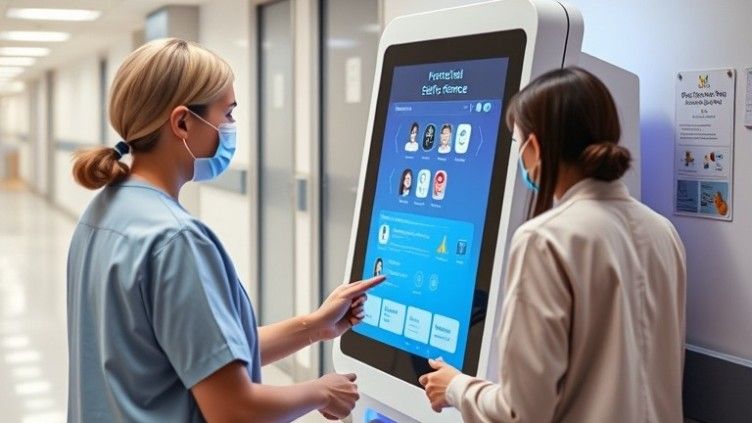
Introduction to Smart Hospitals
Smart hospitals represent a transformative approach to healthcare, utilizing cutting-edge technologies to enhance patient care and operational efficiency. These facilities are designed to leverage digital innovations, such as the Internet of Things (IoT), artificial intelligence (AI), and big data analytics, which collectively work to improve the healthcare experience. By integrating these advanced technologies, smart hospitals aim to deliver a more streamlined, responsive, and patient-centered environment than traditional healthcare facilities.
One of the defining characteristics of smart hospitals is their use of interconnected devices that facilitate remote monitoring and real-time data sharing. For instance, wearable health devices can continuously track patient vitals and transmit this information to medical staff, allowing for prompt interventions when necessary. This integration not only enhances patient safety but also aids in the effective management of chronic diseases, which is crucial given the aging population worldwide.
Moreover, smart hospitals utilize AI algorithms to analyze patient data for predictive analytics, ultimately assisting healthcare providers in making more informed decisions. These systems can identify patterns that may not be immediately obvious to human practitioners, thereby leading to better outcomes and increased efficiency in treatment protocols. Furthermore, implementing smart technology in hospital management enables automated processes, such as scheduling and inventory management, reducing human error and improving resource allocation.
In essence, the rise of smart hospitals signifies a paradigm shift within the healthcare sector, marking a transition from conventional operational methods to data-driven, technology-enhanced healthcare solutions. As more hospitals embrace these innovations, the potential for improved patient outcomes and operational success becomes increasingly evident, prompting the broader healthcare community to reconsider their approach to hospital management and patient care strategies.
Key Technologies Behind Smart Hospitals
The emergence of smart hospitals has fundamentally transformed the healthcare landscape, driven largely by the adoption of advanced technologies. One of the most pivotal elements in this evolution is the Internet of Things (IoT). IoT devices play a crucial role in connecting various medical equipment and IoT-enabled devices, facilitating real-time data transmission. This connectivity ensures that healthcare professionals have immediate access to critical patient data, thereby enhancing decision-making and improving patient outcomes. From wearable health monitors to smart beds that track patient vitals, IoT is redefining personalized care.
Another significant technology contributing to the rise of smart hospitals is telemedicine. Telemedicine platforms enable healthcare providers to offer remote consultations, effectively extending healthcare services beyond the confines of traditional hospital settings. This innovation is particularly vital in situations where timely access to care is crucial, such as during public health emergencies or for patients residing in rural areas. By bridging geographical barriers, telemedicine fosters a more inclusive healthcare system.
Artificial Intelligence (AI) also plays a transformative role in smart hospitals, with applications ranging from predictive analytics to personalized treatment plans. AI algorithms can analyze massive datasets to identify trends and predict patient outcomes, allowing for proactive interventions. Furthermore, AI can optimize hospital operations, improving resource allocation and reducing wait times, significantly enhancing the overall efficiency of healthcare delivery.
Complementing these technologies is big data analytics, which empowers hospitals to harness large volumes of healthcare data effectively. Through advanced analytical techniques, healthcare facilities can derive meaningful insights from patient records, treatment effectiveness, and operational workflows. This data-driven approach not only supports evidence-based decision-making but also fosters continuous quality improvement within healthcare systems.
Enhanced Patient Experience Through Technology
As the healthcare landscape continues to evolve, smart hospitals have emerged at the forefront of technological advancement, particularly in enhancing patient experience. These facilities utilize innovative technologies to provide patient-centered care that is not only efficient but also engaging. A notable example of this transformation is the integration of mobile applications that allow patients to manage their healthcare journeys from their smartphones. Through such apps, patients can schedule appointments, receive reminders, and access their health records anytime, anywhere, effectively streamlining their interaction with healthcare providers.
Moreover, the advent of virtual consultations has revolutionized the way healthcare is delivered, granting patients access to medical professionals without the need for physical visits. This technology is especially beneficial for individuals with mobility challenges or those living in remote areas. It fosters a more flexible approach to healthcare, enabling patients to discuss their health concerns with licensed professionals in real time through video calls. Virtual consultations not only save time but also significantly reduce travel costs and wait times, enhancing overall patient satisfaction.
Automated appointment scheduling and reminders are another critical advancement in smart hospitals. The implementation of AI-driven systems allows patients to book and modify their appointments effortlessly while reducing the administrative burden on hospital staff. This technology minimizes no-show rates through automated reminders sent ahead of appointments, thus optimizing resource allocation and improving patient flow within the hospital. The cumulative effect of these technological innovations significantly boosts patient engagement and satisfaction by providing accessible, timely, and personalized healthcare services, establishing smart hospitals as leaders in patient-centric care.
Efficiency in Hospital Operations
Smart hospitals are transforming the healthcare landscape by leveraging innovative technologies to enhance operational efficiency. One of the primary ways in which these hospitals achieve this is through automation, which streamlines various processes and reduces the workload on staff. Automation can be implemented in areas such as patient scheduling, processing laboratory results, and managing electronic health records, enabling healthcare providers to focus more on patient care.
Furthermore, real-time data analytics plays a crucial role in optimizing hospital operations. By collecting and analyzing data from various sources—such as patient records and hospital equipment—smart hospitals can gain valuable insights into patient flow, resource utilization, and overall operational performance. This allows for better decision-making and the ability to quickly adapt to changing circumstances. For instance, hospitals can analyze peak admission times and adjust staffing levels accordingly, ultimately leading to improved patient experiences and outcomes.
Inventory management is another crucial function that benefits from the integration of smart technology. Advanced tracking systems can monitor supplies in real-time, providing alerts when stock is low or when items are nearing expiration. This not only minimizes waste but also ensures that the hospital is prepared to meet patient needs without interruptions. Additionally, automated inventory systems minimize human error, further enhancing operational efficiency.
Effective staff allocation is also facilitated by the intelligent use of technology. By analyzing patient care demands and staff workloads, smart hospitals can ensure that appropriate personnel are assigned to critical areas, thus reducing burnout and improving job satisfaction among healthcare providers. This strategic approach not only enhances operational efficiency but also significantly contributes to the quality of care delivered.
Data Security and Privacy Challenges
As healthcare facilities increasingly adopt smart technologies, the importance of data security and patient privacy cannot be overstated. Smart hospitals utilize innovative solutions to streamline operations and enhance patient care; however, these advancements introduce a myriad of security challenges. With healthcare data breaches becoming more prevalent, safeguarding sensitive patient information should be a top priority for healthcare administrators.
One of the main threats arises from cyberattacks, ranging from ransomware to phishing schemes, which can compromise patient data. In 2022 alone, healthcare organizations faced numerous high-profile breaches, leading to the exposure of millions of patient records. In addition to external threats, internal vulnerabilities such as inadequate training of staff and the use of outdated systems can further exacerbate security issues.
Compliance with regulations is another critical component of data security in smart hospitals. The Health Insurance Portability and Accountability Act (HIPAA) mandates strict guidelines for the protection of patient information. Failure to comply with these regulations can result in severe penalties and damage to a hospital’s reputation. Therefore, it is essential for smart hospitals to ensure that all technologies and processes align with HIPAA standards and actively monitor compliance.
To combat these data security challenges, healthcare organizations must implement best practices for safeguarding information. This includes using encrypted communications, regularly updating software, and conducting thorough risk assessments. Moreover, training employees on security protocols and creating a culture of awareness regarding data protection can significantly reduce the risk of breaches. By prioritizing data security and privacy, smart hospitals can create a safer environment for patients, ensuring that advancements in technology do not come at the expense of their personal information.
Case Studies of Successful Smart Hospitals
The emergence of smart hospitals has been transformative in healthcare, demonstrating the potential of innovative technologies to enhance patient care and operational efficiency. Here, we present notable case studies from various smart hospitals worldwide, highlighting specific technologies, challenges faced, and the outcomes achieved.
One prominent example is the Samsung Medical Center in Seoul, South Korea. This facility implemented an advanced electronic medical records system, allowing real-time access to patient information across departments. The integration of artificial intelligence in this smart hospital enables predictive analytics for patient management, significantly reducing waiting times and improving treatment outcomes. Despite the initial resistance from staff who needed training on the new systems, the hospital successfully navigated this transition by ensuring comprehensive training sessions and support.
Another noteworthy instance is the Johns Hopkins Hospital in Baltimore, USA. This smart hospital has embraced Internet of Things (IoT) technologies to monitor patient vitals continuously using wearable devices. As a result, healthcare providers can respond proactively to changes in patient conditions. The challenges included data privacy concerns and the need for seamless integration of various devices and systems. However, through meticulous planning and governance, Johns Hopkins achieved impressive results, including a reduction in readmission rates and enhanced patient satisfaction.
In the United Kingdom, the Birmingham Children’s Hospital is another example of a smart hospital that has incorporated virtual reality (VR) technology to improve the patient experience. By using VR as a distraction tool during procedures, the hospital has seen less anxiety among pediatric patients, which has led to a reduction in the use of sedatives. Overcoming the initial technological hurdles was crucial, yet the successful implementation has resulted in positive feedback from both patients and healthcare professionals.
These case studies exemplify how the adoption of innovative technologies can revolutionize healthcare delivery in smart hospitals. Each institution faced unique challenges, yet their commitment to transforming patient care through technology has yielded influential results that pave the way for future advancements.
The Future of Smart Hospitals
The evolution of smart hospitals is poised to fundamentally reshape healthcare delivery in the coming years. The integration of artificial intelligence (AI) is expected to play a pivotal role in this transformation. By harnessing AI algorithms, hospitals can analyze vast amounts of patient data to predict outcomes, improve diagnostic accuracy, and personalize treatment plans. For instance, machine learning models can identify patterns in patient responses to specific medications, thereby facilitating tailored therapies that align with individual genetic profiles.
In conjunction with AI, robotics will increasingly be utilized across various facets of hospital operation. Surgical robots are already transforming surgical procedures, allowing for greater precision and minimally invasive techniques, which can lead to quicker patient recovery times. Beyond surgery, robotic systems can assist in logistics, such as delivering medication and supplies throughout the hospital, thereby enhancing operational efficiency and allowing healthcare providers to focus more on patient care.
Another integral aspect of the future of smart hospitals is the advancement of personalized medicine. This approach emphasizes tailoring healthcare based on an individual’s unique characteristics, including their genetic makeup, environment, and lifestyle choices. This shift towards personalized care will necessitate robust data management systems that can securely store and analyze patient information, ensuring that care strategies are informed by comprehensive insights.
To remain at the cutting edge of these advancements, hospitals must embrace a culture of innovation. This includes investing in new technologies, fostering partnerships with tech companies, and training healthcare professionals to utilize these tools effectively. By prioritizing adaptive strategies, healthcare institutions can position themselves to harness the full potential of smart technologies, ultimately leading to improved patient outcomes and enhanced operational workflows. The future of smart hospitals is not just about technology; it is about revolutionizing how care is delivered and experienced.
Impact on Healthcare Workforce
The advent of smart hospitals has resulted in transformative changes within the healthcare sector, particularly in the roles and responsibilities of healthcare professionals. As smart technologies such as artificial intelligence (AI), telemedicine, and advanced patient monitoring systems become integral to healthcare delivery, the workforce must adapt to a new environment where technology and human expertise coalesce.
One of the most significant impacts of smart hospital technologies is the evolution of job roles. Healthcare professionals are increasingly finding that their traditional tasks are complemented by tools that enhance efficiency and accuracy. For instance, nurses and physicians can now rely on AI-driven diagnostics to support decision-making, allowing them to focus more on patient interaction and personalized care. This shift emphasizes the importance of soft skills, communication, and empathy, which remain critical components in patient care.
Moreover, as smart hospital systems require a higher level of technical proficiency, healthcare providers must embrace new skill sets. Training programs aimed at improving digital literacy among staff have become imperative. Healthcare professionals are now expected to navigate sophisticated electronic health records (EHR) systems and utilize various telehealth platforms. Institutions are evolving by providing ongoing education opportunities to ensure that employees remain competent and confident in using these technologies.
Importantly, smart technologies are designed to assist rather than replace human caregivers. For instance, patient monitoring devices can provide real-time data, allowing healthcare workers to spend more time on critical situations that require their expertise. This symbiosis between technology and human intervention aims to enhance patient outcomes without diminishing the essential role of healthcare workers. As the industry embraces these innovations, it is crucial to ensure that the human touch in healthcare remains at the forefront, fostering a collaborative environment between technology and the workforce.
Conclusion: The Road Ahead for Smart Hospitals
The advancement of smart hospitals signifies a pivotal shift in healthcare delivery. As we have explored throughout this blog post, the integration of innovative technologies into hospital settings has the potential to revolutionize patient care, enhance operational efficiency, and improve health outcomes. By leveraging cutting-edge tools such as Internet of Things (IoT) devices, artificial intelligence (AI), and telemedicine solutions, healthcare providers can create an environment that not only responds to the immediate health needs of patients but also anticipates and addresses future challenges.
Furthermore, the emphasis on data security and patient privacy cannot be understated in this transformation. As smart hospitals embrace these technologies, ensuring the protection of sensitive health information remains a top priority. This dual focus on innovation and security will be fundamental as these facilities navigate the complexities of modern medical environments.
The journey towards fully realized smart hospitals will require collaboration among various stakeholders, including healthcare professionals, technology developers, and regulatory bodies. By working together, these groups can design and implement strategies that facilitate the transition to smart healthcare ecosystems. Continued investment in training and education for staff is also essential, ensuring that healthcare teams are equipped to utilize and manage these advanced technologies effectively.
In closing, it is clear that the rise of smart hospitals marks a transformative era in healthcare. As we continue to explore the capabilities of these innovative facilities, it will be crucial for all involved to remain proactive in embracing the opportunities that arise. Ongoing dialogue and information sharing about these advancements will pave the way for a future where healthcare is smarter, more efficient, and ultimately more beneficial for patients and providers alike.