

Introduction to the Solar System’s Mysteries
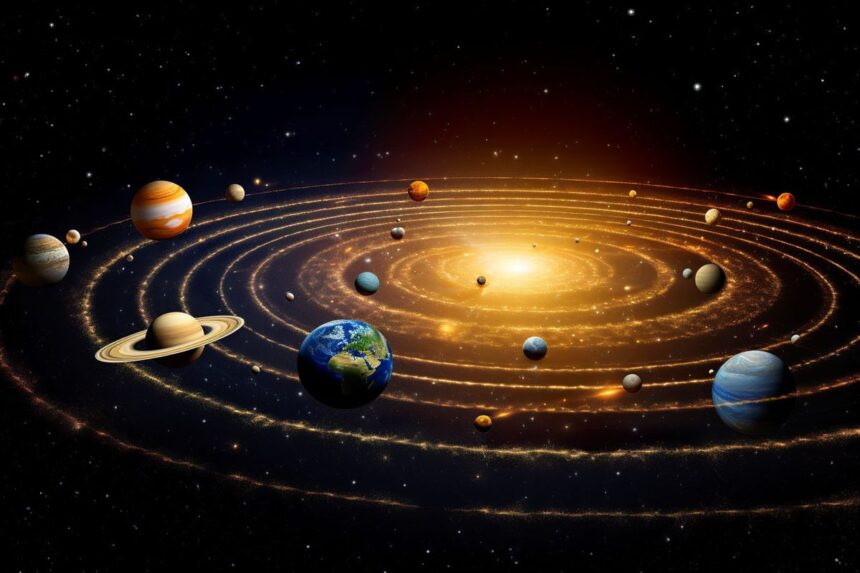
The solar system, a vast expanse of celestial bodies, continues to captivate humanity with its enigmatic wonders. It consists of the Sun, eight major planets, their moons, and a plethora of smaller objects like dwarf planets, asteroids, and comets. As we contemplate the scale of the solar system, it becomes clear that our planet is just a small component within a complex and dynamic cosmic environment.
Throughout history, the quest for understanding the solar system has driven astronomical research and exploration. From the ancient observations of celestial phenomena to the sophisticated technology of today, our desire to unravel the mysteries of space is unceasing. The advancement of telescopes and space probes has allowed scientists to not only observe distant targets but also to gather valuable data regarding their composition, dynamics, and the processes that govern them.
In recent years, significant breakthroughs have been made, reshaping our understanding of the solar system. Discoveries such as the intricacies of Saturn’s rings, the geological activity on moons like Europa and Enceladus, and the identification of potentially habitable environments beyond Earth broaden our horizons. Each of these revelations contributes to our ambition of not only understanding the solar system but also examining our position within the broader universe.
Moreover, the continued exploration of Mars, the study of asteroids, and the missions targeting outer planets signify our relentless pursuit of knowledge. These endeavors do not solely aim to satisfy our curiosity; they are crucial for advancing scientific understanding, technology development, and addressing fundamental questions about life and existence. The solar system’s mysteries are vast, and as we uncover more layers, we bring ourselves closer to answering the essential queries that define our place in the cosmos.
The Role of Space Exploration Missions
Space exploration has been at the forefront of human ingenuity and curiosity, significantly enhancing our understanding of the solar system. Various space agencies, including NASA (National Aeronautics and Space Administration) and ESA (European Space Agency), have conducted numerous missions over several decades that have contributed to this prominent field of study.
Unmanned missions have been particularly pivotal in gathering extensive data from other celestial bodies. For example, NASA’s Voyager missions, launched in the late 1970s, have provided invaluable insights into the outer planets and are currently venturing into interstellar space. Similarly, ESA’s Rosetta mission successfully landed the Philae probe on comet 67P/Churyumov-Gerasimenko, marking a significant milestone in understanding cometary compositions and behaviours.
In addition to unmanned missions, manned missions have also played a crucial role in our exploration efforts. NASA’s Apollo program, which allowed astronauts to land on the Moon, not only showcased advancements in technology but also deepened our knowledge about the Moon’s geology and potential resources. More recent endeavors, like the International Space Station (ISS), foster international cooperation, allowing scientists from around the world to conduct research in microgravity conditions, which contributes to our picture of human capabilities beyond Earth.
Furthermore, ongoing missions, such as NASA’s Perseverance Rover on Mars, not only seek evidence of past life but also examine the planet’s geology and climate. Such explorations are essential for future human colonization efforts. The technology developed for these missions, including advanced propulsion and autonomous systems, continuously enhances our capacity to explore deeper regions of our solar system and beyond.
Revolutionary Findings About Planets
Recent explorations and observations of the planets within our solar system have yielded groundbreaking discoveries that significantly enhance our understanding of their atmospheres, surfaces, and the potential for hosting life. Notably, Mars and Venus have been the focus of intensive research, revealing profound insights into their geological and climatic dynamics.
Mars has garnered attention due to its increasingly Earth-like characteristics. Data from recent missions indicate the presence of complex organic molecules in the Martian soil, suggesting that the planet may have harbored conditions suitable for life in its ancient past. Furthermore, the ongoing analysis of the planet’s polar ice caps has led to discoveries regarding the cyclical nature of its climate patterns, which could provide vital clues about the planet’s ability to support life forms, should they exist.
On the other hand, Venus has presented a more enigmatic challenge for scientists. The recent detection of phosphine gas in its atmosphere raised questions about potential biological processes at play. Although similar to the conditions found on Earth, the extreme atmospheric pressure and scorching temperatures present significant hurdles for habitability. Nonetheless, ongoing studies, including radar mapping from orbiting satellites, are refining our knowledge of Venus’s geology and surface composition, revealing volcanic activity that may persist today.
Advancements in technology, such as the use of artificial intelligence to analyze vast amounts of planetary data, are paving the way for more detailed investigations. These innovative methods enable scientists to simulate atmospheric conditions and predict how different environments can potentially support life. Ultimately, the revelations from Mars and Venus exemplify the dynamic nature of planetary exploration and highlight the importance of continued research for understanding our solar system’s mysteries and the intriguing possibility of extraterrestrial life.
The Asteroid Belt and its Secrets
The asteroid belt, located between the orbits of Mars and Jupiter, is a region populated by millions of small celestial bodies known as asteroids. Recent discoveries have shed light on the origins of these objects, which are believed to be remnants from the early solar system that never coalesced into a full-fledged planet due to the gravitational influence of nearby Jupiter. This area not only provides insight into the formation of our solar system but also reveals the diverse composition and categories of asteroids.
Asteroids in the belt can be broadly classified into three categories: C-type (carbonaceous), S-type (silicaceous), and M-type (metallic), each with distinct chemical and physical properties. Recent studies utilizing advanced telescopes and space missions, such as NASA’s Parker Solar Probe and ESA’s BepiColombo, have enabled astronomers to analyze asteroid compositions in greater detail. These explorations have uncovered significant variations in mineral content, suggesting a complex history of collision, fragmentation, and evolution within the belt.
Moreover, the asteroid belt holds implications for Earth, especially regarding potential threats. Scientists have identified some asteroids as Near-Earth Objects (NEOs), which have orbits that bring them close to our planet. Although the risk of a significant impact event remains low, understanding the trajectories and behaviors of these bodies is crucial for planetary defense initiatives. Recent advancements, including impact modeling and tracking systems, have enhanced our ability to predict possible encounters with Earth, allowing for more informed mitigative strategies.
In summary, the study of the asteroid belt not only contributes to our understanding of the solar system’s formation but also informs us about potential risks posed by these celestial objects. Continuous research into the belt’s secrets will undoubtedly lead to further discoveries that enrich our knowledge of these fascinating bodies and their role in the cosmic landscape.
The Moons of the Solar System: Key Discoveries
In recent years, the exploration of various moons within our solar system has yielded remarkable discoveries, particularly regarding their potential to harbor subsurface oceans. Key targets of interest include Europa, Enceladus, and Titan, each showcasing unique characteristics and raising intriguing questions about astrobiology.
Europa, one of Jupiter’s most prominent moons, has garnered attention due to the extensive data gathered from missions such as the Galileo orbiter. This icy moon is believed to have a vast, salty ocean beneath its frozen surface. The potential for this dark ocean, which may harbor conditions suitable for life, makes Europa a prime candidate for future exploratory missions. The upcoming Europa Clipper mission aims to investigate the moon’s ice shell and subsurface ocean, searching for hints of life.
Similarly, Saturn’s moon Enceladus presents an exciting case for astrobiological exploration. The Cassini mission discovered impressive water geysers erupting from Enceladus’ south pole, suggesting an active subsurface ocean. The composition of these plumes, including organic molecules, indicates that the moon may possess the essential ingredients for life. Additionally, the presence of hydrothermal activity on the ocean floor could provide the necessary energy resources to support microbial life.
On the other hand, Titan, Saturn’s largest moon, offers a different environment with its dense atmosphere and lakes of liquid methane and ethane. While its conditions are drastically different from Earth’s, Titan’s subsurface ocean of water may also have the potential to foster life. Researchers are enthused by Titan’s chemistry, which could potentially lead to the development of life forms vastly different from those on our planet.
These discoveries prompt deeper inquiries into the possibilities of extraterrestrial life, emphasizing the importance of continued exploration of moons within our solar system. The findings from Europa, Enceladus, and Titan could significantly enhance our understanding of the conditions necessary for life beyond Earth.
Understanding the Kuiper Belt and Beyond
The Kuiper Belt is a vast region of space located beyond the orbit of Neptune, primarily composed of small icy bodies and dwarf planets. This area has garnered significant interest from astronomers and planetary scientists due to its role in understanding the formation and evolution of our solar system. Notably, the Kuiper Belt hosts several dwarf planets, with Pluto and Eris being among the most extensively studied. Recent explorations have shed light on these distant objects, revealing their complex compositions and dynamic atmospheres.
Pluto, once classified as the ninth planet, was redefined as a dwarf planet in 2006. The New Horizons mission, which conducted a flyby of Pluto in 2015, provided unprecedented images and data, demonstrating that this celestial body is geologically active with features such as ice mountains and possible subsurface oceans. Such findings have revolutionized our perception of Pluto and have implications for how we understand the characteristics of other Kuiper Belt Objects (KBOs).
In addition to Pluto, Eris, discovered in 2005, has drawn interest due to its size and distance, which necessitates further exploration to understand its properties fully. Discoveries in the Kuiper Belt have not only confirmed the existence of other dwarf planets but have also led to the identification of numerous smaller celestial bodies, known as KBOs. These findings deepen our understanding of the solar system’s formation and migration patterns.
The implications of these discoveries extend beyond the Kuiper Belt, prompting astronomers to rethink theories surrounding the outer solar system’s structure. As exploration technology advances, the potential for uncovering more KBOs promises to reveal further mysteries of our solar system, enhancing our understanding of the conditions that prevailed in its early history.
The Sun: New Insights into Our Star
The Sun, the central figure of our solar system, continues to intrigue scientists with profound discoveries that enhance our understanding of its behavior and the impact it has on Earth and other celestial bodies. Recent advancements in solar research have shed light on various aspects of solar activity, particularly how these dynamics influence space weather and terrestrial climate patterns.
Recent observations have revealed that solar flares and coronal mass ejections (CMEs) are more frequent than previously thought. These eruptive events can release a significant amount of energy and charged particles into space, posing risks to satellites and other technological infrastructure. The launch of more sophisticated monitoring satellites has aided in tracking these phenomena, allowing for timely warnings that protect technological systems and human activities on Earth.
Additionally, new data has indicated that variations in solar output can influence Earth’s climate over extended periods. For instance, researchers have identified correlations between solar cycles and climatic events, suggesting that prolonged periods of solar inactivity might be associated with cooler climate phases on our planet. Such insights underscore the essential role that the Sun plays as the primary energy source for the entire solar system.
Furthermore, investigations into the Sun’s magnetic field have led to a greater understanding of its complex dynamics. The magnetic field undergoes changes throughout the solar cycle, and these fluctuations can significantly affect solar activity. By studying these changes, scientists hope to develop predictive models that can forecast the Sun’s behavior with better accuracy, significantly benefiting satellite operations and safety measures on Earth.
In conclusion, the latest findings about the Sun not only illuminate its critical functions but also underscore its influence over the solar system’s broader dynamics. These insights are pivotal as they enhance our preparedness against solar-related phenomena and deepen our appreciation of our star’s complex nature.
Impact of Discoveries on Future Research
The recent discoveries within our solar system have catalyzed a significant transformation in astronomical research and exploration strategies. Key findings from various missions, such as the Mars Perseverance Rover and the Juno spacecraft orbiting Jupiter, have not only expanded our understanding of planetary bodies but also set the stage for innovative technological developments. As researchers delve deeper into these results, they are paving the way for future explorations that utilize enhanced methodologies and equipment.
Upcoming missions, such as NASA’s Artemis program, aim to return humans to the Moon while establishing a sustainable presence that will serve as a launch point for further explorations of Mars and beyond. These endeavors are driven by the desire not only to explore but also to research the potential for life beyond Earth, a pursuit that remains a focal point of astronomical studies. The data gathered from ongoing missions will play a crucial role in developing the tools and techniques needed for these ambitious goals.
Furthermore, advancements in technology, including next-generation telescopes and robotic systems, will significantly enhance our capabilities to study celestial phenomena. For instance, the James Webb Space Telescope is set to provide unprecedented views of distant galaxies, while missions like the Europa Clipper will allow us to investigate the icy moons of Jupiter for signs of habitability.
These discoveries are therefore not only monumental in their immediate implications but are also instrumental in shaping future research trajectories. As scientists continue to analyze data and formulate new hypotheses, they will ultimately inform and inspire a new wave of exploration missions. This synergy between discovery and research ensures that our understanding of the solar system remains dynamic and continues to evolve in the years to come.
Conclusion: The Future of Solar System Exploration
As we reflect on the remarkable strides made in solar system exploration, it is essential to recognize the significance of continuous inquiry and discovery. The advancements in technology have ushered in a new era of exploration, allowing scientists to observe celestial bodies in unprecedented detail. Missions such as NASA’s Perseverance rover on Mars and the advancements in telescope technology to study distant exoplanets exemplify our ever-expanding capabilities to understand the cosmos.
The discoveries made not only enhance our scientific knowledge but also contribute to our understanding of fundamental questions about life and the universe. Each mission provides insights into the conditions that may support life, the origins of planetary systems, and the dynamic processes at play throughout the solar system. Furthermore, by examining asteroids and comets, we gain valuable information about the building blocks of our solar system, helping to shed light on its formation and evolution.
Moreover, the exploration of the outer planets and their moons holds great promise for future discoveries. Europa, for instance, with its subsurface ocean, may harbor conditions suitable for life. The curiosity surrounding such environments fuels scientific inquiry and invites new generations of researchers and enthusiasts to engage in the field. In an age where collaboration between governmental and private entities is becoming increasingly prevalent, the future of solar system exploration is looking more collaborative and innovative than ever before.
In conclusion, the importance of ongoing exploration in our solar system cannot be understated. It cultivates a sense of wonder, inspires scientific breakthroughs, and enhances our understanding of our place in the universe. As we look to the future, we must continue to prioritize these explorations, ensuring that we remain dedicated to uncovering the mysteries that lie beyond our planet. The journey of discovery is not merely about reaching new destinations, but about the knowledge and insight gained along the way.