

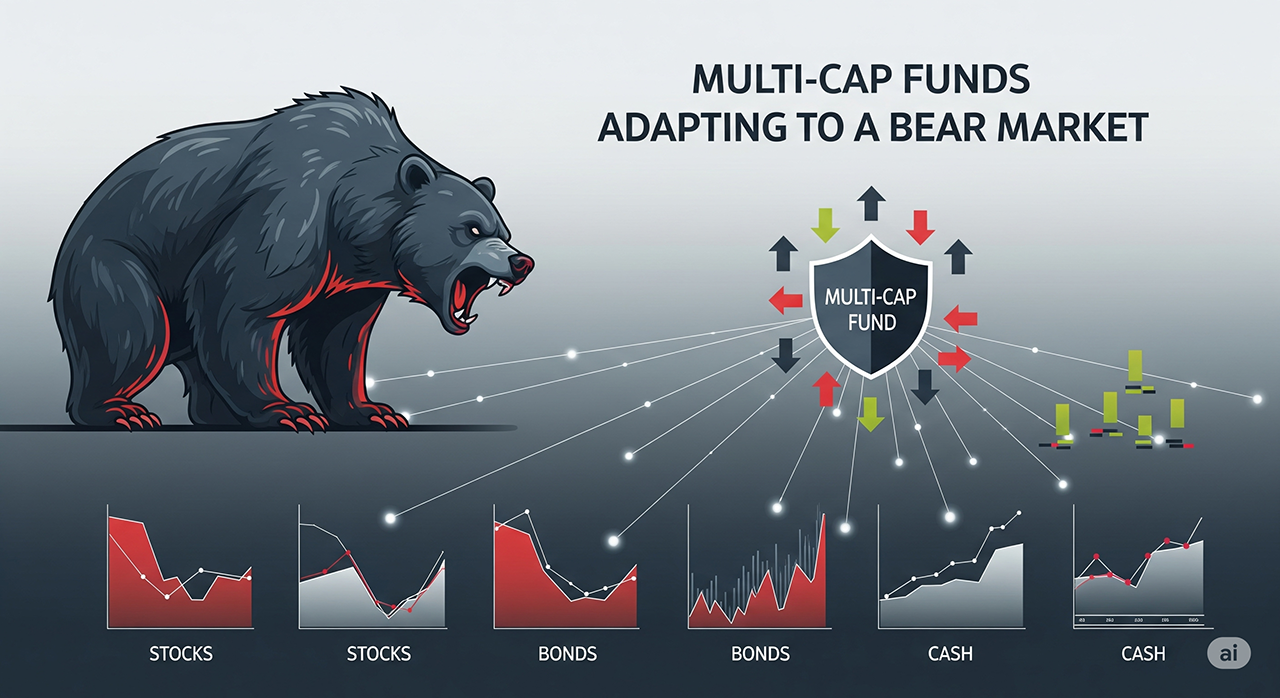
In a downturn, markets can feel unpredictable and intimidating for investors. Multi-cap funds, which spread investments across large, mid, and small companies, offer a practical balanced way to manage risk when markets decline.
Their flexibility allows managers to shift toward stable large-caps or seize chances in smaller companies as valuations dip. By diversifying across segments, these funds aim actively to cushion losses and prepare for long-term recovery.
AD
In this article, we will discuss how multi-cap funds adapt in bear markets.
What Defines a Bear Market?
A bear market is generally recognized when stock prices fall by 20% or more from their recent peak, signaling widespread investor pessimism. In India, such phases often follow economic slowdowns or global uncertainties, leading to reduced market confidence.
These downturns affect most sectors, causing stock values to decline sharply. Understanding what defines a bear market helps investors stay prepared and avoid panic selling.
Recognizing this threshold is key to making informed decisions during volatile periods.
Structural Advantages of Multi‑Cap Funds
Multi cap funds are built with a clear structure that gives them a big advantage, especially during uncertain times. By regulation, these funds must invest at least 25% of their assets each in large-cap, mid-cap, and small-cap companies.
This rule creates a built-in mix that helps spread the risk across different types of companies. Because large companies tend to be stable, mid-sized ones offer growth potential, and small firms bring higher returns with more risk, multi-cap funds balance all these factors naturally.
This diverse setup means the fund isn’t overly dependent on any single market segment, which helps smooth out ups and downs and protect your investment better during market swings.
Multi-cap funds employ thoughtful strategies to navigate difficult market phases and minimize risks during bear markets. Here’s how they adjust their investments to effectively manage these challenges:
1. Strategic Rebalancing
Strategic rebalancing helps multi cap funds stay balanced when markets fall. Fund managers review the mix of large cap, mid cap, and small cap holdings and adjust weights to reduce risk.
In a downturn, they trim mid cap and small cap positions and boost large caps, which tend to be more stable. This disciplined shift smooths volatility and protects value.
By following this plan, funds align with long term goals and stay on track when markets wobble.
2. Utilization of Hedging Strategies
During bear markets, multi cap funds like SBI Multi Cap Fund actively use hedging to manage downside risk. Fund managers may use derivatives such as index futures and options to offset potential losses in their equity portfolio.
They also maintain some exposure to debt or cash, which helps to reduce overall volatility.
According to SBI’s scheme details, derivatives and debt holdings serve as intentional buffers, even though hedging costs may slightly reduce upside.
3. Dynamic Asset Allocation
Dynamic asset allocation means multi-cap fund managers actively change how much they invest in large-cap, mid-cap, or small-cap stocks, depending on how the market is performing.
During a bear market, they usually shift more money into safer, stable large-cap companies. If certain sectors look promising, they may increase exposure there. This flexible approach helps reduce risk and take advantage of new opportunities, making the portfolio more resilient during difficult times.
It’s all about adapting quickly to protect investor wealth.
4. Adherence to Regulatory Guidelines
In India, multi-cap funds must follow SEBI rules that require them to invest at least 25% each in large-cap, mid-cap, and small-cap stocks.
This regulation ensures that fund managers do not focus too much on just one segment, making the portfolio more balanced.
Even during a bear market, this rule prevents excessive risk-taking and helps protect investors by spreading their investments across different types of companies. This structure supports steady performance in changing markets.
Conclusion
Multi cap funds in India manage risk during bear markets by balancing investments across large, mid, and small-cap stocks. This approach helps protect your portfolio from sharp losses, while still offering growth when the market recovers. They provide stability, flexibility, and resilience for investors through tough market cycles.