
Introduction to Container Orchestration
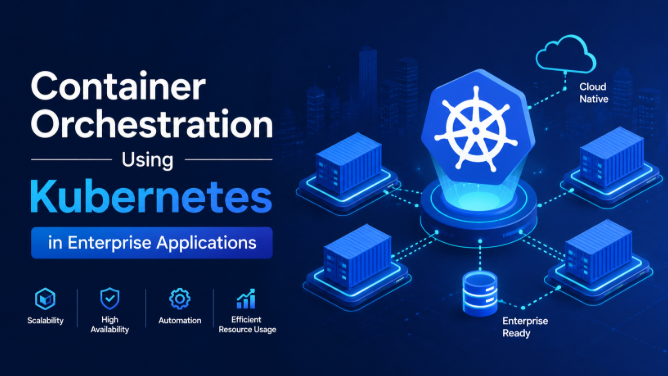
Container orchestration is a vital aspect of modern application development and deployment. It refers to the automated management, coordination, and organization of containerized applications across various environments. As software architectures have evolved, the use of containers has surged, leading to the need for effective orchestration solutions to manage these environments efficiently. Container orchestration allows developers to automate the deployment, scaling, and operation of application containers, thereby enhancing productivity and reducing operational overhead.
The necessity of container orchestration in today’s enterprise applications cannot be overstated. In traditional application deployment, managing resources, scaling applications, and ensuring minimal downtime can be labor-intensive and complex. Container orchestration abstractly simplifies this complexity by providing a framework for managing containers as they scale up or down based on demand, thus ensuring that resources are utilized effectively. This elasticity is particularly critical in environments with fluctuating workloads, where applications must be responsive to varying user demands.
Furthermore, using container orchestration tools, organizations can achieve greater consistency in application environments. By defining clusters of containers and supporting services, developers can ensure that applications are deployed in a uniform manner, minimizing discrepancies that could lead to operational challenges. This standardization also supports improved security and compliance, as configurations can be regularly monitored and managed centrally.
As enterprise applications increasingly rely on microservices architectures, the orchestration of these containers becomes essential not only for operational efficiency but also for seamless collaboration among development teams. Tools like Kubernetes, which is one of the leading platforms for container orchestration, empower organizations to maintain scalable, efficient, and highly available applications, making them a cornerstone of modern application strategy.
Understanding Kubernetes
Kubernetes is an open-source container orchestration platform that has become the industry standard for managing containerized applications. Originally developed by Google, Kubernetes provides an efficient system for automating the deployment, scaling, and management of application containers across various environments, including on-premises and cloud infrastructures. The architecture of Kubernetes is based on a master-slave configuration, where a master node oversees a cluster of worker nodes, ensuring that the desired state of the application is maintained.
At the core of Kubernetes are several critical components, each playing an essential role in the orchestration process. Pods are the smallest deployable units in Kubernetes, encapsulating one or more containers that share storage and network resources. Services facilitate communication between these Pods, enabling reliable access to the containers regardless of their IP addresses. Deployments provide an abstraction for managing the state of an application, allowing developers to define the desired state and letting Kubernetes automatically handle the necessary changes.
The benefits of implementing Kubernetes in enterprise applications are extensive. One significant advantage is self-healing, where the platform automatically replaces and reschedules containers when they fail, ensuring high availability and reliability. Additionally, Kubernetes supports horizontal scaling, allowing applications to scale resources up or down based on demand, effectively catering to varying workloads. Automated rollouts and rollbacks enhance the deployment process, allowing seamless updates while minimizing downtime and potential disruptions.
Through its robust architecture and core components, Kubernetes inherently optimizes the management of containerized applications, promoting efficient resource usage and operational efficiency in today’s dynamic enterprise environments. Its adoption has become crucial for businesses looking to leverage the full potential of containerization in their software development practices.
The Benefits of Using Kubernetes in Enterprise Applications
Kubernetes has emerged as a leading container orchestration platform, bringing a multitude of benefits specifically tailored for enterprise applications. One of the most notable advantages is improved resource utilization. By enabling efficient management of containerized applications, Kubernetes allows enterprises to maximize their hardware capabilities. This efficient allocation of resources not only minimizes waste but also optimizes performance, which is crucial in an enterprise setting where high availability is paramount.
Another significant benefit is the reduction of operating costs. With Kubernetes, enterprises can automate various operational tasks, such as scaling and load balancing, which cuts down on the need for manual intervention. This reduction in operational overhead leads to savings on labor costs, while the efficient use of resources also contributes to lower infrastructure expenses. Furthermore, Kubernetes supports multi-cloud environments, allowing enterprises to leverage cost-effective cloud services and avoid vendor lock-in.
Enhanced agility is another key benefit of deploying Kubernetes in enterprise applications. With its capability to facilitate continuous integration and continuous deployment (CI/CD) processes, Kubernetes empowers development teams to ship code faster and with greater confidence. This agility not only accelerates time-to-market for new features but also enables organizations to respond promptly to changing business needs and customer demands.
In terms of disaster recovery, Kubernetes offers robust solutions for ensuring application resilience. By maintaining continuity through automatic failover and self-healing capabilities, Kubernetes helps safeguard critical enterprise applications against outages. Companies like Airbnb and Expedia have successfully implemented Kubernetes, demonstrated by their improved service uptime and capability to scale efficiently during peak traffic periods.
In conclusion, Kubernetes provides a comprehensive suite of advantages for enterprise applications, ranging from cost savings to improved agility and disaster recovery support. As the adoption of container orchestration continues to grow, leveraging Kubernetes can undoubtedly position enterprises for sustained success in today’s competitive landscape.
Key Features of Kubernetes for Enterprises
Kubernetes has emerged as a leading container orchestration platform, particularly suited for enterprise applications due to its robust features. One of the most critical functionalities is load balancing, which efficiently distributes network traffic across multiple pods. This ensures that no single container becomes overloaded, allowing applications to maintain high availability and reliability during peak usage times. As a result, enterprises can provide consistent performance to their end-users regardless of the workload.
Another essential feature is service discovery, which simplifies the process of locating and communicating between services within a cloud-native architecture. Kubernetes automatically assigns IP addresses and a single DNS name for a set of pods, streamlining connectivity and enhancing internal service communications. This is particularly beneficial for enterprises that require microservices to interact seamlessly and dynamically scale as necessary.
Storage orchestration is equally pivotal in Kubernetes. The platform allows enterprises to automatically mount the storage system of their choice, whether it is local storage, public cloud providers, or networked storage. This flexibility enhances data management capabilities, catering to diverse application needs while ensuring consistent data access and persistence across containers.
Furthermore, automated deployment features provide enterprises with the ability to define the desired state of applications. Kubernetes facilitates continuous integration and continuous deployment (CI/CD) processes, enabling organizations to rapidly roll out, update, and roll back application versions with minimal downtime. This agility is vital in today’s fast-paced digital landscape, allowing enterprises to respond swiftly to market changes.
Lastly, security management is a top priority, and Kubernetes offers several built-in mechanisms to enforce security protocols. It supports role-based access control (RBAC), ensuring that only authorized users can make changes to the system. This focus on secure configuration and management aids enterprises in safeguarding sensitive data and maintaining compliance with industry standards.
Challenges and Considerations in Implementing Kubernetes
Implementing Kubernetes for container orchestration in enterprise applications presents a myriad of challenges that organizations must effectively navigate. One notable challenge is the inherent complexity of Kubernetes itself; its vast array of features and components can be overwhelming for teams not familiar with its architecture. For organizations looking to leverage the power of microservices, understanding how Kubernetes manages scaling, networking, and service discovery is essential yet intricate.
Additionally, the learning curve associated with Kubernetes can pose a significant barrier to successful adoption. Teams may require extensive training to fully utilize Kubernetes capabilities, which can delay implementation timelines. New users often struggle with configuring and deploying Kubernetes clusters, further complicating the onboarding process. This learning phase necessitates a commitment to continuous education and support, highlighting the importance of investing in training programs tailored to the unique needs of developers and operations staff.
Moreover, the need for skilled personnel to manage Kubernetes environments is paramount. Companies must not only develop their existing workforce’s capabilities but may also need to attract new talent with specialized expertise in cloud-native technologies. Organizations can overcome this obstacle by creating structured paths for career development in Kubernetes-related roles and fostering a culture of knowledge sharing within their teams.
To mitigate these challenges, organizations may consider starting with a simplified version of Kubernetes or adopting managed Kubernetes services that reduce some of the operational complexities involved. Additionally, engaging with Kubernetes communities, forums, and official documentation can accelerate the learning process, helping teams to adapt and implement Kubernetes in a more streamlined manner. By acknowledging these challenges and proactively addressing them, enterprises can position themselves for success in their journey of container orchestration.
Real-World Use Cases of Kubernetes
Kubernetes has emerged as a cornerstone for enterprises looking to streamline their container orchestration processes and enhance the efficiency of their applications. Numerous organizations have successfully harnessed the power of Kubernetes to address complex operational challenges and scale their infrastructure.
One notable example is the online retailer Alibaba, which utilizes Kubernetes to manage its massive sales events, such as the Single’s Day shopping festival. By employing Kubernetes, Alibaba can dynamically scale its applications, ensuring that their platform remains responsive and capable of handling peaks in traffic while providing a seamless user experience. This scalability has allowed them to achieve significant cost savings and improved performance during high-demand periods.
Another case worth mentioning is that of Spotify, a renowned streaming service. Spotify adopted Kubernetes to manage its microservices architecture, enabling teams to deploy updates rapidly without downtime. By leveraging Kubernetes’ CI/CD capabilities, Spotify improved its release frequency by automating the deployment process. As a result, the company has observed a decrease in their time-to-market and enhanced collaboration among different development teams.
An additional example is the financial services giant HSBC, which has implemented Kubernetes to establish a more agile and responsive IT environment. HSBC demonstrated that the transition to Kubernetes not only decreased their operational complexity but also boosted their ability to innovate quickly. The bank has reported improved compliance with regulatory requirements, reduced costs associated with maintaining infrastructures, and enhanced security protocols.
These practical examples exemplify how various enterprises deploy Kubernetes effectively to meet diverse business needs. The lessons learned from these implementations highlight the importance of embracing container orchestration to drive operational efficiency and foster innovation, making Kubernetes an invaluable tool in the contemporary business landscape.
Integrating Kubernetes with CI/CD Pipelines
Kubernetes has become an essential component in modern software development, particularly for enterprises looking to enhance their application delivery processes through Continuous Integration and Continuous Deployment (CI/CD) practices. Integrating Kubernetes with CI/CD pipelines allows teams to automate the building, testing, and deployment of applications, improving efficiency and reducing time-to-market.
To seamlessly integrate Kubernetes within a CI/CD pipeline, organizations can leverage a variety of tools. Popular CI/CD solutions like Jenkins, GitLab CI, or CircleCI offer plugins and configurations specifically designed to work with Kubernetes clusters. These tools enable developers to define their deployment specifications in configuration files, making it easier to manage and track changes in consistent environments.
Best practices for integrating Kubernetes into a CI/CD pipeline include establishing a well-defined workflow. This usually begins with code commits that trigger automated builds and tests. Once the application passes these tests, the pipeline can automatically deploy to a Kubernetes cluster. Utilizing Helm charts for package management can facilitate this process, allowing teams to maintain application configurations easily.
Using container scanning tools as part of the pipeline is also crucial, as they ensure that images are checked for vulnerabilities before deployment. Additionally, monitoring the performance and health of the application after deployment is essential for maintaining service reliability. Tools such as Prometheus and Grafana can assist in this area by providing insight into application metrics within Kubernetes.
By automating these processes, organizations significantly reduce the risk of human error and improve overall consistency in deploying applications. This integration not only fosters a faster release cycle but also emphasizes the importance of scalability and resilience in enterprise applications, ultimately leading to a more robust software delivery process.
Future of Kubernetes in Enterprise Applications
The evolution of Kubernetes is poised to significantly influence the landscape of enterprise applications in the coming years. As organizations continue to adopt microservices architectures and cloud-native technologies, the role of Kubernetes as a container orchestration platform becomes increasingly critical. Various trends are on the horizon that will shape the future of Kubernetes in enterprises.
One prominent trend is the growing adoption of multi-cloud strategies among organizations. Kubernetes, with its portability and flexibility, serves as a natural foundation for managing applications across multiple cloud environments. This capability not only enhances agility but also mitigates the risks associated with vendor lock-in. As more enterprises embrace this multi-cloud approach, Kubernetes will likely continue to evolve with enhanced capabilities for seamless integration across diverse platforms.
Furthermore, innovations in Kubernetes features are expected to streamline management processes and enhance security measures. Advanced capabilities such as better observability tools, automated scaling, and integrated security policies will likely emerge, helping enterprises optimize resource utilization and minimize risks. The incorporation of artificial intelligence (AI) and machine learning (ML) into Kubernetes will also enable predictive analytics for improving workload management and automating operations.
As cloud-native applications become increasingly vital for business operations, organizations should focus on building a robust Kubernetes skill set within their teams. Investing in training and resources will not only prepare businesses for the transition to modern application architectures but also foster a culture of continuous improvement in DevOps practices. Moreover, adopting a proactive approach towards infrastructure management through Kubernetes will ensure businesses can rapidly adapt to changing market demands.
In summary, Kubernetes is set to play a transformative role in the future of enterprise applications. Organizations that stay ahead of the curve by embracing emerging technologies and fostering Kubernetes expertise will be better positioned to thrive in a competitive landscape.
Conclusion and Key Takeaways
In the rapidly evolving landscape of enterprise applications, container orchestration has become an essential component for managing complex deployments efficiently. Kubernetes has emerged as a leading platform for this purpose, offering robust features that enhance the scaling and orchestration of containerized applications.
One of the primary advantages of Kubernetes is its ability to automate various aspects of application management, including deployment, scaling, and monitoring. This automation not only reduces the potential for human error but also allows development teams to focus on delivering innovative solutions rather than managing infrastructure. The self-healing capabilities of Kubernetes ensure that applications remain operational by automatically restarting failed containers or replacing them as needed, which enhances overall application reliability.
Another key takeaway is the flexibility and compatibility of Kubernetes with various cloud environments. Its support for hybrid and multi-cloud architectures allows organizations to leverage the most suitable infrastructure for their needs, thereby optimizing costs while maintaining high performance. This makes Kubernetes an appealing choice for enterprises looking to modernize their IT strategies.
Additionally, Kubernetes boasts a thriving ecosystem, which includes a wide array of tools and services that further extend its functionality. From continuous integration and delivery (CI/CD) pipelines to monitoring and logging solutions, the growing community surrounding Kubernetes continues to innovate and enhance its capabilities.
In conclusion, adopting Kubernetes for container orchestration can provide significant benefits to organizations seeking to improve application management and operational efficiency. As technology continues to evolve, keeping abreast of these advancements will be crucial for enterprises intending to maintain a competitive edge in their respective markets.