Introduction to Cloud Computing in Education
Cloud computing represents a transformative technology that has significantly influenced various sectors, including education. By definition, cloud computing refers to the delivery of computing services—such as storage, processing, and software—over the internet, allowing users to access resources from virtually anywhere at any time. This technology plays a crucial role in modern educational settings, facilitating access to a diverse range of applications and tools that enhance both learning and administrative processes.
In the context of education, cloud computing provides a platform where institutions can store vast amounts of data and educational resources without the need for extensive physical infrastructure. This shift not only alleviates the financial burden associated with maintaining traditional IT systems but also streamlines the management of educational tools. Administrators and educators can easily deploy and scale learning applications, ensuring that students have access to the latest resources and materials in real-time.
The relevance of cloud computing in education extends beyond mere resource availability; it promotes collaborative learning experiences. Students and teachers can work together on projects and assignments through cloud-based platforms, facilitating communication and the sharing of knowledge regardless of their physical location. This collaborative capability is particularly beneficial for distance learning and hybrid educational models, where students may not always be present in a traditional classroom setting.
Moreover, cloud computing supports personalized learning by enabling the customization of educational content to meet individual student needs. With the ability to analyze data efficiently, educators can track student progress and adjust curricula accordingly, fostering an environment that encourages academic growth. As educational institutions increasingly adopt cloud-based solutions, the potential for enriched learning experiences and improved administrative efficiency becomes more pronounced, marking a significant advancement in the future of education.
Enhanced Accessibility for Students and Educators
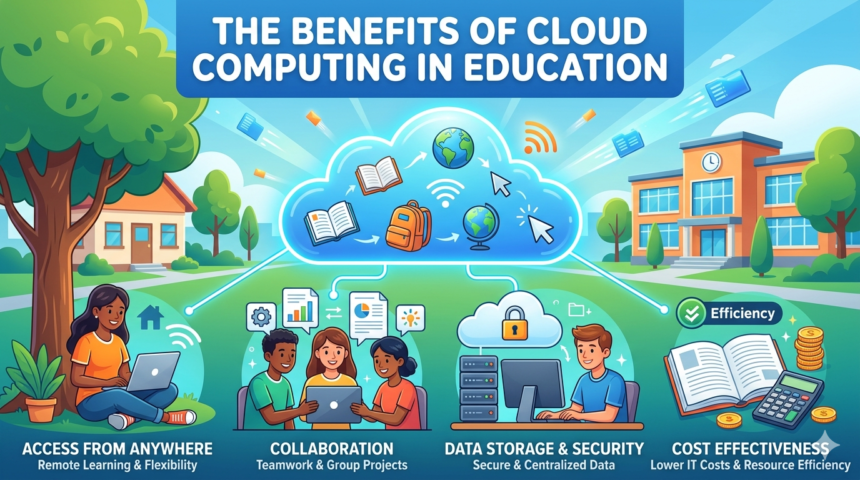
Cloud computing has significantly transformed the educational landscape by enhancing accessibility for both students and educators. One of the most notable advantages is the ability to access educational materials from anywhere and at any time. This improvement corresponds with the increasing demand for flexibility in learning environments, allowing students to engage with course content outside traditional classroom settings. By utilizing cloud-based platforms, learners can conveniently access lectures, assignments, and resources through their devices, which is particularly beneficial for those balancing studies with work or family commitments.
Moreover, cloud computing enables educators to share materials seamlessly. Teachers can upload resources to cloud storage and make them available to their students immediately, reducing logistical burdens associated with traditional methods. As a result, students can access up-to-date information and utilize various multimedia resources to enhance their learning experience. This accessibility supports diverse learning styles by catering to both visual and auditory learners through a wide array of educational content formats.
Additionally, collaborative tools offered by cloud services allow students to work together on projects in real-time, regardless of their physical location. This feature fosters teamwork and communication skills, essential for success in today’s interconnected world. As students collaborate on assignments, they develop not only their academic skills but also their ability to work with diverse groups, preparing them for future professional environments.
In conclusion, the integration of cloud computing in education significantly enhances accessibility, empowering both students and educators. The ability to access learning materials at any time from anywhere not only promotes flexible learning opportunities but also caters to the diverse needs of all students, facilitating a more inclusive and effective education system.
Cost-Effectiveness and Resource Management
Cloud computing has emerged as a transformative solution for educational institutions, particularly in terms of cost-effectiveness and resource management. By leveraging cloud services, schools and universities can significantly reduce their dependence on physical hardware, which often entails substantial initial investments and ongoing maintenance costs. This reduction in reliance on traditional IT infrastructure allows educational institutions to allocate their budgets more efficiently.
Implementing cloud solutions minimizes the necessity for extensive on-premises equipment, such as servers and storage systems. Instead, educational organizations can utilize scalable cloud resources that adapt to their changing needs. This flexibility not only decreases capital expenditures but also lowers operational costs associated with electricity, cooling, and physical space which are typically required for housing hardware. Furthermore, the elimination of complex hardware systems alleviates the burden of maintenance and repair, enabling educational staff to redirect their efforts towards more relevant academic and administrative tasks.
The cost-effectiveness of cloud computing is particularly evident in the context of resource management. Schools can take advantage of cloud-based applications for various administrative functions—from student information systems to learning management systems—without the need for significant upfront costs. Instead of purchasing software licenses outright, institutions can often subscribe to cloud-based platforms on a pay-as-you-go basis, aligning costs with actual usage. This not only enhances financial planning but also ensures that educational institutions remain agile, adapting quickly to innovations rather than enduring lengthy upgrade cycles.
Furthermore, by adopting a cloud-centric approach, educational organizations can facilitate improved collaboration among staff and students. Resources such as shared documents, remote access to coursework, and seamless communication tools become readily available anywhere and anytime, fostering an environment conducive to learning and teaching.
Collaboration and Communication Tools
Cloud computing has significantly transformed the landscape of education, particularly in enhancing collaboration and communication among students, teachers, and administrators. The integration of various cloud-based tools facilitates seamless interaction and promotes joint efforts in academic projects and initiatives. One prominent example is Google Workspace (formerly known as G Suite), which includes applications like Google Docs, Sheets, and Slides. These tools allow multiple users to work on documents simultaneously from different locations, thereby fostering a collaborative environment.
Moreover, cloud computing enables real-time communication via platforms such as Microsoft Teams and Slack. These tools support not only direct messaging but also video conferencing and project management functionalities. By using these resources, educators can provide prompt feedback on group assignments, and students can engage in meaningful discussions outside the classroom setting, leading to enhanced learning outcomes.
Another significant advantage of cloud computing in education is the ability to share academic resources efficiently. Platforms like Dropbox and Google Drive allow educators to upload and share important documents, lecture notes, and multimedia resources with their classes. This accessibility ensures that all students have the necessary materials to succeed in their studies, regardless of their location. Furthermore, it alleviates concerns over incompatible file formats or lost resources, as everything is stored securely in the cloud.
Additionally, collaboration tools enable project management features that aid in organizing tasks and deadlines. Applications such as Trello and Asana can be utilized to assign responsibilities among group members, set timelines, and monitor progress towards collective goals. As a result, the process of managing group work becomes more structured, helping students develop essential skills in teamwork and time management, which are invaluable in their future careers. Overall, the innovative collaboration and communication tools provided by cloud computing are reshaping the educational experience, promoting a more connected and interactive learning environment.
Data Storage and Security Benefits
Cloud computing offers significant data storage capabilities that are particularly beneficial in the field of education. One major advantage is the flexibility of cloud storage, which allows educational institutions to store and manage vast amounts of data without the need for extensive physical infrastructure. This flexibility ensures that schools and universities can efficiently handle growing data needs, ranging from student records to research statistics, thus maximizing resource utilization.
An equally important aspect of cloud computing is its enhanced security measures. Educational institutions often deal with sensitive information, including personal details of students and staff. Cloud service providers employ advanced data encryption protocols that protect data both during transmission and at rest. This means that unauthorized users are significantly hindered from accessing critical information, thereby ensuring confidentiality and compliance with data protection regulations.
Furthermore, cloud solutions typically include automated backup processes, which greatly contribute to data reliability. In the event of accidental data loss or system failures, these backup solutions allow for rapid data recovery, minimizing potential disruptions in education-related activities. With cloud computing, educational entities can attain higher levels of data integrity and security than they historically managed with traditional IT infrastructures.
In addition to the technical advantages, cloud computing supports collaborative learning through shared access to educational resources. Instructors and students can easily collaborate on projects and assignments, utilizing real-time data collaboration tools that foster a more interactive learning environment. Overall, cloud computing presents an effective solution for addressing the data storage and security challenges faced by educational institutions today.
Integration of Innovative Learning Technologies
Cloud computing serves as a vital backbone for the integration of innovative learning technologies in educational environments. By leveraging its capabilities, institutions can incorporate advanced tools such as artificial intelligence (AI), virtual reality (VR), and big data analytics to enhance the learning experience for students. These cutting-edge technologies provide a rich, interactive, and personalized educational journey, transforming traditional pedagogical methods.
Artificial intelligence, for instance, can analyze individual learning patterns and preferences, enabling educators to tailor instructional materials that meet specific needs. Through cloud-based platforms, AI applications can deliver real-time feedback, guiding students on their learning paths, thus improving engagement and retention rates. Moreover, the deployment of AI tools in classrooms facilitates administrative tasks, allowing educators to focus more on teaching rather than administrative burdens.
Virtual reality is another groundbreaking technology concerted within the cloud that immerses students in realistic, simulated environments. This immersive experience not only enhances understanding of complex concepts but also allows learners to explore scenarios that would be impractical in a conventional classroom. For instance, medical students can practice surgeries in a safe and controlled VR setting, while history students can visit ancient civilizations virtually. Such experiential learning approaches are invaluable in promoting deeper comprehension and skill acquisition.
Furthermore, big data analytics plays a crucial role in collecting and interpreting vast amounts of educational data. By analyzing student performance metrics gathered through cloud platforms, educators can identify trends, potential issues, and areas for improvement. This data-driven approach assists in refining curricula and instructional methods, ultimately leading to better educational outcomes and more effective learning strategies.
In conclusion, the synergistic relationship between cloud computing and innovative learning technologies significantly enhances educational practices, fostering personalized and dynamic learning experiences. By harnessing these technologies, educational institutions can prepare students for future challenges while accommodating diverse learning styles and preferences.
Scalability for Educational Institutions
One of the most significant advantages of cloud computing in education is scalability, which provides educational institutions with the flexibility to adjust their technological infrastructure and services according to changing demands. As student populations fluctuate or new program offerings emerge, cloud solutions allow institutions to effectively respond to these shifts without the need for substantial upfront investments in physical hardware.
The traditional model of education often forced institutions to over-provision resources, leading to wasted capacity and unnecessary costs during periods of low enrollment. In contrast, cloud computing introduces a pay-as-you-go model that enables schools and universities to allocate resources dynamically. This on-demand resource approach ensures that institutions can scale their online courses and administrative applications seamlessly as requirements increase or decrease. For example, during periods of peak enrollment, such as the start of a new academic year, a college may require additional storage and processing power to support its registration systems and student portals.
Moreover, the ability to rapidly expand services extends beyond mere enrollment numbers. Educational institutions can introduce innovative programs and specialties without the burdensome constraints typically associated with physical infrastructure. If a university wishes to launch a new online master’s program, it can quickly scale its cloud-based Learning Management System (LMS) to accommodate new students, ensuring a smooth learning experience and timely access to course materials.
Additionally, cloud solutions facilitate collaboration across multiple campuses or even with other institutes, further harnessing scalability by leveraging shared resources. This collaborative environment fosters knowledge exchange and innovation in educational delivery, enhancing the overall learning experience for students. Overall, scalability afforded by cloud computing not only optimizes operational efficiency but also strengthens educational institutions’ ability to adapt in a rapidly changing academic landscape.
Challenges and Considerations
The integration of cloud computing in the educational sector presents a range of challenges and considerations that institutions must address to facilitate a successful implementation. One of the most significant concerns relates to access to reliable internet connectivity. Many educational institutions, particularly those in rural areas or underserved communities, may struggle with inconsistent or slow internet access, which can hinder the effective use of cloud-based resources. This disparity poses a risk of exacerbating the digital divide, leaving some students and educators unable to leverage the benefits of cloud computing fully.
In addition to connectivity issues, there is a pressing need for adequate training and professional development for educators. As the adoption of cloud technologies becomes more prevalent, it is crucial for teachers and administrative staff to be equipped with the necessary skills and knowledge to utilize these tools effectively. Institutions must invest in comprehensive training programs and ongoing support to ensure that educators can maximize the potential of cloud computing in their teaching practices. Without proper training, the transition to cloud-based platforms may result in confusion and hindered educational outcomes.
Another critical consideration is the importance of data privacy and compliance with relevant regulations. Educational institutions must be vigilant in protecting sensitive student data while utilizing cloud services. This involves rigorous compliance with regulations such as FERPA in the United States or GDPR in Europe, ensuring that any cloud provider engaged by the institution adheres to strict data security protocols. Institutions must assess the data policies and security measures implemented by their cloud service providers to mitigate the risk of data breaches or misuse. By addressing these challenges, educational institutions can harness the benefits of cloud computing while safeguarding their stakeholders and enhancing the learning experience.
Future Trends of Cloud Computing in Education
The landscape of education is undergoing a significant transformation due to the rapid advancements in cloud computing. As we look to the future, several trends are emerging that are set to reshape the educational experience. One of the key trends is the proliferation of personalized learning environments, made possible by cloud-based solutions. Educators can use data analytics and artificial intelligence to tailor learning pathways that address the individual needs of students, thereby enhancing engagement and improving learning outcomes.
Another notable trend is the increased integration of collaborative tools that facilitate social learning. Cloud computing enables students and educators to connect seamlessly regardless of geographical barriers. This collaborative spirit nurtures innovation, as learners can engage in real-time discussions, joint projects, and peer-to-peer learning. As educational institutions adopt more flexible online and hybrid models, the reliance on cloud platforms will grow, making geographical constraints increasingly irrelevant.
Furthermore, the implementation of cloud computing is anticipated to enhance the accessibility of educational resources. With the rise of mobile computing, educational materials can be accessed from any device at any time, thereby supporting diverse learning styles and providing equitable opportunities for all students. In particular, this shift may benefit underprivileged populations who may have limited access to traditional educational settings.
The security of cloud technology is also evolving, ensuring that student data and educational materials are safeguarded against cyber threats. As educational institutions continue to embrace cloud solutions, investments in cybersecurity measures will increase, fostering a safe environment for online learning.
In conclusion, the ongoing advancements in cloud computing are poised to transform education by promoting personalized learning, enhancing collaboration, and improving accessibility while addressing security concerns. These trends signify an exciting future for educational institutions and learners alike, reinforcing the essential role of cloud technology in modern educational frameworks.