
Introduction to Technology and Society
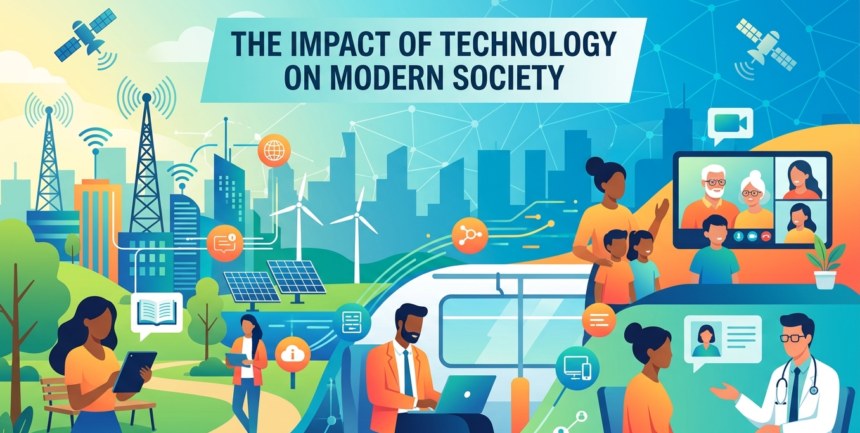
In the contemporary era, technology stands as a cornerstone of daily existence, shaping the way individuals interact, learn, and conduct business. Its pervasive influence has transformed societal norms, facilitating new forms of communication, education, and commerce. Technology is not merely an accessory to modern life; it has become an integral aspect of the human experience, embedding itself in the fabric of society across various levels.
The evolution of communication technologies, from the advent of the internet to the proliferation of smartphones, has significantly altered interpersonal relationships. People can now connect instantly with others across vast distances, fostering relationships that transcend geographical boundaries. This immediacy in communication has reshaped social interactions, creating a more interconnected global society while also raising questions about the quality and depth of these interactions.
Moreover, technology’s impact extends into the realm of education. The integration of digital platforms and online resources has revolutionized traditional learning environments, enabling access to information and knowledge like never before. Students can now participate in virtual classrooms, engage with interactive educational tools, and connect with peers and educators worldwide. This shift not only enhances learning opportunities but also presents challenges in ensuring equitable access to technology.
In commerce, technology has revolutionized the way businesses operate. E-commerce has emerged as a dominant force, allowing consumers to browse and purchase goods and services with ease. Businesses now utilize data analytics and digital marketing strategies to reach their target audiences more effectively, reshaping traditional sales practices.
In essence, technology serves as a powerful catalyst in modern society, driving changes in communication, education, and commerce. As we delve deeper into the specific impacts of technology on various facets of society, it becomes evident that understanding this relationship is crucial for navigating the complexities of the digital age.
Positive Impacts of Technology
Technology has emerged as a pivotal force in shaping modern society, significantly improving various facets of our lives. One of the most profound advancements can be seen in the healthcare sector. Innovative medical technologies, such as telemedicine, have made healthcare more accessible to underserved populations. Patients can consult healthcare professionals remotely, reducing the need for travel and allowing for prompt medical attention. Furthermore, advancements in medical imaging and robotic surgeries have enhanced diagnostic accuracy and surgical precision, thus improving patient outcomes.
In the realm of education, technology fosters a more inclusive learning environment. With the rise of online learning platforms, individuals can access a wealth of information and educational resources from anywhere in the world. This democratization of learning creates opportunities for lifelong education, enabling people to acquire new skills and knowledge regardless of their geographic location. Moreover, interactive learning tools and applications have enhanced student engagement and understanding, thus transforming traditional educational methodologies.
Another significant positive impact of technology is its role in enhancing global connectivity. Social media platforms and communication technologies enable people to connect with others across vast distances, fostering relationships and collaborations that were once difficult or impossible. This connectivity has also facilitated the sharing of ideas and cultures, promoting greater understanding and tolerance among diverse populations. Additionally, businesses are leveraging technology for efficient communication, which fosters innovation and collaboration in the global marketplace.
In conclusion, the positive impacts of technology on modern society are vast and multifaceted. From enhancing healthcare and education to fostering global connectivity, the integration of technology into everyday life has led to improvements in efficiency, quality of life, and communication among individuals and communities worldwide.
Negative Impacts of Technology
While technology has undoubtedly transformed modern society in numerous beneficial ways, it has also given rise to several significant issues that merit careful consideration. One of the most pressing concerns is technology addiction, particularly among younger generations. The pervasive use of smartphones, social media, and video games can lead to compulsive behavior, often resulting in a decline in physical activities and face-to-face social interactions. Consequently, individuals may find themselves increasingly disengaged from the real-world environments, which can exacerbate feelings of loneliness and anxiety.
Additionally, privacy concerns have escalated in the wake of technological advancement. With the widespread collection of personal data by corporations and governments, individuals frequently find themselves vulnerable to exploitation and surveillance. The normalization of data tracking and sharing has led to a climate of distrust, as people become aware that their online activities are constantly monitored. This not only raises ethical questions about consent but also highlights the risks associated with data breaches, which can have profound repercussions for personal privacy and security.
Furthermore, the erosion of social skills is another critical challenge associated with our reliance on technology. As social interactions increasingly occur through screens rather than in person, individuals may struggle to develop effective communication and emotional intelligence. This phenomenon can result in misunderstandings, conflicts, and weakened relationships, both personally and professionally. The gradual decline of interpersonal communication skills has the potential to impact societal dynamics, with a growing gap between those adept at navigating digital interactions and those struggling to engage in conventional social settings.
Technology and Employment
The advent of technology has significantly transformed the modern job market, influencing various aspects of employment in both positive and negative ways. One of the most notable impacts is job displacement due to automation. As industries increasingly adopt automated processes and artificial intelligence systems, lower-skilled jobs are at a heightened risk of being replaced. This shift necessitates a reevaluation of worker skills, as tasks that were once performed by humans are now handled by machines, leading to a decrease in demand for certain roles.
However, while automation has displaced some jobs, it has simultaneously contributed to the emergence of new job categories. Positions related to information technology, data analysis, and machine learning have gained prominence, requiring a workforce equipped with specialized knowledge and skills. This transformation underscores the importance of ongoing education and training, enabling workers to adapt to the evolving demands of the labor market.
Moreover, technology has facilitated the rise of remote work, altering how and where employees perform their tasks. The pandemic accelerated the shift to telecommuting, allowing employees to maintain productivity while working from home. This trend has granted companies access to a broader talent pool, as geographical constraints become less significant. Nevertheless, the shift to remote work demands new competencies in digital communication and project management, which can be challenging for both employers and employees navigating this new landscape.
In conclusion, technology’s impact on employment is multifaceted, encompassing both challenges and opportunities. As automation and remote work reshape the job market, it is imperative for individuals to continually enhance their skills and adapt to these changes in order to thrive in an increasingly technological world.
Influence of Social Media on Society
In the contemporary landscape, social media occupies a central role in shaping interactions and the flow of information across various demographics. Platforms such as Facebook, Twitter, and Instagram have transcended their original purpose of connecting individuals, evolving into powerful tools that influence public opinion and cultural narratives. These platforms enable users to disseminate information rapidly, reaching vast audiences and prompting immediate responses. This immediacy can significantly impact collective thoughts and sentiments, often shaping public discourse on critical issues.
Moreover, social media has been instrumental in amplifying voices that may have previously been marginalized. Activism has taken new forms, with campaigns gaining momentum through hashtags and viral posts. For instance, movements like #BlackLivesMatter and #MeToo have harnessed the reach of social media to create awareness and drive social change, demonstrating the profound effect of online communities in rallying support for various causes. The ability to share experiences and mobilize action through social media has fundamentally altered the dynamics of social movements, allowing them to grow in both scope and influence.
However, the effects of social media are not solely positive. Studies have indicated a correlation between heavy social media use and negative mental health outcomes, particularly among younger demographics. Issues such as cyberbullying, social isolation, and unrealistic comparisons fostered by curated online personas contribute to rising anxiety and depression rates. Furthermore, the constant barrage of information can lead to phenomena such as information overload, complicating the ability to discern credible sources from misinformation.
Thus, while social media can facilitate engagement and solidarity among users, it also presents challenges that society must navigate. The dual-edged nature of social media underscores its complex role in the contemporary world, as it offers both opportunities for connection and obstacles that must be addressed thoughtfully.
Technological Dependence and Mental Health
The rise of technology in modern society has led to significant changes in how individuals interact and engage with their environment. As technology becomes increasingly integrated into daily life, issues such as anxiety, depression, and social isolation have emerged as pressing concerns. Studies indicate a correlation between excessive screen time and deteriorating mental health. While technology has the potential to facilitate communication and provide support, its overuse may contribute to adverse psychological effects.
Numerous surveys highlight that prolonged exposure to screens, especially through social media and gaming, can result in heightened levels of anxiety and depression. Individuals often find themselves caught in a cycle of comparison with others, which can exacerbate feelings of inadequacy and low self-esteem. Furthermore, the availability of information at one’s fingertips can lead to information overload, prompting stress and anxiety as users attempt to process vast quantities of data and opinions.
Social isolation is another critical aspect of technological dependence. Although technology connects individuals virtually, it often detracts from face-to-face interactions, which are vital for emotional well-being. Young adults, in particular, are experiencing loneliness and isolation even while being constantly online. This paradox highlights the psychological challenges posed by technological engagement.
In addressing these mental health issues, it becomes essential to promote digital well-being. Encouraging limited screen time, fostering healthy online habits, and prioritizing offline activities can help mitigate the negative impacts of technology. Educational institutions and mental health professionals are increasingly recognizing the importance of these strategies as a means of promoting healthier relationships with technology.
In conclusion, while technology offers numerous benefits, it is crucial to remain aware of its potential drawbacks, particularly regarding mental health. Managing technology use mindfully can enhance well-being and foster healthier interactions.
The Role of Technology in Education
In recent years, technology has profoundly transformed the educational landscape, redefining how students learn and educators teach. The emergence of e-learning platforms has made education more accessible, allowing students from various backgrounds to access quality learning resources online. This shift towards digital learning has facilitated the creation of extensive online resources, including video lectures, interactive quizzes, and educational forums, enabling learners to engage with the material in a more dynamic manner.
Moreover, educational apps have played a crucial role in enhancing learning experiences. These applications offer personalized learning paths, enabling students to study at their own pace and focus on specific areas where they need improvement. For instance, language-learning apps provide varied exercises that adapt to the user’s skills, while math-focused platforms enable students to tackle problems tailored to their understanding. Such tailored approaches can lead to improved learning outcomes, demonstrating the advantages of technology over traditional teaching methods.
Digital classrooms have also become increasingly popular, allowing for interactive and collaborative learning environments. Tools such as virtual whiteboards, video conferencing software, and shared documents enable real-time communication and collaboration among students and teachers, irrespective of geographical barriers. This connectivity fosters a sense of community and enhances peer learning, which can be beneficial in concept retention and critical thinking improvement.
While traditional learning methods have served for centuries, the integration of technology provides greater flexibility and resources that cater to diverse learning styles. The effectiveness of these modern educational tools compared to conventional methods is evident in engagement levels and knowledge retention across various subjects. As technology continues to evolve, its influence on education is likely to strengthen, offering further enhancements to teaching and learning processes.
Future Trends in Technology and Society
As we venture further into the 21st century, the landscape of technology continues to evolve at a rapid pace. Emerging innovations, particularly in the realms of artificial intelligence (AI), virtual reality (VR), and biotechnology, are poised to significantly reshape societal structures and day-to-day experiences. These technologies hold transformative potential, influencing various aspects of work, leisure, health, and human interaction.
Artificial intelligence, for example, is already beginning to change the way we approach problem-solving and decision-making across multiple sectors. From healthcare, where AI algorithms aid in diagnosing diseases with unprecedented accuracy, to finance, where they enhance predictive analytics for market trends, the integration of AI in our lives is vast. The potential for increased efficiency and improved outcomes suggests a future where AI not only supports but actively participates in critical processes.
Furthermore, virtual reality is breaking down barriers, creating immersive experiences that were once confined to the realm of science fiction. In education, VR offers interactive learning environments that foster deeper understanding and engagement. In contrast, entertainment is being revolutionized by providing users with experiences that are more engaging and personalized. As VR technologies continue to improve, the way we perceive and interact with our surroundings will evolve, creating new social dynamics and cultural trends.
Biotechnology also stands at the forefront of potential change. Advances in genetic engineering and personalized medicine are transforming healthcare, enabling treatments tailored to an individual’s unique genetic profile. This shift not only enhances the effectiveness of treatments but also raises ethical questions about the implications of genetic manipulation and equity in healthcare access.
In conclusion, the future trends in technology, particularly those surrounding artificial intelligence, virtual reality, and biotechnology, indicate a profound transformation in society. As we embrace these innovations, it is essential to consider both the opportunities they present and the challenges they pose, ensuring that progress benefits all facets of society responsibly.
Conclusion: Balancing Technology and Society
The rapid growth of technology has transformed the fabric of modern society, offering unprecedented opportunities alongside significant challenges. As we navigate this landscape, it is crucial to recognize that the benefits of technology must be balanced with a critical evaluation of its impacts. Various aspects of our lives—from communication to healthcare—have been enhanced through technological advancements, fostering greater connectivity and efficiency. However, these improvements are often accompanied by issues such as privacy concerns, social isolation, and an over-reliance on digital devices.
To strike an effective balance, individuals and communities should engage in mindful technology usage. This involves being conscious of how technology shapes our daily interactions and mental well-being. For instance, while social media platforms can help maintain relationships, excessive use may lead to loneliness and anxiety. Thus, it is imperative to cultivate digital literacy, encouraging users to evaluate the quality of their online engagements and to prioritize real-life connections.
Moreover, institutions play a significant role in guiding the responsible use of technology. Educational programs can better prepare individuals to navigate the complexities of the digital age, emphasizing critical thinking skills and ethical considerations. Through this collaborative approach, society can harness technology’s potential while mitigating its adverse effects.
In conclusion, embracing technology with a discerning mindset enables society to enjoy its benefits while addressing the accompanying challenges. The goal is not to reject technological innovation but to integrate it thoughtfully into our lives, ensuring that it serves to enhance human experiences rather than detract from them.