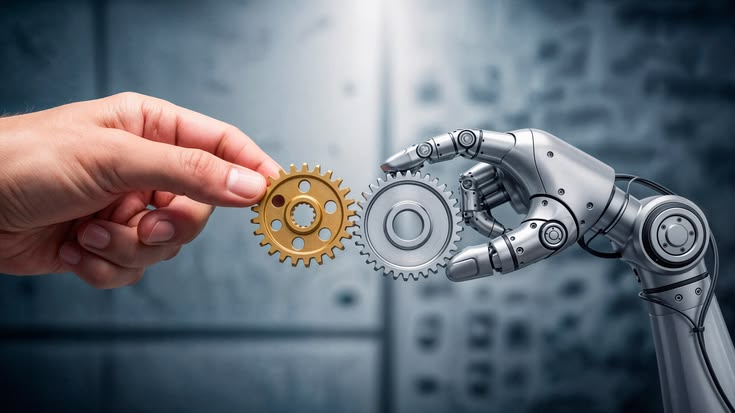
Introduction to AI Trends
Artificial Intelligence (AI) has grown exponentially in recent years and stands at the forefront of technological advancements. Underpinned by sophisticated algorithms and data analytics, AI refers to machines and systems designed to mimic human cognitive functions. This rapid evolution has altered business landscapes, improved decision-making processes, and increased efficiency across various sectors. As we approach the next decade, recognizing the current AI trends becomes crucial for both businesses and individuals.
The integration of AI into everyday operations is no longer a futuristic concept but a present reality, emphasizing the necessity for stakeholders to remain vigilant on its trends. Technologies such as machine learning, natural language processing, and computer vision are becoming increasingly prevalent. They drive automation, enhance data analysis capabilities, and facilitate user engagement in ways previously deemed impossible. For businesses, understanding these AI trends can lead to substantial competitive advantages, whereas for individuals, it shapes job markets and career pathways.
Furthermore, recent developments in AI ethics and transparency are vital in shaping future regulations and governance. As AI systems make decisions affecting daily life, from healthcare to transportation, a growing emphasis on responsible AI practices is critical. Ethical considerations ensure that AI technologies not only deliver efficiency but also adhere to societal values. As organizations adopt AI, understanding these ethical trends aids in building trust and fostering public acceptance.
In essence, awareness of the evolving AI landscape is imperative for making informed decisions. This awareness encompasses trends in technology applications, ethical considerations, and the overall societal impact of AI, ensuring that stakeholders are well-prepared for the adventures ahead in the next decade.
The Rise of Explainable AI (XAI)
The rapid advancement of artificial intelligence (AI) technologies has led to increasing concerns regarding their opacity and the decisions they generate. As AI systems become more deeply integrated into critical sectors like business and healthcare, the need for transparency and accountability is paramount. This is where Explainable AI (XAI) emerges as a crucial development. XAI aims to create AI systems that can effectively communicate the logic behind their decision-making processes, thereby providing users with transparency.
One of the main drivers behind the rise of XAI is the growing demand for trust in technology. Businesses and healthcare institutions increasingly rely on AI for data analysis, predictive modeling, and patient care. However, stakeholders are often hesitant to fully embrace these systems due to the black-box nature of many AI algorithms. By making AI more interpretable, XAI facilitates a clearer understanding of how decisions are made, which in turn fosters trust among users and stakeholders.
Moreover, the implications of XAI extend beyond user trust; they are pivotal in ethical AI deployment. In the healthcare sector, for instance, understanding why an AI system recommends a particular treatment plan is essential for clinicians to align care with patient needs effectively. Similarly, in business, transparent AI systems allow for informed decision-making, where managers can dissect the reasoning behind recommendations, leading to more credible insights and accountability.
As organizations strive to integrate AI responsibly, the shift toward Explainable AI signals a commitment to ethical practices. Implementing XAI not only enhances the reliability of AI systems but also supports compliance with emerging regulations focused on data transparency. By shaping a future where AI is not just efficient but also comprehensible, XAI could significantly influence how technology is perceived and utilized across various sectors.
AI in Automation and Workforce Dynamics
The integration of artificial intelligence (AI) into various sectors is transforming job markets and workforce dynamics at an unprecedented pace. As automation technologies advance, industries are increasingly leveraging AI to enhance efficiency and reduce operational costs. This trend not only redefines existing job roles but also gives rise to new employment opportunities, ultimately reshaping the very fabric of the workforce.
On the positive side, AI-driven automation can streamline repetitive tasks, allowing employees to focus on more strategic responsibilities. For instance, in manufacturing, robots can take over assembly line work, leading to a safer working environment while also increasing production rates. Furthermore, the emergence of AI technologies is creating a demand for new skill sets. Workers will need to acquire knowledge in fields such as data analysis, machine learning, and AI system management, opening pathways for career advancement in these domains.
However, the implications of AI in the workforce are not entirely positive. Many low-skilled jobs are at risk of being replaced by automation, which can lead to significant job displacement. Occupations in sectors like customer service, retail, and certain administrative roles could see a dramatic decline as AI technologies become more capable of handling tasks traditionally done by humans. Consequently, this trend raises concerns about inequality and the need for comprehensive strategies to support displaced workers through reskilling and upskilling programs.
The future job market will likely emphasize collaboration between humans and AI, necessitating a balanced approach to integration. New roles such as AI ethics consultants, data privacy specialists, and human-AI interaction designers are expected to emerge, reflecting the demand for skills that complement AI applications. In conclusion, while AI holds the potential to drive efficiency and innovation within the workforce, it also necessitates careful consideration of its impact on employment and the need for strategic workforce planning as we transition into this new era of automation.
AI and Personalization in Customer Experience
In recent years, the intersection of artificial intelligence (AI) and customer experience has emerged as a transformative force in the retail and service industries. AI technologies are being extensively adopted to enhance personalization in consumer interactions, ultimately resulting in more engaging and relevant experiences. One of the most notable trends is the increasing implementation of AI-driven marketing strategies that utilize data analytics to tailor advertisements and promotional efforts to individual consumer preferences.
AI algorithms sift through vast amounts of consumer data, analyzing purchasing histories, browsing behaviors, and demographic information to create detailed customer profiles. These insights allow businesses to deliver personalized marketing messages that resonate more effectively with their target audience, leading to higher engagement rates and increased conversion opportunities. For instance, companies like Amazon and Netflix use sophisticated recommendation systems powered by AI to suggest products and content based on individual user behavior, thereby improving user satisfaction and loyalty.
Furthermore, the role of AI in customer service has seen a significant evolution. Chatbots and virtual assistants are becoming commonplace, providing real-time assistance and support to customers. These AI-driven systems can understand natural language and context, allowing them to respond to inquiries accurately and promptly. By offering personalized assistance, businesses can enhance the overall customer experience and reduce response times, making interactions seamless and efficient.
As businesses continue to explore AI capabilities, the focus on personalization will only intensify over the next decade. With improvements in machine learning technologies and data analytics, companies can anticipate consumer needs and provide tailored solutions that meet expectations. This trend towards personalization not only fosters customer loyalty but also positions companies to stand out in a competitive marketplace. Therefore, embracing AI in customer experience strategies is essential for organizations aiming to thrive in the ever-evolving digital landscape.
Deep Learning Developments
Deep learning, a subset of artificial intelligence, has emerged as a driving force behind many technological advancements in recent years. As we look towards the next decade, it is anticipated that deep learning technologies and neural networks will continue to evolve and significantly influence multiple sectors. These developments are not merely incremental; they represent a paradigm shift in the way we process and analyze data.
One of the most promising attributes of deep learning is its ability to analyze unstructured data. Companies across various industries are discovering the potential of deep learning algorithms to extract insights from text, images, and even audio. For instance, in healthcare, deep learning applications can enhance diagnostic accuracy by analyzing medical images, predicting patient outcomes, and personalizing treatment plans. As neural networks become increasingly sophisticated, their capability to identify patterns in vast datasets will grow, leading to innovations that can save lives and reduce healthcare costs.
Moreover, the automotive industry is poised for disruption through deep learning. The development of autonomous vehicles heavily relies on deep learning techniques that process data from sensors and cameras, allowing for real-time decision making. Advances in this field will not only make self-driving cars safer but also transform urban mobility, impact transportation logistics, and reshape city infrastructures.
Additionally, deep learning’s impact on industries such as finance cannot be overlooked. Financial institutions are beginning to leverage neural networks for fraud detection, risk assessment, and algorithmic trading. As these technologies evolve, the speed and accuracy of financial transactions will be enhanced, ultimately leading to a more efficient financial ecosystem.
In conclusion, the future of deep learning is bright. As research progresses and technologies mature, their applications will permeate various sectors, fundamentally altering how we interact with the world and redefine operational efficiency across industries.
AI Ethics and Governance
The rapid advancement of artificial intelligence (AI) technologies has brought with it significant ethical considerations that demand attention from various stakeholders. As AI systems become more integrated into everyday life, concerns regarding privacy, bias, accountability, and transparency have emerged prominently. One important trend is the establishment of ethical frameworks that guide the responsible use of AI. These frameworks aim to ensure that AI deployment does not infringe upon human rights and promotes fairness and inclusivity.
In recent years, governmental bodies and international organizations have started to implement regulations and guidelines aimed at addressing these ethical dilemmas. For instance, the European Union has been at the forefront of proposing legislation, such as the AI Act, which seeks to create a comprehensive regulatory framework for AI technologies. This legislation emphasizes the importance of ensuring that AI systems are safe, ethical, and respect fundamental human values. Such regulations are crucial in fostering public trust in AI and mitigating potential risks.
Moreover, notable initiatives are emerging globally that establish industry standards and best practices for AI governance. Organizations such as the IEEE and ISO are working on developing consensual standards that promote the ethical deployment of AI technologies. One significant goal of these standards is to ensure transparency in AI algorithms, enabling users to understand how AI systems reach their decisions. By addressing the ethical implications through structured governance, organizations can anticipate and manage potential challenges associated with AI deployment more effectively.
The establishment of ethics boards and advisory panels within organizations is another trend gaining traction. These boards bring together diverse stakeholders, including ethicists, technologists, and community representatives, to oversee AI projects and evaluate their social impact. Their insights are valuable in aligning AI development with societal norms and ethical expectations. As we move forward, the discourse around AI ethics and governance will be vital in shaping a future where AI contributes positively to society while respecting individual rights and ethical boundaries.
AI in Healthcare: A Transformational Force
The integration of artificial intelligence (AI) in healthcare has emerged as a transformational force, significantly enhancing various aspects of patient care and medical practices. AI technologies are revolutionizing diagnostics, treatment modalities, and the overall management of healthcare systems. By analyzing vast amounts of medical data, AI can identify patterns that often elude human clinicians, thereby supporting more accurate diagnostic processes.
One of the most significant advancements in healthcare AI is the rise of telemedicine. With the increased reliance on digital platforms, telemedicine has gained widespread acceptance, enabling remote consultations and reducing the barriers to healthcare access. AI-driven tools, such as chatbots and virtual assistants, are complementing telemedicine by streamlining patient interactions and facilitating symptom assessments before consultations. This technology not only enhances patient experience but also optimizes resource allocation within healthcare facilities.
Furthermore, AI-assisted surgeries represent another promising trend in healthcare. Utilizing machine learning algorithms, robots can assist surgeons with precision, reducing recovery times and minimizing risks associated with complex procedures. These advanced systems contribute significantly to improved surgical outcomes and patient safety. The incorporation of AI in surgery is transforming traditional practices and fostering a paradigm shift in the way surgical procedures are approached and executed.
Lastly, predictive analytics driven by AI models is playing a crucial role in proactive patient care. By analyzing historical data, these models can forecast individual patient needs, identify potential health risks, and implement preventive measures. This ability to predict adverse health events empowers healthcare providers to tailor interventions before an issue escalates, ultimately improving patient outcomes and reducing healthcare costs.
As AI continues to evolve, its implications for healthcare are boundless, marking a new era of innovation in diagnostics, treatment, and patient interaction.
AI and Cybersecurity
The integration of Artificial Intelligence (AI) into cybersecurity strategies is rapidly transforming how organizations protect their sensitive data and digital assets. As cyber threats become increasingly sophisticated, traditional security measures are often no longer sufficient to ward off potential breaches. AI-driven technologies present innovative solutions to enhance cybersecurity frameworks, making them more effective in combating a wide array of cyber risks.
One key application of AI in cybersecurity is its ability to analyze vast amounts of data in real time. Machine learning algorithms can process logs, network traffic, and user behaviors to identify patterns that may indicate malicious activities. This proactive approach enables security teams to detect anomalies and respond to threats before they escalate into serious breaches. Moreover, AI systems can continuously learn and adapt, improving their defensive capabilities over time based on new data inputs.
Moreover, AI-powered tools, such as intrusion detection systems and predictive analytics, play a critical role in automating threat detection and response processes. By leveraging AI, organizations can reduce their response times to incidents, limit potential damage, and enhance their overall security posture. For instance, AI can facilitate automatic incident responses, minimizing the need for human intervention and thus allowing cybersecurity professionals to focus on more complex challenges.
Additionally, the use of AI in cybersecurity is making strides in the development of more refined identity verification methods. Biometric systems, enhanced by AI algorithms, can improve user authentication processes and prevent unauthorized access. This not only boosts user confidence in digital services but also supports regulatory compliance regarding data protection standards.
As AI trends continue to evolve, their role in strengthening cybersecurity measures will become even more critical. By embracing these cutting-edge technologies, organizations can better position themselves to thwart cyber threats and safeguard their valuable information against ever-changing attacks.
The Future of AI: Predictions and Innovations
The landscape of artificial intelligence (AI) is at a pivotal point, characterized by rapid advancements and growing capabilities. Moving forward into the next decade, experts foresee significant innovations that will further integrate AI into various facets of daily life and business. One notable prediction includes the enhancement of natural language processing, which is expected to reach unprecedented levels of fluency and comprehension. This will enable more intuitive human-computer interactions, making AI assistants increasingly indistinguishable from human communication.
Moreover, the integration of AI with other emerging technologies such as quantum computing is anticipated to exponentially increase processing power and data analysis capabilities. This could facilitate breakthroughs in fields such as medicine, agriculture, and environmental science, where AI may help in developing personalized treatment plans or optimizing resource usage to combat climate change.
Another major area of focus is the ethical use of AI. As technology advances, discussions around AI ethics, transparency, and fairness are becoming increasingly crucial. Innovations in governance frameworks will likely emerge to ensure that AI systems are designed and implemented responsibly. This includes addressing biases within algorithms and safeguarding user privacy, aligning with society’s expectations regarding technology.
Economically, the effects of AI are projected to be profound. With automation increasingly replacing repetitive tasks, the labor market will need to adjust, leading to the creation of new job opportunities in AI oversight, development, and maintenance. While some job sectors may diminish, others will flourish, illustrating the dual-edged sword of AI innovation.
In conclusion, the next decade promises a transformative journey for AI, marked by revolutionary advancements and challenges. As AI continues to evolve, its integration into society will require careful consideration of its implications, ensuring that developments benefit all facets of life.