

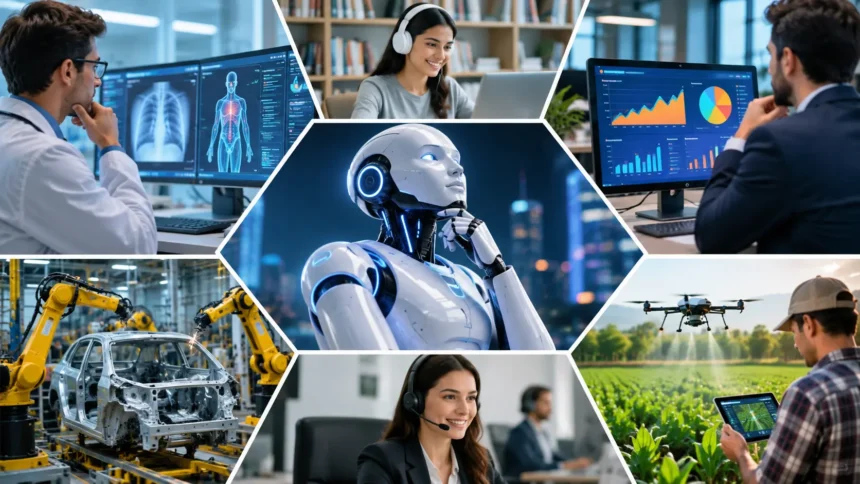
Artificial intelligence use cases are becoming increasingly common across businesses, education, healthcare, and everyday activities. AI technology helps people complete repetitive tasks, analyze information, generate ideas, and improve decision-making. From small businesses to large organizations, practical AI applications can save time and support more efficient workflows.
Understanding how artificial intelligence works in real situations makes it easier to recognize its value. Machine learning, natural language processing, and intelligent automation are already changing how different industries operate. This guide explores practical artificial intelligence use cases, their benefits, and how individuals and businesses can apply AI responsibly.
What Are Artificial Intelligence Use Cases?
Artificial intelligence use cases are practical ways organizations and individuals apply AI technology to solve specific problems. These applications may involve analyzing data, automating activities, recognizing patterns, or generating useful information. Rather than relying on theoretical possibilities, real-world AI examples demonstrate how intelligent systems can support everyday tasks and professional responsibilities.
Different artificial intelligence applications depend on different technologies and capabilities. Machine learning systems identify patterns in data, while natural language processing helps computers understand and generate human language. Computer vision analyzes visual information, and generative AI creates content based on user instructions and patterns learned during training.
The most useful AI applications begin with a clear problem that technology can realistically help address. For example, a business may want to reduce manual data entry, while a student might need additional learning support. Choosing the right solution requires understanding its limitations, evaluating accuracy, and keeping human judgment involved in important decisions.
Artificial Intelligence Use Cases in Everyday Life
Artificial intelligence already supports many activities people perform without thinking about the technology behind them. Smartphones use intelligent features to organize photographs, recognize speech, and suggest useful information. Email services apply automated filtering to identify unwanted messages, while navigation applications analyze traffic conditions to recommend suitable routes.
Smart home systems provide another example of practical AI integration. Certain thermostats learn household temperature preferences, and compatible voice assistants respond to spoken instructions. These technologies can make household routines more convenient, although users should review privacy settings and understand what information their devices collect.
Personal productivity tools also demonstrate how artificial intelligence can simplify everyday responsibilities. AI assistants can organize notes, summarize personal documents, and suggest schedules based on provided information. These features are most effective when people verify important details and avoid sharing sensitive information with services that lack appropriate privacy protections.
AI Use Cases in Business Operations
Businesses use artificial intelligence to automate routine processes and improve the organization of daily operations. AI-powered software can classify documents, process basic requests, and extract relevant information from business records. These applications reduce time spent on repetitive activities and allow employees to concentrate on responsibilities requiring communication, creativity, and professional judgment.
Intelligent workflow automation can connect different stages of a business process. For example, an AI system may categorize incoming customer inquiries and direct them to the appropriate department. Employees can then focus on resolving individual requests instead of manually reviewing every message before assigning it.
Business managers also use artificial intelligence to identify patterns in operational data. Predictive analytics can highlight changing demand, unusual expenses, or potential workflow delays. Although these insights support better planning, organizations should evaluate recommendations carefully because inaccurate data or changing circumstances can affect the reliability of automated predictions.
Artificial Intelligence Use Cases in Healthcare
Healthcare organizations use artificial intelligence to support clinical workflows, analyze medical information, and improve administrative efficiency. Certain AI systems assist healthcare professionals in reviewing medical images and identifying findings that deserve closer examination. These applications can support professional assessment, but they do not replace qualified medical judgment or established diagnostic procedures.
Natural language processing is another practical AI application in healthcare settings. Specialized tools may help organize clinical notes, prepare documentation drafts, or summarize information from patient records. Reducing administrative responsibilities can give healthcare professionals more time for patient communication, provided privacy safeguards and professional review remain central to the process.
Artificial intelligence also contributes to medical research and selected approaches to treatment planning. Machine learning models can analyze complex datasets and identify patterns that researchers may investigate further. However, clinical effectiveness depends on scientific validation, regulatory requirements, appropriate patient populations, and careful monitoring of potential errors or bias.
AI Use Cases in Education and Online Learning
Artificial intelligence can support education by providing students with additional explanations and personalized practice opportunities. Intelligent learning platforms may adapt questions according to a student’s performance and highlight subjects requiring more attention. This approach can complement traditional teaching by offering learners different ways to understand difficult concepts.
Teachers may use generative AI to prepare lesson outlines, develop classroom activities, and create practice materials. These tools can reduce preparation time when educators review the information and adapt it to student needs. However, teachers remain responsible for checking factual accuracy, ensuring age-appropriate content, and encouraging independent thinking.
Online learning platforms also use recommendation systems to suggest relevant courses and educational resources. AI models may examine learning progress and identify useful next steps based on completed activities. Students can benefit from these suggestions when they remain actively engaged and treat automated assistance as a learning aid rather than a substitute for understanding.
Artificial Intelligence Use Cases in Customer Service
Customer service is one of the most recognizable artificial intelligence use cases across modern businesses. AI-powered chatbots answer frequently asked questions, explain standard procedures, and provide basic information about services. These tools can improve response availability, especially when customers need assistance outside normal business hours.
Natural language processing allows certain customer support systems to interpret written questions and identify their likely purpose. For example, an automated assistant may distinguish between billing inquiries, delivery questions, and technical support requests. This classification helps direct customers toward appropriate information or employees without requiring manual sorting of every message.
AI can also assist human support representatives by summarizing conversations and suggesting relevant knowledge-base articles. Such features may reduce time spent searching for information during customer interactions. However, complicated complaints and sensitive situations still require human understanding, clear escalation procedures, and careful handling of customer information.
AI Use Cases in Marketing and Advertising
Marketing teams use artificial intelligence to analyze audience behavior, organize campaign information, and develop content ideas. AI-powered analytics can identify engagement patterns and highlight differences between customer groups. These findings help marketers refine their strategies, although conclusions should be checked against reliable data and actual customer needs.
Generative AI supports marketing workflows by creating initial drafts of social media posts, advertisements, email messages, and campaign outlines. This assistance can make brainstorming and content preparation faster. However, marketers should review all generated material for accuracy, brand consistency, originality, and suitability before publishing it.
Advertising platforms may also use machine learning to support campaign optimization and audience selection. Automated systems examine performance signals and adjust certain delivery decisions within configured settings. While these capabilities can improve efficiency, businesses still need clear objectives, responsible data practices, and regular monitoring to evaluate campaign effectiveness.
Artificial Intelligence Use Cases in Search Engine Optimization
Search engine optimization professionals use artificial intelligence to organize keyword research and identify related search topics. AI tools can group keywords according to apparent meaning, suggest content themes, and assist with search intent classification. These features may help SEO teams plan more relevant website content and reduce repetitive research work.
Content optimization is another practical application of AI in digital marketing. Intelligent writing assistants can review readability, identify unclear explanations, and suggest improvements to article structure. Nevertheless, valuable SEO content requires accurate information, original insights, and a strong understanding of what readers genuinely want to learn.
Technical SEO workflows can also benefit from intelligent automation and data analysis. AI-assisted systems may help summarize website crawl reports, categorize recurring errors, or identify unusual changes in performance. However, recommendations should be reviewed because fixing website problems requires understanding technical context, search engine guidelines, and the potential consequences of implementation.
AI Use Cases in Finance and Banking
Financial institutions use artificial intelligence to analyze transactions, organize customer information, and support fraud detection processes. Machine learning systems can identify unusual activity patterns that may require additional investigation. These alerts help security teams prioritize suspicious events, although unusual behavior does not automatically mean fraud has occurred.
Artificial intelligence also supports certain administrative responsibilities within financial organizations. Automated document processing tools can extract information from forms, classify records, and assist with routine account-related requests. These applications may improve operational efficiency when organizations maintain strong information security and reliable verification procedures.
Financial forecasting represents another important application of machine learning technology. AI models examine historical data to identify trends and estimate possible future outcomes. However, market behavior remains uncertain, and predictions can be misleading when conditions change, making human supervision and appropriate risk assessment essential.
Artificial Intelligence Use Cases in Retail and E-Commerce
Online retailers use artificial intelligence to recommend products based on shopping activity, customer preferences, and available catalog information. Recommendation engines analyze patterns to identify items that may interest individual shoppers. These suggestions can make product discovery more convenient, although their usefulness depends on relevance and responsible handling of customer data.
Inventory management is another area where AI can support retail businesses. Predictive systems estimate future product demand using historical sales, seasonal changes, and other available information. Retailers may use these forecasts to plan stock levels, but unexpected events and changing customer behavior can still create inaccurate predictions.
AI-powered customer assistance can also improve certain online shopping experiences. Automated systems help shoppers locate product information, understand delivery policies, and compare basic features. By handling straightforward questions, these tools can reduce routine support requests while leaving complicated concerns for experienced customer service employees.
AI Use Cases in Manufacturing and Production
Manufacturing companies use artificial intelligence to monitor equipment, improve production planning, and identify potential quality concerns. Machine learning systems analyze information collected from sensors and machinery to recognize unusual operating patterns. Early warnings may help maintenance teams investigate developing problems before they cause unexpected production interruptions.
Computer vision is widely explored and applied in automated quality inspection. Camera-based systems examine products for selected visible defects, incorrect positioning, or differences from expected standards. These systems can process repetitive inspections efficiently, but their performance depends on lighting, image quality, training data, and regular testing.
Production planning can also benefit from predictive analytics and intelligent scheduling tools. AI systems examine available resources, operational requirements, and historical production information to recommend possible adjustments. These recommendations may improve workflow coordination when managers verify practical constraints and maintain suitable safety procedures throughout manufacturing operations.
Artificial Intelligence Use Cases in Agriculture
Agriculture is increasingly using artificial intelligence to support crop monitoring, resource planning, and farm management. AI-powered systems can analyze images and environmental information to identify patterns associated with crop conditions. These insights may help farmers investigate possible problems earlier and make more informed decisions about field management.
Precision agriculture technologies use sensors and predictive models to support irrigation and resource allocation. Some systems examine soil moisture, weather conditions, and crop requirements to recommend watering adjustments. When reliable information is available, these tools may help reduce unnecessary resource consumption while supporting productive farming practices.
Computer vision can also assist agricultural researchers and farmers with crop classification and selected plant health assessments. Image analysis tools may identify visible characteristics associated with particular conditions. However, automated findings should be evaluated alongside local farming knowledge, environmental factors, and appropriate professional advice before important agricultural decisions are made.
Artificial Intelligence Use Cases in Transportation
Transportation companies use artificial intelligence to support route planning and logistics operations. Intelligent systems analyze traffic information, delivery schedules, and available routes to suggest efficient travel plans. These recommendations may reduce unnecessary travel and improve coordination, although changing road conditions can affect actual performance.
AI also supports demand forecasting for transportation and delivery services. Businesses can examine historical shipment volumes and seasonal activity to estimate future operational needs. Such predictions help organizations plan vehicles, staffing, and distribution schedules, but unexpected changes in demand may require adjustments beyond automated recommendations.
Advanced driver-assistance technologies represent another application of artificial intelligence in transportation. Certain vehicle systems use cameras and sensors to detect surrounding objects or assist with specific driving functions. These features may improve driver awareness within their designed limits, but attentive human supervision remains necessary whenever the vehicle requires it.
AI Use Cases in Human Resources and Recruitment
Human resources departments may use artificial intelligence to organize administrative information and simplify employee-related workflows. AI systems can help prepare onboarding materials, answer routine workplace policy questions, and categorize internal requests. These applications can reduce repetitive administrative work when employees have access to accurate information and human assistance.
Recruitment teams sometimes use intelligent software to organize applications and identify information relevant to job requirements. However, automated hiring systems can introduce unfair outcomes when training data or evaluation criteria contain bias. Employers should maintain transparent processes, evaluate tools for fairness, and ensure qualified people remain accountable for employment decisions.
Employee training is another area where AI can support professional development. Intelligent learning platforms may recommend educational resources based on job responsibilities or identified training needs. These recommendations can help organizations provide more relevant learning opportunities while respecting employee privacy and avoiding inappropriate workplace monitoring.
Artificial Intelligence Use Cases in Cybersecurity
Cybersecurity teams use artificial intelligence to examine large amounts of security information and identify potentially suspicious activity. Machine learning tools analyze patterns in network traffic, account behavior, and system events. These capabilities may help security professionals detect unusual changes that deserve further investigation before problems become more serious.
Automated threat classification is another practical application of AI in information security. Intelligent systems can organize security alerts according to their characteristics and possible importance. This process allows analysts to prioritize investigations, although false positives and missed threats remain possible when automated detection tools operate without sufficient oversight.
Artificial intelligence can also support security education and defensive analysis. Organizations may use AI assistants to explain technical alerts, summarize incident reports, or organize recommended protective measures. However, reliable cybersecurity still requires trained professionals, secure system configurations, regular updates, and established procedures rather than dependence on automated tools alone.
AI Use Cases in Content Creation and Design
Content creators use artificial intelligence to generate ideas, prepare outlines, and develop early drafts of written material. These tools can help overcome planning difficulties and organize information before the editing stage. Their usefulness increases when creators provide clear instructions and review the output for accuracy, originality, and audience relevance.
AI-powered design applications can assist with image editing, background removal, layout suggestions, and visual concept development. These capabilities may reduce time spent on certain repetitive design activities. However, professional judgment remains important for ensuring accessibility, visual consistency, appropriate usage rights, and alignment with the purpose of a project.
Video production workflows can also benefit from selected AI applications. Automated captioning, transcription, and basic editing assistance help creators prepare content for different platforms. These technologies can improve efficiency, but generated captions and visual changes should be reviewed to prevent mistakes, misleading representations, or unintended alterations to the original material.
How to Choose the Right AI Use Case
The best artificial intelligence use cases begin with clearly identifying an existing problem. Organizations should examine which tasks involve repetitive work, slow information processing, or unnecessary administrative effort. Selecting AI technology based on measurable needs makes it easier to determine whether the investment produces useful improvements.
Before adopting an AI tool, consider its accuracy, operating costs, privacy protections, and compatibility with existing systems. A solution that performs well in a demonstration may not work equally well with real business information. Small pilot projects can help teams test performance and identify limitations before introducing technology across larger operations.
Human oversight should remain part of every responsible implementation strategy. Employees need clear instructions about when to trust automated assistance and when to verify results independently. Training, performance monitoring, and regular reviews help organizations achieve practical benefits while reducing mistakes, excessive dependence, and unnecessary operational risks.
Conclusion
Artificial intelligence use cases demonstrate how intelligent technology can support everyday activities and professional responsibilities. From customer service and marketing to healthcare, manufacturing, and education, AI offers tools for improving efficiency and understanding complex information. Its strongest applications address genuine problems rather than introducing automation without a clear purpose.
Practical AI adoption requires careful planning, reliable data, and continued human involvement. Automated systems can make mistakes, reflect bias, or produce recommendations that do not match real-world conditions. Evaluating their limitations helps individuals and businesses use technology responsibly while maintaining appropriate control over important decisions.
As artificial intelligence continues evolving, additional applications will likely become available across different industries. Learning about existing AI use cases can help people identify opportunities that match their goals and resources. Ultimately, successful implementation depends on combining intelligent tools with practical experience, critical thinking, and meaningful human judgment.
Frequently Asked Questions
What Are the Most Common Artificial Intelligence Use Cases?
Common artificial intelligence use cases include customer service chatbots, recommendation systems, fraud detection, content assistance, and predictive analytics. These applications help organizations process information, automate suitable activities, and support everyday decisions.
How Is Artificial Intelligence Used in Daily Life?
Artificial intelligence appears in navigation applications, smartphone features, spam filters, voice assistants, and online recommendations. These tools help users organize information, communicate more conveniently, and complete routine digital activities with less manual effort.
What Are the Best AI Use Cases for Small Businesses?
Small businesses can use AI for customer inquiry management, appointment scheduling, document organization, marketing assistance, and basic data analysis. The best application depends on operational needs, available resources, and reliable human supervision.
What Are Real-World Examples of Artificial Intelligence?
Real-world AI examples include medical image analysis, automated customer support, product recommendation engines, predictive equipment maintenance, and intelligent traffic planning. Each application uses data processing or pattern recognition to support a specific activity.
How Can Beginners Start Using Artificial Intelligence?
Beginners can start with simple AI applications such as summarizing notes, organizing information, brainstorming ideas, or creating practice questions. Learning to write clear instructions and verify generated results helps build useful skills while reducing mistakes.