

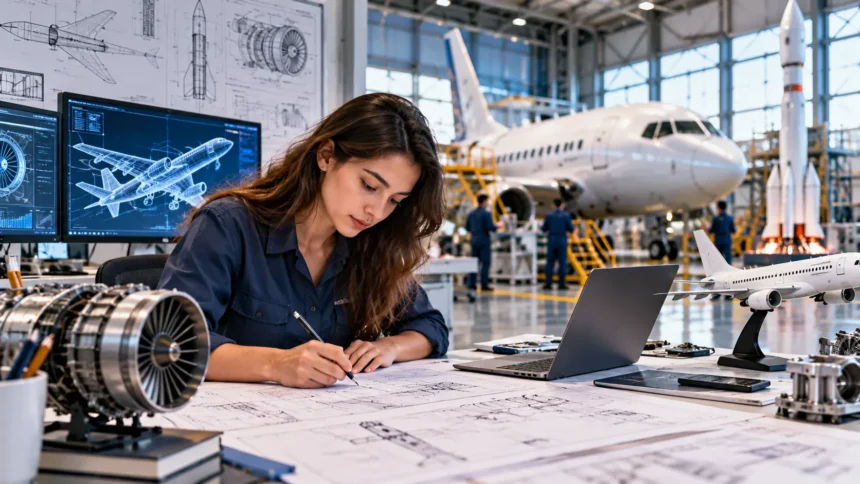
Aerospace engineering is one of the most fascinating career fields for people interested in aircraft, spacecraft, aviation, and advanced technology. Aerospace engineers help design, develop, test, and improve systems that operate within Earth’s atmosphere and beyond it. Their work contributes to commercial aviation, satellite technology, space exploration, and other important engineering applications.
Learning how to become an aerospace engineer involves understanding the educational requirements, technical skills, and practical experience needed to enter this specialized profession. Most aerospace engineering careers begin with a strong foundation in mathematics, physics, and engineering principles. Students also benefit from programming knowledge, design experience, and opportunities to participate in relevant academic projects.
Whether you are a high school student exploring future careers or a college student considering engineering specializations, this guide explains the path toward aerospace engineering. You will learn about degree options, essential subjects, software skills, internships, professional responsibilities, and career opportunities. Understanding these requirements can help you make informed decisions about your education and professional development.
What Is an Aerospace Engineer?
An aerospace engineer is a professional who applies engineering principles to the development of aircraft, spacecraft, satellites, and related technologies. Aerospace engineering combines mathematics, physics, materials science, and advanced computer-based design methods. Engineers in this field work on systems that must meet demanding performance, reliability, and safety requirements.
The profession includes two closely related areas: aeronautical engineering and astronautical engineering. Aeronautical engineering focuses primarily on aircraft and systems operating within Earth’s atmosphere. Astronautical engineering concentrates on spacecraft, satellites, orbital systems, and technologies associated with space missions.
Aerospace engineers may specialize in aerodynamics, propulsion, structures, flight controls, manufacturing, or systems engineering. Some work on entire vehicles, while others focus on specific components or software systems. The exact responsibilities depend on the employer, project requirements, and the engineer’s technical specialization.
What Does an Aerospace Engineer Do?
Aerospace engineers perform technical tasks related to designing, analyzing, and improving aerospace systems. Their responsibilities may include developing engineering models, reviewing performance requirements, and evaluating how components behave under different operating conditions. They often work with computer simulations and specialized engineering software to support design decisions.
Testing is another important part of aerospace engineering. Engineers analyze experimental data, compare results with predictions, and identify areas requiring improvement. Their work may involve collaboration with specialists in mechanical engineering, electronics, software development, manufacturing, and quality assurance.
Aerospace engineers must also consider safety, efficiency, cost, and environmental performance. For example, an engineer working on commercial aircraft may help improve structural performance or reduce energy consumption. Engineers involved in satellite projects may focus on reliability, communication systems, or operation within challenging space environments.
Step 1: Build a Strong Foundation in Mathematics and Physics
Mathematics and physics are among the most important subjects for students interested in aerospace engineering. Engineering calculations rely on concepts involving motion, forces, energy, and mathematical relationships. Building a strong understanding of these subjects during secondary education can make advanced university coursework more manageable.
Students should focus particularly on algebra, trigonometry, geometry, calculus, and introductory physics. These topics form the foundation for later studies in aerodynamics, mechanics, and engineering analysis. Computer science can also be useful because modern aerospace engineering relies heavily on computational tools.
Developing good study habits is just as important as learning technical concepts. Practice solving problems, reviewing mistakes, and understanding why particular mathematical methods work. Students who build confidence in foundational subjects are better prepared for the complex analytical challenges encountered during engineering education.
Step 2: Earn a Bachelor’s Degree in Aerospace Engineering
A bachelor’s degree in aerospace engineering is one of the most direct educational pathways into the profession. University programs typically combine mathematics, science, engineering fundamentals, and specialized aerospace subjects. Students learn how aircraft and spacecraft systems are designed, analyzed, and evaluated through coursework and engineering projects.
Many bachelor’s programs in the United States take approximately four years of full-time study. Coursework may include aerodynamics, structural analysis, thermodynamics, propulsion, flight mechanics, and control systems. Students often complete laboratory activities and a final engineering design project that brings together several technical skills.
When selecting a university, review program accreditation, curriculum quality, laboratory facilities, and internship opportunities. In the United States, ABET accreditation is an important consideration for engineering programs. Students in other countries should check recognized national accreditation requirements and professional engineering standards.
Step 3: Consider Related Engineering Degree Options
An aerospace engineering degree is valuable, but it is not the only possible pathway into the industry. Some employers also hire graduates with relevant degrees in mechanical engineering, electrical engineering, computer engineering, and related technical fields. Suitability depends on the position and the applicant’s specialized knowledge.
Mechanical engineering is particularly relevant because both fields involve mechanics, materials, thermodynamics, and engineering design. Electrical engineers may contribute to avionics and control systems, while software engineers can work on simulation and aerospace computing applications. These related disciplines support many important aerospace projects.
Students choosing an alternative degree should explore aerospace-focused electives, research opportunities, and relevant internships. Building a strong technical portfolio can help demonstrate interest in the field. However, certain specialized positions may require specific aerospace coursework, advanced qualifications, or experience that general engineering programs do not provide.
Step 4: Learn Important Aerospace Engineering Subjects
Aerospace engineering students study several technical subjects that explain how aircraft and spacecraft operate. Aerodynamics examines how air moves around objects and influences forces such as lift and drag. Flight mechanics explores how flying vehicles move and respond to different operating conditions.
Other important subjects include materials science, structural mechanics, thermodynamics, and control engineering. Materials science helps engineers understand the properties of components used in demanding environments. Control engineering focuses on methods for maintaining stable and predictable system behavior under changing conditions.
Astronautical engineering students may also study orbital mechanics, spacecraft systems, and space environments. University coursework combines mathematical theory with simulation and laboratory analysis. Developing an understanding of these subjects prepares students to contribute to aerospace projects while following professional engineering and safety standards.
Step 5: Develop Programming and Technical Software Skills
Programming is increasingly important in aerospace engineering because many projects involve simulations, automated analysis, and large datasets. Engineers use programming languages to process information, develop computational models, and evaluate technical performance. Python, MATLAB, and C++ are useful examples, depending on the specialization.
Computer-aided design software also supports the development of engineering models and technical drawings. Tools such as SolidWorks, CATIA, and Siemens NX are used in various engineering environments. Learning the basic principles of CAD can help students understand how digital models support product development and collaboration.
Students may also encounter simulation tools used for computational fluid dynamics, structural analysis, and control-system modeling. Different employers rely on different software platforms, so fundamental engineering knowledge remains important. Learning how to interpret and validate software results is more valuable than simply memorizing commands.
Step 6: Strengthen Problem-Solving and Analytical Skills
Aerospace engineering involves solving complicated problems that often have multiple possible solutions. Engineers must consider technical performance, safety, efficiency, cost, and practical limitations. Strong analytical skills help professionals evaluate information and select appropriate approaches based on evidence.
Students can strengthen these abilities through mathematics exercises, engineering assignments, and structured design challenges. Learning to explain assumptions and evaluate results is particularly important. A technically correct calculation may still be unsuitable if it relies on unrealistic conditions or incomplete information.
Critical thinking also helps engineers recognize uncertainty and identify areas requiring further investigation. Professional projects frequently involve reviewing test results and communicating possible limitations. Developing these habits during education prepares students for collaborative engineering environments where careful judgment matters.
Step 7: Gain Experience Through Academic Projects
Practical engineering projects help students connect classroom knowledge with real applications. University assignments may involve computer modeling, structural analysis, aerodynamic simulations, or designing conceptual aerospace systems. These activities provide opportunities to develop technical skills in a supervised educational environment.
Students can participate in university engineering clubs, design teams, or faculty-led research projects. Team-based projects are particularly valuable because aerospace professionals frequently work with engineers from different specialties. Students learn to document their work, communicate findings, and manage project responsibilities.
A strong academic portfolio can include simulation reports, CAD models, research presentations, and engineering design documentation. Projects should emphasize the student’s actual contributions and the reasoning behind design decisions. Proper supervision and institutional safety procedures are essential whenever laboratory equipment or physical testing is involved.
Step 8: Apply for Aerospace Engineering Internships
Internships provide valuable opportunities to understand how aerospace organizations operate in professional environments. Students may assist engineering teams with data analysis, documentation, software development, or other supervised technical activities. These experiences help connect academic learning with workplace expectations and engineering procedures.
Aerospace internships are available through aircraft manufacturers, engineering companies, research institutions, and certain government organizations. Eligibility requirements vary depending on the employer, location, degree program, and project. Some opportunities also have citizenship or security-related restrictions that applicants must meet.
Students should prepare a clear resume highlighting relevant coursework, programming knowledge, projects, and academic achievements. University career centers and official employer career pages can provide information about available opportunities. Applying early and demonstrating genuine technical interest may improve the chances of securing suitable experience.
Step 9: Build Communication and Teamwork Skills
Aerospace engineers rarely work entirely alone because complex projects require several technical disciplines. Engineers collaborate with designers, software developers, analysts, technicians, and project managers. Effective communication allows these teams to share information and understand important engineering requirements.
Written communication is particularly important because technical projects depend on accurate documentation. Engineers may prepare reports, summarize analysis results, and explain recommendations to colleagues. Clear writing helps reduce misunderstandings and supports consistent decisions throughout the engineering development process.
Students can develop these abilities through presentations, group assignments, and research discussions. Learning to listen carefully and respond constructively to feedback is also valuable. Strong teamwork skills complement technical knowledge and help engineers contribute effectively to multidisciplinary projects.
Step 10: Choose an Aerospace Engineering Specialization
Aerospace engineering includes several specializations that allow professionals to focus on particular technologies. Aerodynamics engineers study airflow and aerodynamic performance, while structural engineers evaluate the behavior of materials and components. Systems engineers coordinate requirements and interactions across different parts of a project.
Other specializations include avionics, guidance and control, spacecraft engineering, manufacturing, and computational simulation. Each area requires a different combination of engineering knowledge and software skills. Students may discover their interests through university courses, academic projects, and professional internships.
Choosing a specialization does not necessarily determine an entire career permanently. Aerospace professionals may develop new expertise or transition between related technical areas over time. Selecting a field that matches your strengths and interests provides a useful starting point for further professional development.
Step 11: Apply for Entry-Level Aerospace Engineering Jobs
After completing a suitable degree, graduates can begin applying for entry-level aerospace engineering positions. Common job titles include junior aerospace engineer, design engineer, systems engineer, test engineer, and engineering analyst. Job descriptions vary, so applicants should carefully review the technical requirements of each position.
Employers may evaluate academic performance, engineering projects, programming skills, and internship experience. A strong resume should clearly explain relevant qualifications without exaggerating responsibilities or achievements. Students can also prepare to discuss technical problems and describe how they approached previous academic assignments.
Some positions require additional qualifications related to citizenship, work authorization, or access to controlled information. These restrictions vary across employers and countries. Applicants should review official eligibility requirements and consider a range of opportunities in commercial aviation, research, manufacturing, and related engineering industries.
Step 12: Consider a Master’s Degree or Advanced Education
A master’s degree in aerospace engineering can provide deeper knowledge in a specialized technical field. Graduate programs may focus on aerodynamics, structural mechanics, spacecraft systems, computational modeling, or related research areas. Advanced education can be particularly valuable for positions requiring extensive technical analysis.
However, a master’s degree is not required for every aerospace engineering job. Many professionals enter the industry after completing a relevant bachelor’s degree and develop specialized expertise through work experience. The value of graduate education depends on career objectives and the requirements of particular employers.
A doctoral degree may be appropriate for students interested in advanced research or university teaching. Research-focused careers often involve developing new engineering methods and investigating challenging technical questions. Before pursuing additional education, students should consider program costs, research interests, and long-term professional goals.
What Skills Do Aerospace Engineers Need?
Aerospace engineers need a combination of technical knowledge and professional abilities. Important technical skills include mathematics, physics, engineering analysis, computer modeling, and familiarity with specialized software. These capabilities allow engineers to evaluate designs and understand complicated aerospace systems.
Analytical thinking and attention to detail are also essential because engineering errors can have serious consequences. Professionals must evaluate assumptions, interpret data, and follow established standards. Problem-solving skills help engineers identify practical solutions when projects involve competing requirements or unexpected technical challenges.
Communication, teamwork, organization, and continuous learning complete the professional skill set. Aerospace technology evolves as new materials, computing tools, and design methods become available. Engineers who continue developing their knowledge are better prepared to adapt throughout their careers.
Where Can Aerospace Engineers Work?
Aerospace engineers work in several industries connected with aviation, spacecraft, and advanced technology. Major employment areas include aircraft manufacturing, satellite development, aerospace research, and engineering consulting. Some professionals also work for government agencies or organizations supporting scientific and commercial space activities.
Commercial aviation companies employ engineers to develop and improve aircraft systems and components. Space-related organizations need specialists in spacecraft structures, electronics, thermal systems, and mission analysis. Aerospace engineering skills may also be useful in advanced manufacturing and other industries requiring complex system design.
Work environments vary depending on the position. Some aerospace engineers spend most of their time using computers for analysis and design, while others work in laboratories, manufacturing facilities, or supervised testing environments. Professional responsibilities often involve close coordination with multidisciplinary teams.
How Much Do Aerospace Engineers Earn?
Aerospace engineering salaries vary according to experience, education, specialization, employer, and location. Entry-level engineers generally earn less than experienced professionals who manage complicated technical responsibilities. Positions requiring specialized expertise or significant project leadership may offer higher compensation.
In the United States, aerospace engineering is generally considered a well-compensated technical profession. However, national salary statistics should not be treated as guaranteed earnings for individual graduates. Actual compensation depends on regional labor markets, employer budgets, job responsibilities, and professional experience.
Students researching salary expectations should review current labor statistics and recent job postings for their target location. Compensation comparisons should also consider benefits, living costs, professional development opportunities, and career progression. A balanced assessment provides a more realistic understanding of the financial aspects of an aerospace engineering career.
How Long Does It Take to Become an Aerospace Engineer?
The most common pathway involves completing secondary education followed by a bachelor’s degree in aerospace engineering or a related discipline. In the United States, bachelor’s programs generally take around four years of full-time study. Requirements and program lengths may differ in other countries.
Students can develop relevant knowledge before university through mathematics, physics, programming, and supervised academic activities. Internships and university projects provide additional practical experience during undergraduate education. These opportunities can help graduates prepare for entry-level positions without necessarily adding several years to their studies.
Advanced specializations may require graduate education or additional professional training. However, there is no single timeline that applies to every aerospace engineering career. Academic progress, chosen specialization, internship availability, and individual circumstances all influence the path toward professional employment.
Is Aerospace Engineering a Good Career Choice?
Aerospace engineering can be a rewarding profession for people interested in science, aviation, mathematics, and advanced technology. It provides opportunities to contribute to important engineering projects and work with specialized technical systems. The profession also encourages continued learning as aerospace technologies develop.
However, the field can be academically demanding because it requires a strong understanding of mathematics and physical sciences. Engineering work also involves careful documentation, rigorous testing, and detailed analysis. Students should consider whether they enjoy these activities rather than focusing only on the excitement associated with aircraft and space exploration.
Career opportunities depend on regional industries, economic conditions, and technical specialization. Some aerospace positions are highly competitive or subject to eligibility restrictions. Researching educational programs and employment options can help students make informed decisions about whether aerospace engineering matches their interests and goals.
Common Mistakes to Avoid When Pursuing Aerospace Engineering
One common mistake is concentrating only on aircraft and spacecraft without developing the mathematical skills required for engineering analysis. Aerospace engineering involves much more than understanding how vehicles look or operate. Students should prioritize physics, mathematics, programming, and foundational engineering knowledge.
Another mistake is overlooking practical experience during university. Coursework provides essential theory, but supervised projects and internships can demonstrate how engineering principles apply to real problems. Waiting until graduation to build technical experience may make it harder to present relevant examples during job interviews.
Students should also avoid assuming that every university program or aerospace employer has identical requirements. Accreditation, specialization options, employment eligibility, and internship opportunities vary considerably. Careful research and realistic career planning can help prevent misunderstandings about education and professional opportunities.
Conclusion
Learning how to become an aerospace engineer begins with developing a strong foundation in mathematics, physics, and engineering principles. A relevant bachelor’s degree provides the technical knowledge needed for many entry-level positions. Programming, computer-aided design, analytical thinking, and practical project experience further strengthen career preparation.
Students can improve their opportunities through accredited education, supervised projects, internships, and effective communication skills. Aerospace engineering offers specializations in aerodynamics, structures, avionics, systems engineering, and spacecraft technology. Choosing an appropriate pathway depends on personal interests, academic strengths, and long-term career objectives.
Aerospace engineering is a challenging but potentially rewarding profession for people who enjoy technical problem-solving and scientific innovation. Success requires patience, continuous learning, and a commitment to responsible engineering practice. With thoughtful educational planning and relevant experience, aspiring engineers can prepare for opportunities across aviation, research, and space technology.
Frequently Asked Questions (FAQs)
What qualifications do you need to become an aerospace engineer?
Most entry-level aerospace engineering positions require a bachelor’s degree in aerospace engineering or a related engineering discipline. Strong mathematics, physics, programming, and analytical skills are also important for professional success.
How many years does it take to become an aerospace engineer?
A bachelor’s degree in aerospace engineering typically takes around four years in the United States. Additional time may be required for graduate education, specialized training, or professional experience.
Is aerospace engineering hard to study?
Aerospace engineering can be academically demanding because it involves advanced mathematics, physics, computer modeling, and engineering analysis. However, consistent study and practical learning can help students develop the required skills.
Can you become an aerospace engineer without an aerospace degree?
Yes, some aerospace engineering positions accept graduates from mechanical, electrical, computer, or related engineering programs. Eligibility depends on the role, relevant technical knowledge, and employer requirements.
Do aerospace engineers need a master’s degree?
A master’s degree is not necessary for many entry-level aerospace engineering jobs. However, advanced education may be useful for specialized research, technical leadership, or positions requiring deeper expertise.