

Introduction to Accessible Education
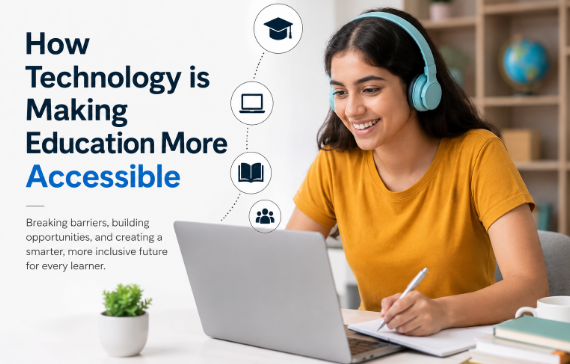
Accessible education is a fundamental aspect of an equitable society, enabling individuals to pursue knowledge regardless of their physical, social, or economic circumstances. By ensuring that all learners have equal access to educational resources, we empower them to gain the skills and knowledge necessary for personal and professional development. This empowerment not only benefits the individuals involved but also enhances the collective capacity of communities and society at large.
The role of technology in fostering accessible education cannot be overstated. Through innovative tools and platforms, technology has the potential to bridge educational gaps that have historically marginalized marginalized groups. For instance, students with disabilities can benefit from assistive technologies such as screen readers and speech-to-text applications, which facilitate participation in learning environments that were previously challenging or impossible for them. Moreover, online learning platforms provide flexible access to educational materials, enabling individuals from different geographical locations and backgrounds to engage in lifelong learning.
Moreover, technology has facilitated the creation of diverse educational content that caters to various learning styles. Video lectures, interactive simulations, and gamified learning experiences accommodate visual, auditory, and kinesthetic learners alike. With these advancements, education is evolving in a way that prioritizes inclusivity and accessibility, allowing for a more personalized learning experience for all students.
In conclusion, the significance of accessible education lies in its transformative power, empowering individuals and communities. As technology continues to advance, its role in making education more inclusive becomes increasingly vital, ensuring that everyone has the opportunity to learn and thrive in an ever-changing world.
The Role of the Internet in Education
The advent of the internet has fundamentally transformed the landscape of education, making learning more accessible to a worldwide audience. In recent years, traditional educational barriers have been dismantled, allowing individuals from diverse backgrounds to access a plethora of resources that were previously limited to formal institutions. Online courses, webinars, and information-sharing platforms have emerged, offering a rich array of learning opportunities that cater to various needs and preferences.
One significant development is the proliferation of online education platforms, such as Coursera, edX, and Udemy, which provide learners with the flexibility to engage with course material at their own pace. These platforms offer a wide range of subjects, from computer programming to creative writing, often at little to no cost. This democratization of knowledge enables individuals to pursue lifelong learning and upskilling, fostering personal and professional growth regardless of geographical constraints.
Moreover, the internet facilitates real-time communication and collaboration among students and educators, transcending physical boundaries. Virtual classrooms and discussion forums enable learners to engage in meaningful dialogue irrespective of their location. This connectivity has encouraged the formation of global study groups, allowing participants to share perspectives and resources, thus enriching their educational experience.
The impact of internet-based education extends to underserved communities, where access to traditional educational institutions may be limited. For many, online learning represents a vital opportunity to gain qualifications and skills that can enhance employability and drive economic development. Consequently, the role of the internet in education is not merely a matter of convenience; it is a critical factor in ensuring equitable access to knowledge, ultimately shaping a more informed and capable global society.
E-Learning Platforms and Tools
In the current educational landscape, e-learning platforms and tools play a pivotal role in making education more accessible to students worldwide. One of the most significant advancements in this area is the emergence of Massive Open Online Courses (MOOCs). These platforms, such as Coursera and edX, provide learners with the opportunity to enroll in courses from reputable universities and institutions, often at little to no cost. This democratization of knowledge allows individuals from diverse backgrounds and geographic locations to access high-quality education, which was previously limited to those who could afford traditional schooling.
Furthermore, educational apps such as Duolingo and Khan Academy have revolutionized the way learners interact with educational content. These applications utilize engaging formats such as gamification and interactive exercises, which enhance motivation and retention of knowledge. For example, Duolingo employs bite-sized lessons in language learning, making it easy for users to practice in short, manageable sessions. The accessibility of these apps on various devices allows learners to study anytime and anywhere, removing barriers posed by location and time constraints.
Digital classrooms, facilitated by tools like Google Classroom and Microsoft Teams, further enhance accessibility by creating virtual learning environments that foster collaboration and communication. Teachers can share resources, assign tasks, and provide feedback in real-time, making it easier for students to engage with course materials and each other. These platforms are particularly beneficial for distance learning and enable educators to reach students who might otherwise struggle to participate due to physical or logistical challenges.
In summary, the evolution of e-learning platforms and tools, including MOOCs, educational apps, and digital classrooms, highlights a significant shift toward more inclusive and flexible educational experiences. These innovations contribute to bridging the gap in education accessibility, ensuring that learners around the globe can thrive in their educational journeys.
Accessibility Features in Educational Technology
The integration of accessibility features in educational technology has revolutionized the way students with disabilities engage with learning materials. For instance, screen readers are invaluable tools that convert text displayed on screens into synthesized speech. This technology allows visually impaired students to interact with digital content through auditory means, enabling them to access books, articles, and educational resources with ease. By facilitating a more inclusive environment, screen readers empower these individuals to participate fully in the educational process.
Another significant feature that enhances accessibility is the inclusion of subtitles or closed captions in educational videos. Subtitles provide essential support for students who are deaf or hard of hearing, allowing them to follow along with auditory information through visual text. Additionally, captions can aid non-native speakers in comprehending spoken language, thereby broadening their learning experience. The ability to toggle subtitles on and off further enables personalized learning, catering to individual preferences and needs.
Language translation tools also play a critical role in making education more accessible. These tools help break down language barriers by translating educational materials into various languages, thus allowing non-native speakers to grasp content that would otherwise be challenging to understand. With the aid of such technology, students can engage with course materials in their preferred language, fostering a more inclusive and equitable learning environment.
Furthermore, these accessibility features not only support students with disabilities but also enhance the overall educational landscape. By accommodating diverse learning needs, educational technology fosters an environment where every student can thrive. As institutions continue to adopt these innovations, they pave the way for a more inclusive future in education, addressing the needs of all learners regardless of their abilities.
The Rise of Mobile Learning
In recent years, mobile learning has gained significant traction as a fundamental aspect of educational technology. This shift towards mobile platforms has been propelled by the widespread adoption of smartphones and tablets, providing unprecedented flexibility for learners. With the ability to access educational resources on-the-go, students can now engage with learning materials anytime and anywhere, a feature that traditional learning environments cannot offer.
According to a recent survey, over 70% of students reported using mobile devices for educational purposes, showcasing a clear trend towards mobile learning. This percentage continues to grow as more educational institutions embrace mobile-friendly resources and applications. The convenience of mobile learning allows learners to manage their studies alongside other responsibilities, a crucial advantage for those balancing academics with work or family obligations.
Case studies illustrating the effectiveness of mobile learning further highlight its benefits. For instance, schools implementing mobile learning platforms have observed a notable increase in student engagement and retention rates. In one study conducted in a large urban district, students using a dedicated mobile app for their coursework demonstrated a 20% improvement in test scores compared to their peers in traditional learning settings. This data underscores the potency of technology in facilitating a more interactive and personalized learning experience.
Additionally, many educational apps and platforms are designed to cater to diverse learning needs, allowing educators to tailor content and instructional methods to suit individual students’ pace and style. This adaptability enhances the learning process, enabling users to fully leverage mobile technology’s potential for educational success. As the landscape of education continues to evolve, mobile learning stands out as a pivotal component in making education more accessible and effective for all learners.
Social Media and Collaborative Learning
In today’s digital landscape, social media platforms have emerged as powerful tools that facilitate collaboration among students and educators. These platforms not only allow for the sharing of knowledge but also foster a vibrant community of learners who can interact, share ideas, and work together on projects regardless of geographical limitations. By harnessing social media, education becomes a more inclusive and dynamic process.
One notable example includes Facebook groups dedicated to specific subjects or educational interests. Educators and learners can join these groups to discuss relevant topics, share resources, and seek assistance on various academic challenges. For instance, a Facebook group focused on mathematics might see students posting complex problems and receiving solutions from peers or educators who can provide various methods of understanding. This form of collaborative learning helps students absorb concepts more effectively while also developing critical thinking skills.
Another powerful platform is Twitter, where educators often use hashtags to create discussions around specific themes or events in education. Hashtags like #EdChat or #EdTech enable educators from around the world to share insights, participate in real-time conversations, and exchange innovative teaching practices. Likewise, video platforms such as YouTube have facilitated collaborative projects where students can produce, edit, and publish collaborative videos, allowing them to engage with technology in an educational context.
Collaborative platforms such as Google Docs allow students to work together on documents or presentations in real-time. This fosters teamwork and encourages peer feedback—integral components of the educational experience. Consequently, social media not only bridges gaps by connecting learners and educators but also creates new opportunities for collaborative learning, which is essential for fostering a broader understanding of various subjects.
Challenges to Technological Accessibility in Education
While technology has great potential to enhance educational accessibility, numerous challenges still impede its seamless integration into learning environments. One of the most significant issues is the digital divide, which refers to the gap between those who have easy access to digital technologies and those who do not. This divide often exists along socioeconomic lines, with students in lower-income families being disproportionately affected. These students may lack access to reliable internet connections, computers, or other necessary devices, which puts them at a disadvantage in an increasingly digital learning landscape.
Another critical challenge is the lack of infrastructure in certain regions, particularly in rural or underfunded urban areas. Many schools do not have the adequate technological framework, such as sufficient bandwidth, modern equipment, or even basic technical support, needed to facilitate effective digital education. This situation hinders educators’ ability to implement technology-enhanced learning opportunities that could benefit all students.
Additionally, there is often insufficient training available for educators on how to effectively utilize technology in classrooms. Many teachers may feel overwhelmed by the rapid advancement of educational technology or lack the confidence to integrate these tools into their pedagogy effectively. Without proper professional development focused on technology integration, educators may miss opportunities to enrich their instructional practices and thus fail to engage all students fully.
Potential solutions to these challenges include government initiatives aimed at improving broadband access in underserved areas, as well as investments in infrastructure that allows schools to better equip themselves with the necessary tools. Furthermore, comprehensive training programs for educators should be prioritized to ensure they are prepared to leverage technology in their teaching. Only through the concerted effort of policymakers, educational institutions, and communities can we hope to enhance the accessibility of education through technology.
Case Studies of Successful Implementations
Numerous educational institutions around the globe have effectively harnessed technology to enhance access to learning resources for diverse populations. One prominent example is the University of California, Berkeley, which implemented a range of digital tools aimed at providing equitable education to students with disabilities. Through the use of adaptive technologies, such as screen readers and speech recognition software, Berkeley has significantly improved the accessibility of its online learning platforms, enabling all students to engage fully with course materials regardless of physical limitations.
Another noteworthy case is the Khan Academy, a nonprofit organization that has transformed traditional educational paradigms by offering free, high-quality online courses. Targeting primarily underserved communities, Khan Academy utilizes video lectures and interactive exercises to facilitate self-paced learning. This method allows students from various backgrounds to access content at their convenience, effectively addressing barriers associated with geographic and economic disparities. The organization’s analytics framework also tracks student progress, providing insights that help educators tailor their teaching strategies.
Furthermore, the Massachusetts Institute of Technology (MIT) has launched an initiative known as OpenCourseWare. This program allows educators and students worldwide to access a vast repository of course materials from MIT’s extensive curriculum, thereby democratizing education. The challenges of ensuring content is accessible to all users were met through the integration of subtitles and transcripts for videos, thus catering to hearing-impaired students. As a result, MIT has set a precedent for transparency and open access in academic resources.
These illustrations underscore the critical role technology plays in making education more accessible. While challenges persist in fully integrating these tools across all educational sectors, the successes of these institutions demonstrate the potential for technology to bridge gaps in learning and offer opportunities to those who might otherwise be excluded from traditional educational pathways.
The Future of Accessible Education Through Technology
The landscape of education is continually being reshaped by advancing technology, fostering an era where accessibility is not merely an aspiration but a fundamental right. As we gaze into the future, several innovations are poised to enhance educational accessibility further, transforming not only how learners engage with content but also how they interact with educational environments.
Artificial intelligence (AI) is emerging as a pivotal force in personalizing learning experiences. By analyzing individual learning patterns and preferences, AI can create tailored educational paths that accommodate diverse learning needs. Imagine a classroom where every student has access to a customized curriculum, complete with adaptive resources that cater specifically to their strengths and weaknesses. This personalized approach can diminish barriers faced by learners with disabilities, enabling them to achieve their full potential.
Moreover, virtual reality (VR) is becoming an increasingly significant tool in creating immersive learning environments that transcend physical limitations. By utilizing VR technology, students can explore historical landmarks, engage in scientific experiments, or practice language skills in real-world simulations, all from the comfort of their own homes. This immersive experience can significantly benefit students who may struggle with traditional learning methods, providing them with opportunities to engage with educational content in novel and impactful ways.
As we progress, these technological advancements promise to revolutionize educational accessibility further. Innovations such as augmented reality (AR) can enhance interactive learning, allowing students to visualize complex concepts in three dimensions. Additionally, advancing online platforms will continue to provide countless interactive resources, making learning materials available to a wider audience than ever before.
In conclusion, the future of education is bright, with technology offering unprecedented opportunities for enhancing accessibility. As emerging trends like AI and VR gain traction, they will undoubtedly reshape the educational landscape, fostering learning environments where every individual can thrive regardless of their background or abilities.