

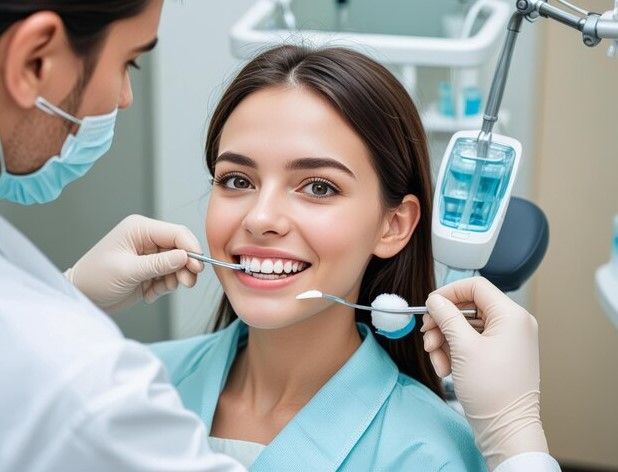
Regular dental check-ups play a role in maintaining overall health by identifying oral issues early. Dentists remove plaque, tartar, and bacteria, which can build up over time and contribute to tooth decay and gum disease if left untreated. Here are a few reasons why you need regular dental check-ups for overall health:
Protect Gums and Enamel
During check-ups, a dentist can remove accumulated plaque and tartar from your teeth. They assess and manage periodontal disease, which may lead to gum recession and tooth loss. Dental cleanings reduce the bacterial load, limit inflammation, and support the surrounding bone. Patients with overall good health and few or no restorations may still benefit from visits that monitor decalcification and related concerns.
AD
Tooth decay develops from the demineralization of the enamel. Demineralization occurs when acidic byproducts from bacteria that live in plaque contact the enamel, which contains calcium and phosphate. Dental care providers may use fluoride treatments to support remineralization of the enamel and reduce the risk of cavities. Dental specialists help recommend fluoridated toothpaste, oral rinses, or in-office applications of gels, foams, or varnishes during check-ups to reinforce the enamel surface.
Repair Cavities With Fillings
Cavities arise when dental caries create defects in the tooth structure. Dental specialists use different types of fillings to restore these areas. After removing the carious tissue, they place dental cement, amalgam, or tooth-colored materials to fill and seal the cavity.
The resulting restoration is designed for long-term function, and periodic check-ups allow the dental care provider to evaluate whether fillings show signs of wear or failure. Check-ups also allow professionals to review older restorations that may be nearing the end of their service. Repairing cavities in your teeth can be a simpler procedure than performing a root canal, which is why regular checkups are necessary.
Restore Teeth With Crowns
Dental crowns restore the size, strength, and appearance of damaged teeth. Crowns fit over worn or structurally compromised teeth, enclosing them and shielding the remaining structure. Fabricating crowns requires a dental professional to record accurate impressions of the prepared teeth. Traditional crown fabrication uses impression materials like acrylic and alginate in trays. Dental offices may also use digital impressions, which rely on intraoral scanners rather than physical materials. These impressions guide laboratories or chairside systems in creating crowns that patients wear for extended periods before needing reassessment.
Close Gaps With Bridges
Gaps within a dental arch can result from missing teeth. These spaces affect function and overall arch alignment. A dental care provider may use dental bridges to span these gaps with artificial teeth. Fitting a bridge requires reshaping abutment teeth that will support the restoration. Enamel shaping involves carefully reducing and contouring the abutment teeth so a dental bridge can fit securely. The arch area — made up of the teeth, gums, and supporting bone — helps determine how the bridge is positioned and how stable it will be.
Visit a Dentist Today
Check-ups with a dentist provide a careful evaluation of your teeth and gums. Dental care providers offer diagnostic and preventive services that address conditions such as gum disease, tooth decay, and cavities. Contact a dental office to schedule an appointment to help maintain your oral health.