

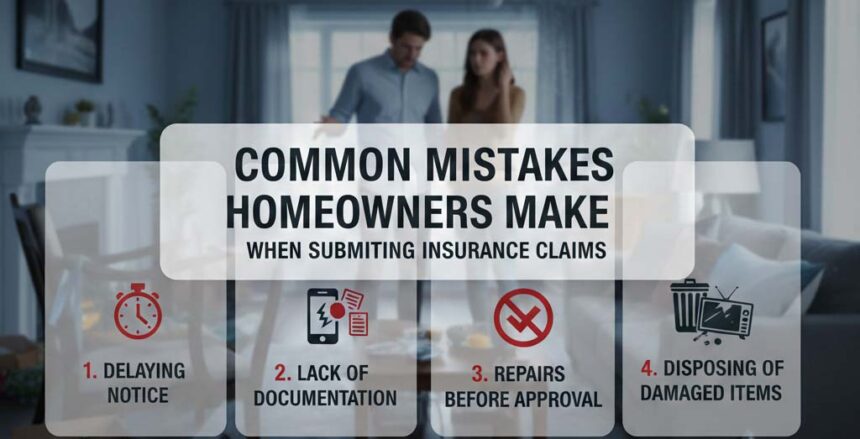
Filing a home insurance claim can be a complex and often stressful process. Many homeowners believe that submitting a claim is straightforward, but in reality, insurance companies have specific procedures, documentation requirements, and timelines that can affect the outcome. Missteps during the submission process can result in delays, underpayment, or even the outright denial of a claim. Understanding the most frequent mistakes homeowners make can help you navigate the system more effectively and protect your financial interests. We will explore the key pitfalls to avoid when filing a home insurance claim and how careful planning and attention to detail can make a significant difference in the outcome.
Common Pitfalls Homeowners Face
1.Delaying the Claim Submission
One of the most frequent errors homeowners make when dealing with Texas property insurance claims is waiting too long to report a loss to their insurance company. Prompt reporting is crucial because insurers often require immediate notification to assess the situation accurately and prevent further damage. Delays can raise questions about the validity of the claim and may be used as a reason to reduce or deny compensation. In addition to timely reporting, homeowners should document the damage as soon as possible. Taking photographs, noting specific details, and preserving damaged items helps create a strong record for the insurer. Waiting to submit a claim until after repairs or cleanup can also result in lost evidence, making it harder to prove the extent of the loss.
2. Inadequate Documentation of Loss
Homeowners sometimes underestimate the importance of thorough documentation when filing a claim. Insurance companies rely heavily on the evidence provided to evaluate claims and determine settlement amounts. Incomplete or vague documentation can lead to disputes or lower payouts. It’s essential to compile detailed records, including photos, videos, receipts, and inventories of damaged or lost items. Each item should include a description, approximate value, and date of purchase. Even small items matter, as insurance policies often cover replacement costs for personal property. Without careful documentation, the insurance company may question the claim’s legitimacy or only offer a partial settlement.
3. Misunderstanding Policy Coverage
Another common mistake is not fully understanding the terms of the insurance policy. Many homeowners assume all types of damage or loss are automatically covered, but policies have exclusions, limits, and conditions that affect compensation. For example, flood damage often requires a separate policy, and some perils may have sub-limits that restrict the payout for specific items. Misinterpreting coverage can lead to unrealistic expectations, frustration, and missed opportunities for proper compensation. Homeowners should review their policies carefully, note any deductibles, and ask clarifying questions to understand what is and isn’t covered. This knowledge allows for more accurate claim preparation and reduces surprises during the settlement process.
4. Attempting Repairs Too Quickly
While it may be tempting to immediately fix damages after an incident, rushing repairs can interfere with the insurance claim process. Insurers typically need to inspect the property to assess the damage and determine the amount of the payout. Making repairs without prior documentation or approval may cause the insurer to question the extent of the damage or reduce reimbursement. In cases of severe structural damage, temporary fixes are acceptable; however, permanent repairs should ideally be postponed until the claim has been fully evaluated. Homeowners should communicate with their insurance company before beginning repairs and maintain records of any temporary fixes, such as receipts for materials used, to prevent further damage.
5. Underestimating the Importance of Professional Help
Many homeowners try to handle claims independently without seeking assistance from professionals knowledgeable about the process. Insurance companies have trained teams and standardized procedures that can overwhelm those unfamiliar with the claims handling process. Failing to seek help can result in overlooked documentation, missed deadlines, and settlements that do not reflect the true extent of the loss. Professionals, such as public adjusters or claim consultants, are familiar with the tactics insurance companies use and can effectively advocate on behalf of homeowners. Their involvement often increases the likelihood of receiving a fair and timely settlement, while allowing homeowners to focus on recovering from the loss rather than navigating complex paperwork.
6. Providing Inconsistent or Inaccurate Information
Accuracy and consistency are crucial when handling insurance claims. Inconsistent statements, exaggerations, or omissions can raise red flags and result in delays or denials. Homeowners should provide clear, factual, and consistent information throughout every stage of the claim process. This includes written communications, phone conversations, and any forms submitted to the insurance company. Maintaining a detailed log of all interactions with the insurer can also help resolve disputes and ensure all information aligns. Even small discrepancies, such as differing dates or values of damaged items, can trigger additional scrutiny and unnecessarily complicate the claim process.
7. Neglecting Policy Deadlines and Procedures
Insurance policies often contain strict deadlines and procedural requirements that homeowners must follow. Missing these deadlines can jeopardize the claim, even if the damage is covered by insurance. Deadlines may include the timeframe for reporting a loss, submitting required forms, or providing documentation. Homeowners should carefully review their policy, note important dates, and maintain organized records to meet these requirements. Adhering to the insurer’s procedural steps ensures that the claim proceeds smoothly and prevents delays caused by missing or incomplete submissions.
Filing a home insurance claim is a detailed and often challenging process that requires careful planning and attention to multiple factors. By understanding the common mistakes homeowners make, such as delays, incomplete documentation, misunderstanding policy terms, or rushing repairs, individuals can better navigate the process and maximize their potential settlement. Avoiding these pitfalls, maintaining clear communication, and keeping detailed records are key strategies for ensuring claims are handled effectively. With preparation and diligence, homeowners can protect their property and financial interests while reducing stress during what is often a difficult time.